Pages

Friday, May 25, 2018

Italy: The Sense of an Elephant, by Marco Missiroli

I borrowed this book from the library because I found the title (and the blurb on the back) intriguing. I wondered where it was going at first. After all, all the secrets seemed to be revealed in the first few chapters, so it wasn't a mystery. It centres round an ex-priest, Pietro, who has taken a job as concierge in an apartment block in Milan. We soon learn that Lica, the father of one of the families in the building, is his son. So I wondered how the tension would sustain itself as there didn't seem to be much to reveal. It turns out, this is not quite the "feel good" story that it seems to be at first. There are surprises to come, not least at the end, and moral dilemmas that left me with plenty to think about.

I wondered about the translation - do Italians refer to a "concierge" or do they have their own word for it? We don't seem to have an English equivalent, but to refer to Pietro as a concierge seems to lend rather a French flavour. Then, the building is frequently referred to as a "condominium" which sounds very American to me, and modern, though in other ways I pictured the building as much older. (The blurb on the back refers to it as a "palazzo" - much more Italian sounding).

I enjoyed the book, and found the characterization complex and interesting. Pietro has two old friends in Milan, the gay lawyer Poppi who found him the job, and his tarot-reading friend Anita. There are also flashbacks to his past life in Rimini, and his relationship with Celeste. And then there are other inhabitants of the apartment building including Paola and her adult son Fernando, who has the mind of a child.

The Sense of an Elephant was translated from Italian by Stephen Twilley and published by Picador in 2015. It was originally published in Italy ,where it won the Campiello Prize, in 2012.

Wednesday, May 23, 2018

Somalia: The Orchard of Lost Souls, by Nadifa Mohamed

I found this a really interesting book to read shortly after my pick for Ethiopia (scroll down a couple of posts). It is set in the north part of Somalia, near the border with Ethiopia and about ten years later than Maaza Mengiste's book. So there were noticeable resonances between the two stories.

The Orchard of Lost Souls focuses on three women (or rather, two women and a girl). All are strong, independent characters. Filsan is a young female soldier, sent north to Hargeisa from Mogadishu to help suppress the rebellion growing in the north. Kawsar is a widow. Nine-year-old Deqo was born in a vast refugee camp outside the city. She is brought with a troop of refugee children to dance at a political rally. When she forgets the steps, frozen in fear, she is dragged aside by the woman in charge of the troop to be punished. Kawsar intervenes and Deqo runs off, leaving Kawsar to be arrested. At the police station the soldier Filsan beats her savagely. Thereafter she is crippled and confined to her house, unable to tend to her beloved orchard. The paths of the three characters separate but, like channels of a braided river, they come together again later in the story.

Apart from the beating Kawsar receives in the police station, I found this book not nearly as brutal as Mengiste's. We see the city emptying out and suffering from the war, but the portrayal of political oppression is not as extreme, perhaps because the city is remote from the capital where the leaders live. There are certainly some brutal passages, for instance when Filsan is sent to take part in an action to destroy water reservoirs in surrounding villages, because the tribesmen are suspected of aiding the rebels. However, these are not quite as central to the story as in "Beneath the Lion's Gaze", and the focus is more on the tenderness between the three women that arises as events unfold, leading to a much more hopeful ending, at least for the central characters.

The north of Somalia, where the book is set, has been declared to be an independent state, the Republic of Somaliland, since 1991. So for anyone wishing to include Somaliland as a separate country, this would be a good book to read. However its independence is not officially recognized, and it is not on the list of countries recognized by the United Nations that I am following. Nadifa Mohamed was born in Hargeisa in 1981 and moved to London with her family in 1986, shortly before the events of this book. This was intended to be a temporary move, but it became permanent when the war broke out. She did not return to Hargeisa until 2008.

The Orchard of Lost Souls is her second book and was published by Simon and Schuster UK Ltd in 2013.

Wednesday, May 09, 2018

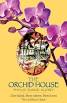
Dominica: The Orchid House, by Phyllis Shand Allfrey

"The Orchid House" is narrated by Lally, the elderly servant of a white family who have fallen on hard times in an unnamed Caribbean Island. The three small girls who had ben in Lally's charge have now grown up - Natalie is a wealthy widow, who is supporting her impoverished parents, Stella has married a farmer in America and Joan is in England where she is politically involved in the Labour Party.

During the course of the story, the girls return one by one to the island. Their father is ill and drug dependent after returning from "the war" (apparently the First World War). Each daughter tries in her own way to change things - Joan through politics, Natalie with money, and Stella with a drastic course of action that has unforeseen consequences. Caught up in the story also are Mademoiselle Bosquet, the girls' childhood French teacher who is in love with "the Master", and a young man, Andrew, dying of tuberculoses - but which sister does he most love? And which of them loves him?

The book was originally published in 1953 and was for a long time forgotten, as colonialism was left behind and the political situation in the Caribbean changed - though a film adaptation was made in 1990. There is an introduction to the current edition written by Schuyler Esprit, a scholar of Caribbean literature and post colonial studies. In it she puts the book in its cultural and political context. Although some of the finer details of her explanation were a little lost on me, nevertheless I found it worthwhile reading, all it would be quite possible to enjoy the book without it.

Phyllis Shand Allfrey was born and brought up in Dominica, and lived in New York and London as a young woman. She returned to Dominica in the 1950s, was a cofounder of the Dominica Labour Party, and subsequently became a newspaper editor. The current edition of The Orchid House was published in 2016 by Papillote Press, a publishing house which specialises in Caribbean literature.

Monday, May 07, 2018

Ethiopia: Beneath the Lion's Gaze, by Maaza Mengiste

Set around the period 1974 - 1978, when famine and rebellion led to the overthrow of the Emperor Haile Selassie and the establishment of a military dictatorship, this novel focuses on Hailu, a doctor, and his family in the capital of Addis Abbaba. At the onset of the book Hailu's wife Selam is in hospital, dying. His elder son Yonas is married to Sara, and they have one daughter, Tizita. His younger son Dawit is a student,heavily involved in clandestine political activity.

The members of the family are all deeply affected in different ways by the death of Selam. Sara mourns her as the replacement for her own mother. Hailu immerses himself in his work. Dawit becomes estranged from his childhood friend, Mickey, who has joined the military, for the security of a paid job. As the political situation unravels, all the members of the family, in their different ways, are faced with unthinkable choices.

The novel is quite grim and brutal in parts. It is lightened by lyrical passages which describe dreams or visions, including those of the dead and dying. Ethiopia has a long Christian tradition - the emperor (or King of Kings) was supposedly a descendant of the Biblical King David, the monarchy of Ethiopia being the oldest in the world - and this tradition is reflected in the beliefs of the characters.

As I read further into the book, I was more and more riveted by the writing, and found it hard to put down. The period described in the second half of the book is one of brutal genocide. The ending is somewhat inconclusive - those remaining are safe, for the meantime, but on finding that the military government (the Derg) lasted around 13 - 14 more years after the conclusion of the novel, I couldn't help wondering how long that safety would hold.

Maaza Mengiste writes in the author's note at the end that it is a fictionalized account based on real history. Only the emperor and his prime minister are given the names they had in real life. Other characters are fictionalized including many of the military leaders. So the dilemmas and actions taken in the book are not actual events that took place, but nevertheless they represent the real difficulties that a wide range of people faced at the time.

Maaza Mengiste was born in Addis Abbaba in 1974 and left with her family at the age of four when they fled the Ethiopian Revolution. She spent the rest of her childhood in Nigeria, Kenya and the United States, and now lives in the latter country where she teaches creative writing.

Tuesday, May 01, 2018

Dominican Republic: Before We Were Free, by Julia Alvarez

I could have read the much better known book by Junot Diaz, "The Brief Wondrous Life of Oscar Wao". Two things put me off - firstly, that Diaz had moved to the United States when he was six years old, and secondly, I read that the book was set in the United States (among the Dominican immigrant community).

Instead, I looked at the novels of Julia Alvarez, and found one in e-book form in our local library. "Before We Were Free" is actually a young adult book. It is narrated by Anita, who is eleven years old at the start of the story. She lives in a house on the family compound with her parents and elder brother and sister. Close by are her aunts, uncles and cousins, but gradually they have all moved away to the United States. Anita is lonely, and innocent of the wider political realities of life under "El Jefe", whose poster is on every classroom wall and in every home. It is 1960 and El Jefe is the dictator, Rafael Trujillo.

The young adult level of the book meant that I found the first chapter or two a bit simplistic, but gradually as Anita becomes older, she learns more of the political situation, and the problems that her family are facing. The gradual revelations are compelling to read and I found myself gripped by the story, through which I learnt a lot more of the history of the Dominican Republic.

Julia Alvarez has also written an adult novel set at about the same time period: "In the Time of the Butterflies". I'll be looking out for it.

Wednesday, April 25, 2018

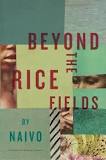
Madagascar: Beyond the Rice Fields, by Naivo

I was delighted when this newly published book turned up in our local library. It is described as the first Malagasy novel to be published in English. I'm not sure what that means as it was initially published in France and appears to have been translated from French. So I suspect that is "Malagasy" as in "from Madagascar" rather than "Malagasy" as in "written in the Malagasy language".

At any rate, it is a fascinating view of the little known history of Madagascar. Set in the nineteenth century, at the time of King Radama I and his successor Queen Ranavalona I, it tells of the life of Tsito, a young boy from the forest people, who is captured and enslaved, and of Fara, the daughter of the man who purchases him. It is a time of great turbulence in Madagascar. Tsito falls in love with Fara, but as a slave, he is not able to fulfil his love. However, eventually he is able to gain his freedom. He becomes a skilled craftsman, and even travels to Chatham in Kent to learn English methods of shipmaking. In the meantime Fara and her family fall victim to a sweeping wave of repression against the newly ascendant Christian religion, and against others who are suspected in any way of disloyalty to the crown, or of sorcery.

The book is dense with plot and many characters, and was at times tricky to follow. I found myself flipping back to check on earlier happenings, and also turning to the glossary and historical summary at the end of the book. Nevertheless, I was riveted by this view of a world that I was unfamiliar with, knowing of Madagascar only through wildlife documentaries.

Naivo is the pen name of Naivoharisoa Patrick Ramamonjisoa. The book was translated from French by Allison M. Charetteand published by Restless Books in October 2017.

Sunday, April 22, 2018

Burkina Faso: The Parachute Drop, by Norbert Zongo

I was delighted to come across the Global Anthology, a website which highlights a piece of literature from every country in the world. Many countries are represented by links to short extracts, but the entry for Burkina Faso linked to a pdf the entire text of Norbert Zongo's The Parachute Drop (though lacking the introduction mentioned by Ann Morgan in her review). This downloaded beautifully to my newly acquired e-reader so I took it on holiday last week so that I could finish off the "B" countries.

Norbert Zongo was an investigative journalist. Though the novel is set in the fictional African republic of Watinbow, it has been suggested variously that the novel is a thinly disguised critique of Togo, or of Burkina Faso itself. I suspect that in discussing the misuse of power by African leaders in newly independent countries, it is applicable to quite a few African countries. Gouama, the 'Founding President and Clairvoyant Guide' of Watinbow is a deeply flawed and ruthless person, who imprisons Marxists, and students suspected of being Marxists, assassinates former loyal friends, and believes in sorcery, so that he uses the body parts of those he has had killed for bizarre rituals.

However, he is in some ways naive, and finds himself manipulated by advisors he had trusted, so that he loses power in a military coup, and finds himself stranded deep in the countryside, trying to reach safety in the form of the neighbouring country, where he believes the president will come to his aid and assist him to regain power. In the course of his arduous journey, he is assisted by local farmers and fishermen, some of whom turn out to be the very students he had earlier imprisoned, and who had managed to escape execution.

I found the portrait of Gouama surprisingly sympathetic, showing both his evil side and his humanity and, at times, good intentions. The students who assist him, however, come across as more one-sided. While both colonial governments and the new leaders of African independence (whether civilian or military) are shown as deeply flawed, the Marxists are shown as good people who care for the needs of the poor and who believe that "development" means nothing unless the people have better healthcare and enough food to eat. While this may be the case, I feel that there are flawed individuals involved in any political movement, and that Marxist governments are no better (though sometimes no worse) than other types of government in this respect.

Nevertheless, though it was clear early on that the book was written to convey a political message, I found it an engrossing story.

The Parachute Drop was translated by Christopher Wise, and originally published by Socialist Stories.
Monday, April 09, 2018

Mauritius: The Last Brother, by Nathacha Appanah

Nathacha Appanah is a French Mauritian of Indian origin, and worked there as a journalist before moving to France in 1998.

"The Last Brother" is set in the final years of World War II, although the young protagonist, a boy named Raj, does not know what is happening outside his island home. When a flash flood sweeps away his two brothers, Anil and Vinod, he and his parents leave their village to cope with their grief, his father taking up a new job as a prison guard. Raj, a victim of his father's savage beatings, spends time in the prison hospital, where he meets and befriends David, a young Jewish boy.

David is one of a group of European Jews who had taken ship for Palestine to escape Hitler. However the British, who were in charge of Palestine at the time, would not allow the ship to land, and the passengers were interred on the island of Mauritius for the duration of the war, where 127 of them perished.

All this is in the past when Raj, now a seventy year old man, narrates the events of those days. He carries a deep burden of guilt, and of regret for the lost David, his only friend after his brothers' death. The story benefits from the dual perspective - the simplicity of the child to whom the events happened, with the more reflective view of the old man looking back. Lyrical and poignant,it has been translated from the French by Geoffrey Strachan, and published by Maclehose Press.

Saturday, March 24, 2018

Chile: Camanchaca, by Diego Zúñiga

I have been intrigued by the area of Northern Chile that surrounds the Atacama Desert, the dryest place on earth, every since discovering that my great grandmother's brother, a Scottish mining engineer, settled there in the late 1800's. So when I read of this book, the author's first novel, I ordered it.

When it arrived I found a very slim volume of a little over a hundred pages, many of which carry only a few lines of text. The book tells of its teenage narrator, living with his mother in Santiago, invited by his father in the northern city of Iquique to visit him and take a road trip with him. The camanchaca is a low sea fog that is the only source of moisture in the desert. The story is told in fragments as if seen through fog, fragmented, elusive and with its outlines blurred.

I found the narrator a somewhat unappealing character - overweight, with bad teeth, uncertain about life. But the writing is compelling, with a sense of mystery about it, which is never quite solved. A quick, but not necessarily easy, read, which I found myself appreciating very much. The author was born in 1987, so it will be interesting to see what path his writing takes in future.

Camanchaca is translated from the Spanish by Megan McDowell, and published in 2017 by Coffee House Press.

Sunday, March 11, 2018

Cape Verde: The Last Will and Testament of Senhor da Silva Araujo, by Germano Almeida

I knew little about the Cape Verde Islands before reading this book, apart from the fact that I have a CD of songs by the "barefoot diva" Cesaria Evora, who comes from there. It turns out that the islands are somewhat different to the rest of Africa. They were uninhabited until discovered by the Portuguese in the 15th century. It was ideally situated for the Atlantic slave trade, and its modern population has a mixture of Portuguese, Moorish, Arab and African heritage.

This was an easily readable book. The title character has been single all his life,a comfortably off business man and appeared to be a model of rectitude. But when he dies, he leaves a will of some three hundred pages, which reveals his life story, including the existence of an illegitimate daughter. This is rather unwelcome news to his nephew, who had expected to inherit his uncle's estate.

As the book proceeds, the daughter, Maria da Graca, and nephew Carlos, gradually learn more of their uncle's life, along with the reader. It is a rich picture of a life. The blurb suggests that the book moves along a blurry line between farce and tragedy. But one thing made me uncomfortable about this book - the description of the conception of Maria da Graca. Despite her mother saying "it wouldn't have happened if I hadn't wanted it", the description suggests that she had little choice in the matter, in fact it was uncomfortably close to a rape scene between an employer and a powerless employee. The book was originally written in 1991, and perhaps it didn't seem a problem then, but today this scene is disturbing.

The book was translated from the Portuguese by Sheila Faria Glaser and published by New Directions in 2004

Friday, March 02, 2018

Brazil: The Invisible Life of Euridice Gusmao, by Martha Batalha

Crow Blue, the first book I read from a Brazilian author, had large parts set out of the country. And when Martha Batalha's newly translated book appeared in our library, it looked intriguing, so I thought I would give it a go.

Euridice Gusmao and her elder sister Guida are two very different people, growing up in Rio de Janeiro in the 1940s, the daughters of Portuguese immigrant merchants. Guida reads womens magazines and styles her sister's hair. Euridice is a talented musician and dreams of fame and fortune. One day Guida disappears. Euridice gives up her ambitions to marry and live the conventional life of a wife and mother. But Euridice is bored. The book tells the story of the various projects Euridice adpots to inject some interest into her humdrum life. And what happens when Guida turns up again with her young son? (But without her husband).

I found the book entertaining and amusing. The reader cannot but feel sympathetic towards the spirited Euridice, and wish that she had lived in more enlightened times, when she might have better fulfilled her potential. For although all her schemes occupy her for a time, ultimately she does not have the means to carry any through to its completion. Perhaps her final project, writing a book, will have a better outcome? We are left to wonder...

The Invisible Life of Euridice Gusmao was translated from the Portuguese by Eric M B Becker and published by Oneworld Publications in 2017.

Sunday, February 18, 2018

United Kingdom: Elmet, by Fiona Mozley

The United Kingdom is a tricky one (in fact, I've considered splitting it up and reading a book each for England, Scotland and Wales). It's not, of course, that there is a lack of choice but that there is too much choice. I wanted something that could only come from the UK - not a generic "modern big city" sort of book. The Booker Prize long-listed Elmet seemed to fit the bill.

It is set in rural Yorkshire, in the vale of Elmet, the site of the last independent Celtic kingdom in England. Here Daniel and his sister Cathy live with their father apart from modern life, in a house that Daniel's father has built by hand. They live by hunting and fishing. But even though they wish it, they cannot keep themselves apart from the outside world. Though Daniel's father is tender with his children, violence lurks inside him. And men in the outside world are threatened by their presence, and want to control their lives. A terrible denouement is coming.

It's a powerful and unsettling book but also very lyrical. Cathy takes after their father and prefers the outdoors. Daniel likes the indoors and their idiosyncratic schooling with Vivien, a neighbour. He is watchful and observant. Even so, I found him puzzling as a narrator, and couldn't quite decide if the "voice" of the book, with its impressive and precise vocabulary, was true to what he might have learnt in his year or so of being schooled this way. The other thing that I found a little unrealistic was that everyone wanted to solve their issues without the intervention of the police. But some of the events that took place would surely attract very prompt police intervention in the modern world, and this didn't happen. Or perhaps it did, just not within the time frame of the story. At any rate, as the story unfolded, I was totally gripped by the narrative, and by the beauty of the language and description.

Fiona Mozley grew up in York and is studying for a degree in medieval history. Elmet is her debut novel and is published by John Murray (Hachette UK), 2017.

Monday, February 12, 2018

Bahrain: Yummah, by Sarah A Al Shafei

I'm slowing down on the world reading because I have a lot of other books on my "to be read" list that don't fit this project. However, I thought I should try and fill in some of the gaps among the B's and C's - Bahrain being first on the list.

It came down to a choice of two books, after I searched extensively and couldn't find any others. Either QixotiQ, by Ali Al Saeed, or Yummah. And after reading Ann Morgan's review of QixotiQ, I thought Yummah would be the better bet.

Mind you, it is not without flaws. The story tells of the life of Khadeeja, a Bahraini woman growing up in a traditional society, raising her children and becoming the matriarch of a large family of grandchildren and greatgrandchildren as times change and modern influences affect their lives. "Yummah" it appears is an Arabic term for "grandmother". It's the sort of story that you might write for your family to tell of your family history. As a description of Bahraini life it was interesting enough, but there was not a lot of drama in the way events unfolded. And I found Khadeeja to be an infuriatingly perfect woman - patient and forgiving. When her husband, going through financial difficulties, leaves her to travel to Dubai where he remarries a rich woman, she never stops loving him. And when he is old and ill, she takes him back and nurses him. There were flaws too, in the maths. In places, time intervals between children are clearly stated - two years after her first daughter, she is pregnant again. She has a third daughter, and then a son, and a couple more after that - she is nursing a baby when her five year old son is bitten by a scorpion and dies. So her eldest must now be about ten years old at least - but several more children follow, and her eldest is still around eleven or twelve years old and approaching marriageable age.

The author studied in Boston and Miami and received a BA there. I presume that the book has not been translated, but written in English. It would have benefitted from editing but mostly the mistakes do not get too much in the way of the reader. I often noticed a lack of punctuation so that where I would have expected a full stop between sentences, there was none, and the two sentences were written as one. In spoken English, this would have been less obvious. The most charming quirk that I noticed on several occasions was the use of the phrase "to go behind" which floored me briefly, until I realised the author meant "to go after" eg someone "went behind" money instead of "going after" money.

But the lack of editing is an inevitable consequence of the fact that many of the books I am reading for this project are produced on low budgets, in a world where the big publishers concentrate on a few titles likely to achieve mass market success. My copy, which I had to pursue rather diligently in various corners of the internet, was I think a "print on demand" title (it does seem to be available on Amazon, but I don't purchase from there as the shipping rates to New Zealand make their prices ridiculously expensive).

At any rate, despite its flaws, I found the book an enjoyable enough read. And as the author is apparently only twenty four years old, or was at the time of its publication, perhaps there will be more to come from her, and she will improve as she goes on.

Tuesday, January 16, 2018

Poland: Swallowing Mercury, by Wioletta Greg

Wioletta Greg is a poet, and it shows in this delightful novella about a young girl growing up in the country in Poland in the dying days of the Communist regime. The young girl at the centre of the book is named Wiola, and one wonders if it is semi-autobiographical. At any rate, the series of small vignettes that make up the book are at times amusing and at times lyrical - but also very gritty. Superstition and religion are in conflict with each other and with politics in this community, but while in some ways it seems like a long-lost rural world, in other ways it is strikingly modern - glue-sniffing, for instance, makes an appearance. The title is taken from an episode in which Wiola breaks a thermometer and swallows the mercury after being sexually molested by the local doctor.

I found the writing very fresh and, despite the grimmer aspects of the story, overall uplifting.

"Swallowing Mercury" was translated by Eliza Marciniak and published by Portobello Books. It was the recipient of an English Pen Award.

Sunday, December 31, 2017

Malawi: The Boy Who Harnessed the Wind, by William Kamkwamba and Bryan Mealer

I found this book listed on a website suggesting the most iconic book set in 150 countries round the world. While not all the books listed on the website are written by authors from the countries in question (the English novelist Graham Greene has listings for both Haiti and Monaco, Ernest Hemingway's The Old Man and the Sea is the title chosen for Cuba and, strangely, the listing for Barbados is Nigerian author Chris Abani's novel Song for Night set in West Africa), there were some useful suggestions of books I had not come across before.

William Kamkwamba is a young Malawian brought up in the village of Wimbe near the capital of Lilongwe where his father was a farmer. When famine hit the village, he had to drop out of high school as there was no money to pay his school fees. At a loose end for something to occupy his time and his mind, he resorted to a small library of donated American books in the local primary school. The science books fascinated him, and from them he was inspired to build a windmill to bring electricity to his family's small house so that they could have electric light (and not have to go to bed at seven in the evening). His windmill was built mainly from junk salvaged from various places including an abandoned tobacco estate nearby. From time to time, when a part needed to be purchased, he managed to pick up odd jobs for cash, or was helped out by his slightly less poverty-stricken friend Gilbert, the chief's son.

William not only succeeded in building his windmill, he attracted outside attention, and was invited to speak at a TED conference. Donor help enabled him to go back to school, and to realise his dream of building a bigger windmill to pump water so that his family could grow two crops a year instead of one, and of bringing wind-powered electricity to his whole village.

The book is written in the first person - theoretically by William. But he describes at various times his poor English, and no matter how much it has improved, no doubt his non-Malawian coauthor played a big part in the writing of the book. So on this basis, it perhaps does not quite qualify as written by a Malawian writer - still, I am going to count it as such.

What I found particularly inspiring about the book is that William's dream in no way involved emigrating to America, as so many African books seem to focus on. Instead, he clearly loves his home, and wanted only to make the lives of his family and village better - and the improvements that enabled this were by no means huge and expensive. Sometimes small things, coupled with intelligence, persistence and determination can make a huge difference.

The Boy Who Harnessed the Wind was published by Harper Collins in 2009.

Thursday, December 28, 2017

Grenada: Hurricane Fever, by Tobias S Buckell

I was a bit dubious about the suitability of this book for Grenada. Tobias S Buckell was born in Grenada, and spent much of his youth growing up on boats in Grenada, and then the British and US Virgin Islands. However, he now lives in the United States, and the blurbs for his book suggested that they were standard western style thriller territory. Nevertheless, they are readily available in our library, so I selected the most Caribbean sounding of his titles, and went ahead.

I actually enjoyed it very much - great holiday reading. It has actually been marketed as science fiction, taking place in the near future, when climate change has caused sea level rise and a considerable increase in the number of hurricanes and the area in which they hit. Petro chemical fuelled vehicles still exist but are the preserve of the wealthy and most cars are electric. And a wealthy megalomaniac has a plan that will change the face of the world for ever...

Former spy Roo Jones receives a message from a dead friend, and in the midst of raging hurricanes, he must come out of his retirement to puzzle out the significance of the information he has been left, and act to defeat a global conspiracy. Of course, with this type of book, it always spoils the plot to reveal too much, so I will leave it at that. I found the technology quite credible and the suspense was maintained throughout.

Hurricane Fever was published in the UK in 2014 by Del Rey, part of the Random House Group.

Tuesday, December 26, 2017

Iceland: Butterflies in November, by Audur Ava Olafsdottir

It's not difficult to find Icelandic crime novels - they seem to go along with the whole Scandinavian crime noir scene that is very popular right now and helps fill out the shelves of our library system. I knew though, that Iceland is a very literary nation and I wanted to see what else I could find. (Literary festivals in Iceland feature prominently in the works of David Mitchell, who I suspect may have attended a few as a speaker himself).

This book is narrated in the first person and the narrator does not appear to be named (I might have missed it somewhere, but she is only referred to as "she" on the back cover blurb so I suspect not). She has been dumped by her husband and her lover, hits a goose with her car, killing it (and subsequently cooking it), and acquires responsibility for her pregnant best friend's deaf son, after her friend is hospitalised.

There is one bright note - she wins the lottery. Now spectacularly rich, she takes the boy, Tumi, on a road trip across the country. Despite her never having wanted children, she bonds surprisingly well with the deaf boy. Along the way, passages in italics hint at a secret in her past.

The book is described as "blackly comic". I didn't find it comic in a "laugh out loud" sort of way, more "wry smile" territory - but also tender and sensitive. A very enjoyable read which also gave some of the flavour of Iceland in November and December, when the sun barely lifts above the horizon (but one can still go swimming, in hot pools).

Butterflies in November was translated from the Icelandic by Brian FitzGibbon and published by Pushkin Press in 2013.

Friday, December 22, 2017

Republic of Congo: Black Moses, by Alain Mabanckou

Alain Mabanckou was born and grew up in Congo, and currently lives in Los Angeles. I have to confess, I am still a little confused about the two Congos. It would have been simpler if the other - the former "Belgian Congo" - had retained its name adopted in the late twentieth century of Zaire instead of becoming the Democratic Republic of Congo. The Republic of the Congo is apparently also called Congo-Brazzaville after its capital city, which is just across the river from Kinshasa, the capital city of Congo-Kinshasa (Democratic Republic of the Congo). Congo-Brazzaville was formerly part of French Equatorial Africa.

Its other large city is the port city of Pointe-Noire, where the author grew up and this story is set. The hero is an orphan who was given a name by the priest Papa Moupelo "Tokumisa Nzambe po Mose yamoyindo abotami namboka ya Bakoko" which means in Lingala "Thanks be to God, the black Moses is born on the earth of our ancestors". The story follows his time in the orphanage where he eventually falls in with the twins Tala-Tala and Songi-Songi. The orphanage is under the control of a corrupt director. The Marxist-Leninist revolution of the 1970s has caused the demise of the priest Papa Moupelo as religion is now out of favour. Moses escapes the orphanage with the twins to live a rough life on the streets of Pointe-Noire, and finds a home among the Zairian prostitutes of the Trois-Cents quarter. As he grows up, they encourage him to find honest work. But his good times do not last...

I enjoyed the book, but to my Western notions of story arc, the ending seemed a little off...somehow not the type of resolution we would normally expect from a novel. Poor Moses does not come out of life very well, in the end, which seemed strange as it had appeared he was going to be a survivor. It is neither quite a tragedy nor a comedy but somehow trails off a little. Still, it was a great insight into the street life of the country, and was a winner of an English Pen award and a finalist for the International Man Booker Prize in 2015.

I also have the author's memoir, "The Lights of Pointe-Noire" and am looking forward to reading that, too.

Wednesday, December 13, 2017

Liberia: This Child Will be Great, by Ellen Johnson Sirleaf

I couldn't find any fiction from Liberia, so instead I chose this memoir written by Africa's first female president. It was interesting to read, but more impersonal than I expected. Although there were some childhood memories, mostly it was an account of the author's political life and career, and of political events in the country. There were some interesting omissions. For instance, at one point the author spent nine months in prison. Blink and you could miss it. In one paragraph she was being imprisoned, and almost in the next sentence she was released again, with almost no indication of how she felt about her time in prison and how she coped.

She married very young and divorced her abusive husband when she was still young, with four sons. Near the end of the book, she explains why she did not marry again. She says that there were romances, and one very special friend, but no details are given.

Still, I learnt a lot about the country from the book. The author is just finishing her second six year term as president, and the book was written early in her presidency. (She was elected at the end of 2005 and the book was released in 2009, before she won the Nobel Peace Prize in 2011). It would be interesting to read a follow-up, with more details of how she succeeded - or not - in her goals, later in her presidency, and how she coped with the Ebola crisis. And - dare I say it - maybe some more personal insights?

"This Child Will be Great" (the title was taken from something an elderly man said to Ellen's mother) was published by Harper Collins.

Saturday, December 02, 2017

South Africa: Zoo City, by Lauren Beukes

Zinzi has a sloth which accompanies her everywhere she goes, draped on her back. She lives with other "animalled" outcasts in a Johannesburg slum known as Zoo City. Her talent is finding lost things, which she uses to earn her living, but when a job goes wrong she is engaged, reluctantly, to find a missing girl, and is drawn into a very dark and dangerous underworld revolving around the music industry.

This is fantasy but not of the usual sort which always seems to be set in a vaguely medieval type of world. The setting is in every way modern South Africa apart from the fantasy elements in which people who criminal acts become "aposymbiots" and at the same time acquire unusual, magical talents. It's dark, complicated and totally original. I could say it's not a genre I've been into much before - but then, it is not really a "genre" novel at all, bursting out of the confines of both fantasy and noir thriller.

Zoo City won the Arthur C Clarke award in 2011 - an award for the best science fiction novel published in English in the previous year. Which is interesting, since "science" is thin on the ground although perhaps the vaguely stated reasons for the onset of the condition of animal companionship qualify as "science". Be that as it may, the book's quality is certainly deserving of recognition. I'll be looking out for more of this author's work.