Since starting my world reading project I have discovered many wonderful features of our local library's website. I can search the catalogue by subject eg "fiction - India", make "for later" lists of books that I want to read for the project, and make subject lists of books I have read for the use of other library website users. I can place a hold on books I want to read, and have them sent to my nearest branch from the other side of the city.
My latest discovery (I had this in the back of my brain, but only just got around to trying it), is that I can request books that the library doesn't have - not for interloan, which is a little pricy, but for them to add to their collection. So a few days ago I filled in the form three times over, for books from Benin, Macedonia and Uganda, and waited to hear.
Now I find that all three books I requested have been ordered, so in due course I will get to read them. This is going to be a wonderful relief to my rather strained book buying budget. The only drawback being that it is likely to be the best reviewed books that the library will agree to purchase. For some of the smaller countries, where the only possible book is of somewhat dubious quality, I hesitate to ask the library to add the book to their collection. Which means that I will probably have to buy the books that I least want to keep.
Still, I'm really pleased to be able to fill in a few more countries this way. I plan to put in further requests from time to time, aiming to space out the arrival of the books ordered.
Wednesday, May 31, 2017

Sunday, May 21, 2017
Trinidad & Tobago: House of Ashes, by Monique Roffey

On the outskirts of the City of Silk, in the fictional Caribbean island of Sans Amen, Ashes is a follower of the Leader, who has established a spiritual commune. He has rescued street kids, fed and educated them, and trained them and other followers to fight. Now they are going to seize power, to establish a New Society.
The followers of the leader invade and take over the television station and the House of Power. But their revolution quickly goes wrong. Holed up for days in the House of Power, with their parliamentarian hostages and the army surrounding them outside, Ashes gradually changes his view of the Leader, and of the existing regime. How will it end? Will he get out alive, and will he spend his life in prison? And what of the young former street kid, Breeze, cocky but ignorant?
The use of fictional names such as the House of Power and the City of Silk give this book an edge of fantasy, but everything else about it is firmly grounded in the real world. It is based on an actual insurrection that took place in Trinidad in 1990, although with a different outcome. In that case, Islamist extremists were responsible. In the fictional version, the nature of the spiritual beliefs of the rebel group are not defined. Ashes prays, and connects himself with "the beautiful". In the House of Power, he contemplates a stained glass window depicting the crucified Christ and states that Jesus was a revolutionary. But it is clear that whatever his belief is, he is not a Christian.
There is an element of environmentalism in the book too. One of the hostage Parliamentarians is the Minister for the Environment. She is passionate about the plight of leatherback turtles, and these figure prominently in the latter part of the story.
It is a convincing and moving book, which presents the characters on both sides as complex people, sometimes misguided but doing the best they can for their beliefs. I had to google a few of the terms used, and ended up knowing a little more about the Caribbean, besides enjoying a worthwhile read.
Monday, May 15, 2017
Belize: Time and the River, by Zee Edgell

The novel tells the story of Leah, a slave born in Belize town, her mother Hannah, brother Sam and friend Will, a slave who was born in Africa. Will wants Leah to be his sweetheart but she does not love him. Leah dreams of a better future and eventually becomes a freed woman although this involves some compromises on her part, and distances her from her former friends.
As the story follows Leah's life from young womanhood till her death, it reads more like a book that someone might write about the history of a forebear, rather than a fictional novel - facts of a real life do not always fit a traditional narrative arc. However, there is no indication that it is anything other than fictional. I enjoyed reading the book, despite its structural limitations. I found it an interesting portrait of the complex social conditions that prevailed in the area at the time, a country about which I previously knew little.
Zee Edgell was born in British Honduras in 1940. Her first novel, Beka Lamb, was set in 1951 and published in 1982, a year after her country became the newly independent Belize. It was the first novel by a Belizan writer to reach an international audience. She has worked in international development and travelled widely, and is currently living in the United States.
Friday, May 12, 2017
Cameroon: Behold the Dreamers, by Imbolo Mbue

The Jonga's - Jende and Neni, and their son Liomi - are Cameroonians trying to make it in New York. While Jende works as a chauffeur for an investment banker on Wall Street, Neni is studying at community college with a dream of going to pharmacy school. Jende does not have a green card but does have a permit to work while waiting for his asylum application to be heard. His wealthy employer, Clark and his wife Cindy are also in their own way pursuing the American dream. Cindy had a hard childhood and is insecure about her social position. The interaction between the two couples, and the events that unfold during the collapse of Lehman brothers and subsequently, form the narrative of the novel. We also meet Clark and Cindy's two children, Vince who wants to give everything up and search for peace and enlightenment, and the younger son Mighty.
Although set in New York, the novel reveals a good deal more than I expected about life in Cameroon. It is a place where everyone's dream is to leave and go somewhere else. And yet, will they find happiness there? In the end, in their own way, Jende, Clark and Vince all find a path that satisfies them. (And yet, given that the author is a woman, I find it a little strange thinking about it now that the women in this book are more harshly treated).
Be that as it may, I enjoyed the book very much, and would be interested to read more by the same author in future.
Friday, May 05, 2017
Czech Republic: Spaceman of Bohemia, by Jaroslav Kalfar
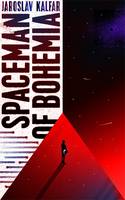
This is by no means the end of the story. The book also gives us a lot of the recent history of the Czech Republic, through the history of Jakub's own family. He must confront the dark deeds of his father, and his love for his grandparents, and somehow make a new life for himself.
I loved this book. (That's two in a row with strange aliens - a coincidence? But this one resembles Jane Rawson's in that point only, otherwise they are very different books). The suspenseful plot was enhanced by the in depth characterisation of Jakub, his wife Lenka, grandparents, and other peripheral characters including the mysterious Shoe Man.
Jaroslav Kalfar was born in the Czech Republic and emigrated to the US at the age of fifteen. It appears from his author photo that he is still quite young. Unlike many other books written by authors who emigrate to the United States, this is in no way an American book. And it appears from the acknowledgments at the back that the author still considers himself very much Czech, referring as he does to "my country" in a way that can only mean the Czech Republic. So, while I keep trying (often fruitlessly) to read books that have been published in the country and language of the author, rather than the countless American influenced books of immigrants, I felt that this one was an entirely satisfactory choice for the Czech Republic.
Friday, April 28, 2017
Australia: From the Wreck, by Jane Rawson
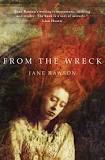
This addition turns the story into something truly amazing. Inventive, lyrical, suspenseful and invoking a sense of wonder at the beauty of earth, the oceans, and the vast expanse of space, along with tender sympathy for the plight of humans and of the homeless life forms who came to earth millions of years ago and took refuge in the oceans.
One of my favourite reads of the year so far.
Monday, April 24, 2017
North Korea: The Accusation, by Bandi

The seven stories in this collection are relatively simple, and have a common theme - in each, the central characters are struggling to survive in a regime where the ordinary people have little, and live in fear of the consequences of the slightest wrong act or careless phrase, while the "Dear Leader" lives a luxurious lifestyle and must be praised at all costs. (When he moves around the country, it is a "Class One Event" and all other traffic must stop to make way for him). Generally, there is a moment of realization in each story, where the truth of their situation breaks through, overcoming years of propaganda.
Despite this simplicity, the characters in each story are different and completely individual. I was fascinated by the insight and power of these stories. I have to believe that they are a true reflection of life in North Korea - the author had nothing to gain by exaggeration or distortion, given that the stories were never going to be published in his own country. In fact, they lay hidden for years, most being dated around the early 1990s, until he was able to give them to someone to smuggle secretly out of the country. (Bandi means "firefly" and is, of course, a pseudonym).
The Accusation is translated by Deborah Smith, and published by Serpent's Tail in 2017.
Wednesday, April 19, 2017
Switzerland: The Chef, by Martin Suter

Together they set up "Love Food", an enterprise specialising in erotic meals which, we are led to believe, have the couples who eat them wanting to jump into bed with each other. This is achieved by the aphrodisiac qualities of Ayurvedic recipes that Maravan has inherited from his beloved great aunt, combined with his "molecular cooking" techniques. Maravan is desperately trying to send money back to Sri Lanka to help his family, in the last days of the conflict between the Sri Lankan government and the LTTE rebels. From couples, they progress, somewhat against Maravan's values, to providing catering for rich businessmen and their escorts. Together they are drawn into an underworld of sex and illegal arms dealing.
I found the story readable enough, but not altogether convincing. Was Maravan's food really that powerful? And somehow, neither the struggles of the Sri Lankan Tamils not the world of the dodgy arms dealers really drew me in emotionally.
Nevertheless, according to the blurb Martin Suter has a huge readership. He was born in Zurich in 1948 and now spends his time between Spain and Guatemala. The Chef was translated from German by Jamie Bulloch and published in Great Britain by Atlantic Books in 2013.
Monday, April 17, 2017
Egypt: The Yacoubian Building, by Alaa Al Aswany
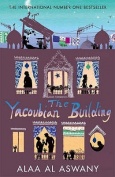
The novel exposes rampant corruption in political life, and in the police force. I found the depiction of female characters rather troubling, as most of them seemed to exist only in relation to men - someone's mother, someone's sister, someone's wife. Only the older Frenchwoman, Christine, a bar owner, and Dalwat, the rather unpleasant widowed elder sister of another character, appeared to have much agency of their own. I suspect this reflects the Eqyptian situation at the time as much as it reflects the writer's ability to create convincing depictions of the opposite sex.
The depiction of homosexuals I also found rather troubling, but again, perhaps realistic in the setting of the novel. In both cases (women and homosexuals) there seemed to be a huge focus on them as sexual objects, rather than as people with wide-ranging lives.
Despite all the dark events in the novel, it does end on a somewhat positive note. I'm not sure though, that I would agree with the blurbs on the back - the New York Times describes it as "a comic yet sympathetic novel about the vagaries of the human heart" - sympathetic, perhaps, but hardly comic in my opinion.
The Yacoubian Building was published in Arabic in 2002, translated by Humphrey Davies and published in English by Harper Perennial in 2007.
Saturday, April 15, 2017
Lebanon: As Though She Were Sleeping, by Elias Khoury

Meelya is a young Lebanese Christian woman who has married Mansour, a Palestinian. She leaves Lebanon to live with him in Nazareth, but escapes reality in dreams. Her dream world is convincingly evoked, as she slips in and out of it. But just as in real life dreams, the book can be rambling and illogical at times. Still, the beauty of the language made me persist. Eventually, at the end of the story, there was a moment of revelation as the author linked the story of Abraham's intended sacrifice of his son Isaac with the death of Christ(and with Meelya herself) that formed a very satisfying conclusion (a little Bible knowledge will help the reader here).
As Though She Were Sleeping was translated from Arabic by Humphrey Davies and published in Great Britain by MacLehose Press in 2011.
Sunday, April 02, 2017
Romania: Black Sea Twilight, by Domnica Radulescu

Nora is a talented artist growing up in Mangalia on the Black Sea Coast of Romania. Gigi, her boyfriend is from a Turkish family in the same town. Nora dreams of going to art school and Gigi of becoming a ship's captain like his father, while Nora's twin brother Valentin has been sent to live with his aunt Raluca in Bucharest, so that he can study piano. But Communist Romania under the brutal and oppressive regime of Nicolae Ceausescu is not an easy place to grow up. The slightest joke or innocent teenaged escapade might bring someone to the attention of the secret police.
This was an absorbing story, following the fortunes of Nora, Gigi, Valentin, and of Anoushka, the young French woman with a mysterious past whom Gigi and Nora rescue from the sea in a storm, and Didona, Valentin's first love, a gypsy from the State Circus.
However, I felt the author was using the story to cram in as much as she could of the recent history of Romania. So, while the first part of the story, until Nora reaches Paris, unfolded naturally, there were some odd passages later in the story: Nora receives a letter from her mother in which her mother tells the story of her own early life. On a train trip to see France, Anoushka suddenly launches into the story of her own early life in Hungary and Romania. And Nora hangs out in Paris with a group of young artists, actors and directors, who argue vigourously about the merits of Parisian culture and the fact that many of the most prominent artists there are Romanian immigrants.
A bibliography at the end of the book seems to bear out that the author wanted to impart factual information about Romania as much as to tell a story.
Despite these sometimes awkward intrusions, which could have been trimmed down without hindering the flow of the narrative, I enjoyed reading this book.
Domnica Radulescu was born in Romania and won a national prize for a volume of short stories when she was twenty, but fled during Nicoae Ceaucsecu's dictatorship and settled in the United States as a political refugee in 1983. She is a professor at Washington and Lee University in Virginia.
Wednesday, March 29, 2017
New Zealand: The Quiet Spectacular, by Laurence Fearnley

New Zealand books are easy for me to obtain, and there's plenty of choice. I had gradually become aware of Laurence Fearnley as a writer I had yet to dip into, which seemed rather a lack, given that she has been writing novels, some of them award winning, for around twenty years. So I put my name on the hold list for her latest, "The Quiet Spectacular" at the library, and eventually it came round to my turn (the hold list being surprisingly long).
The book is set in the south of New Zealand, in an unnamed area clearly based on Dunedin, and on a rural dormitory town and wetlands slightly to the south of the city. Christchurch, where I live, also gets a mention as the childhood home of one of the main characters, and residence of her parents. I find when the setting is familiar, the reading experience is changed by the inevitable mental fact checking that goes on. I didn't find anything to quibble with (and the earthquakes of 2010 and 2011 inevitably got a small mention).
The book centres around three women. Loretta is a school librarian with two grown children, a soon to be teenaged son, a husband and an ex. She appears to be suffering some sort of mild mid-life crisis, and has embarked on a project to catalogue adventurous women in a book (imaginary or real) called "The Dangerous Book for Menopausal Women". Chance is a teenage girl whose goat farming father and brothers are interested only in go karts, while her mother is literary but cold and mentally cruel to her. Riva is an older women, who has given up a successful business making women's outdoor clothing in the United States, and returned to New Zealand where she is restoring and protecting a wetland reserve. Riva is mourning the death of her sister Irene, but has promised Irene that on the fourth anniversary of her death, she will do something spectacular to celebrate, and will then stop mourning her and get on with life.
These three women separately discover the wetlands, and a hut that Riva and Irene had built there, and eventually meet up. I found the variety of female characters interesting. Men are peripheral here. But though Riva says of men that she can "take them or leave them", it is not an anti-male book (the author, by the way, is a woman despite her male-sounding name). Chance's father, for instance, seems to be a good hearted person, in the glimpses we see of him, while her mother Trudy is not at all sympathetically drawn.
The book was interesting enough that I felt I would like to explore Fearnley's earlier work - in particular, "The Hut Builder" which won the fiction section of the 2011 New Zealand Post Book Awards.
Wednesday, March 22, 2017
Japan: The Goddess Chronicle, by Natsuo Kirino

Some countries have too many fine authors to choose just one book. So, even though I had already read a book from Japan for this project, I decided that The Goddess Chronicle looked interesting enough that I would read another. Even if it means the project will take longer overall (I suspect I will choose extra books from a number of other countries, too).
The Goddess Chronicle is based on the Japanese legend of the gods Izanami and Izanagi. In the first part of the book, two sisters are born into the family of the Oracle on a small island which I suspect from the description is located somewhere in the area of Okinawa. They are inseparable, until, on her sixth birthday, Kamikuu is chosen to be the next Oracle, in succession to her grandmother, and enters a rigorous training. When the grandmother dies some years later, and Kamikuu takes over her role, her younger sister Namima discovers that she is to be the priestess of darkness, and live in isolation at the island's cemetery.
Namima who has fallen in love with a young man, Mahito, rebels against this role. Together the two lovers escape the island. But things don't work out as Namima had hoped. Namima finds herself in the underworld serving the goddess Izanami, but she wishes to return to the island for revenge.
I'm not sure how much of the book is drawn from the original legend, but I suspect that portions of the latter part of the book come from the original myth, and that the story of Namima and Kamikuu is the author's own invention. Natsuo Kirino has written a number of earlier books, chiefly crime fiction. This novel, too, is rather dark, in a much more mythic way. I found it quite spellbinding, and read it quickly, as it was hard to put down. However the parts near the end that appeared to be traditional were a little harder to follow at times than the parts that seemed original. The modern mind, perhaps, is a little less foreign than the centuries old legends.
Monday, March 13, 2017
Haiti: The World is Moving Around Me, by Dany Laferrière

By internet searching, I had a small but interesting looking list of novelists from Haiti, all women: Yanick Lahens, Edwidge Danticat (although she left the country at a young age), Marie-Vieux Chauvet, Évelyne Trouillot. When it came to our local library, however, apart from some children's books by Edwidge Danticat, all I could find was Laferrière's "I Am a Japanese Writer" as an e-book, and in paper format, his memoir of the Haiti earthquake.
Although Laferrière left Haiti as a young man and settled in Canada - as a journalist he was at grave risk from the then brutal dictatorship. However, at the time of the earthquake of January 12, 2010, he was in Port au Prince for a literary festival. This memoir is his account of the days that followed, before he was evacuated out to Canada by the Canadian embassy, and again when he returned to visit his family for the funeral of his aunt.
Although some 200,000 people died in the devastating earthquake, he does not dwell on that so much as describe the way in which life continued. And the background of Haitian culture that he describes is one of pride in a nation that was the first in the world, in 1804, where black slaves managed to shake off the rule of white men and form their own self determining nation. The narrative of the earthquake is fragmentary, in short, descriptive passages, and evocative. "We say January 12 here the way people say September 11 in other places" he writes. In Christchurch where I live, we refer to September 22 - our own earthquake of September 22, 2011. And though far fewer lives were lost here than in Port au Prince, and the devastation was not nearly as great, nevertheless, many passages had a resonance for me.
Laferrière pins down the reason why novels from some countries are so hard to find for this project:
"What art form will be the first to come forward after the earthquake? Poetry, so impulsive, or painting, eager for new landscapes? Where will the first images of the earthquake be seen? On the city walls or the bodies of tap-taps?... The novel demands a minimum of comfort that Port-au-Prince can't offer; it's an art form that flourishes in industrialized nations."
While I still hope to read some of the novels mentioned above, I'm glad I chose this one first. I found it a very readable insight into the country and the people, giving more depth than reportage of events in the newspapers.
Tuesday, February 28, 2017
Côte d’Ivoire: The Blind Kingdom, by Véronique Tadjo

This is another country for which I had to do some searching. I am trying to find female writers, and also to find alternatives to the books already read by Ann Morgan - I'm trying not to just follow someone else's list. Ahmadou Kourouma was Ann's choice for Côte d’Ivoire, and there seemed to be little else out there, until I came across Véronique Tadjo.
This is a slim book, and it does not follow the usual structure of a novel. It is a collage of short chapters which are made up of many types of text - some declamatory, like political speeches, some rather Biblical in form, in the nature of poetry or prophesy. Although I found this structure interesting, I also found that it made it harder to recall the story line, especially when I had put the book down and picked it up again later.
The book opens with a catastrophic earthquake, which the author says in an interview at the end of the book is a metaphor for the devastation that occurred in many African countries after independence. The unnamed kingdom in the story is ruled by the blind - another metaphor. The emblem of the king and his court is the bat, an animal with very poor eyesight but excellent sonar. The bats however, which inhabit the royal palace, leave their excrement everywhere, leading to pollution and decay.
The king's daughter Akissi falls in love with Karim, one of his advisers who comes from the Other People who are sighted. Karim sends Akissi to his mother in the north of the country, where she learns from her and recovers her sight.
At times I felt the method of layered texts led to a little too much abstraction, but on the whole, I found the book interesting and well told.
The Blind Kingdom was translated from the French by Janis A Mayes and published by Ayebia Clarke Publishing Limited.
Saturday, February 25, 2017
Cameroon: Venus of Khala-Kanti, by Angèle Kingué

So I kept looking, and eventually stumbles on Angèle Kingué's Venus of Khala-Kanti. It relates the lives of three women in an imaginary West African village. Although big promises of development are made by government officials, it is these three women who do the most to improve the economic lot of the village, using their ground up methods. Assumta, who has returned from the capital where she may have worked as a prostitute, sets up a small restaurant serving the needs of the drivers of the trucks sent to build new roads, and a small shop for the village. She takes in Bella and Clarisse, who have also faced hardship in their previous lives, and together they develop the Good Hope Center, which fuels the restoration and growth of the village's inhabitants.
The story is uplifting but not unrealistic. Although the women's endeavours greatly improve their lives, and those of others around them, there are also hardships and setbacks. And unlike Ishmael Beah's Radiance of Tomorrow, I felt that the story did not unnecessarily demonize the forces of progress, nor glorify tradition, offering a somewhat more balanced view.
The fact that I had to hunt rather hard to locate this book bears out that it is probably not destined to become great literature - but it is a well told tale, in its own way, and an enjoyable read.
Venus of Khala-Kanti was translated from French by Christine Schwartz Hartley and published by Bucknell University Press.
I have added a page to the blog with a list of countries, along with the books I have read for this project, and links to the reviews that I have written. I have also included the books that I read early in my world reading project, before I started posting reviews here. Possibly I will review these later, in the meantime I thought the titles might be of interest to others pursuing the same challenge.
Saturday, February 18, 2017
Lithuania: Breathing Into Marble, by Laura Sintija Cerniauskaite

Isabel lives in a country cottage with her husband Liudas and frail son Gailius. When she decides to adopt a troubled young orphan, Ilya, she has no idea of the chain of dark events that will follow. I immersed myself in the beauty of this story - the prose is poetic and although the tale is tragic, it also ultimately seems redemptive, enabling Isabel to come to terms with her childhood and with the consequences of Ilya's adoption.
The translation on the whole was excellent - the English read smoothly and naturally. And yet, every so often, an odd, ungrammatical phrase cropped up which was not a typo that would have occurred if it had been originally written in English. These were infrequent enough that I can't locate one on a quick look through to quote, however, careful editing would have picked them up - they were all of a kind that could be easily corrected and did not really detract too much from the reading of the book.
Breathing Into Marble was translated from Lithuanian by Marija Marcinkute and published by Noir Press.
Monday, February 13, 2017
The Netherlands: Ten White Geese, by Gerbrand Bakker

This novel is full of moments of haunting beauty. It is both tragic and strangely uplifting. I had earlier started on "June", another of Gerbrand Bakker's novels, but somehow found it too slow and couldn't get into it. This one, however, I found quite compelling, and the pace of the telling just right.
Ten White Geese was translated from the Dutch by David Colmer, and published by Penguin Books in 2013 (originally published in Dutch in 2010 and in English by Harvill Secker in 2012).
Sunday, February 12, 2017
Antigua: Unburnable, by Marie-Elena John

However, when her one novel, Unburnable, arrived in the post, it turns out to be set in Dominica. Although the acknowledgments at the back of the book appear to suggest that the author has family connections there, it wasn't quite clear what they were, nor did a google search help me. I decided to count the book for Antigua, anyway, although with reservations.
These reservations are as described above, and nothing to do with the quality of the writing. This is a powerful book. It recounts the return to Dominica of Lillian Baptiste, twenty years after she fled at the age of fourteen to escape her family heritage. Now she must confront the past - her half-crazy mother Iris, and grandmother Matilda, who are the subjects of chante mas songs sung at Carnival. Teddy, a man who has loved Lillian for many years, returns with her. To find the truth, however, they must look past the obvious, and come to an understanding of the island's history, and the culture of the Carib people, and the maroons (descendants of escaped slaves).
The ending of the book is left somewhat open. The reader learns the truth, but does Lillian? And can Teddy save her? I found the book fascinating, and regretted that the author had not written any more novels after the publication of Unburnable in 2006 - her primary profession was an Africa development specialist.
Sunday, January 29, 2017
Syria: In Praise of Hatred, by Khaled Khalifa
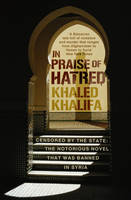
Many passages of the novel describe the narrator's state of mind, rather than events - her thoughts, perceptions, and visions. This makes for more challenging reading than a more action led plot. In the first part she often transits seamlessly between describing actual scenes and describing what are obviously mystic visions, so that I found it hard to follow the context of some of these visions. I also found it difficult to understand just why, initially, she felt that hatred was necessary, and that the only way to prevail against the "other sect" was to kill all their sons. Later, as violence becomes entrenched in the everyday life of Aleppo, there appears to be no going back for either side, and the path that she is on leads inevitably to disaster.
There is a wide range of viewpoints expressed, however, in the other characters in the story, some of whom believe still in the tolerance that Syria was historically renowned for, while others pursue pleasure more than religion. Besides the three aunts, there are parents, uncles, younger brothers, and others brought into the family by marriage. The narrator herself appears conflicted between the demands of religion and the demands of her body - despite her efforts to renounce her body, the novel is full of many passages of erotic sensuality.
The narrator, in the end, finds it hard to sustain the hatred that has fuelled her actions, after some years in prison:
"How hard it is to spend all your time believing what others want you to believe; they choose a name for you which you then have to love and defend, just as they choose the God you will worship, killing whoever opposes their version of His beauty, the people you call 'infidels'. Then a hail of bullets is released, which makes death into fact."
Khaled Khalifa was born in 1964 near Aleppo, Syria. The novel was first published secretly in Damascus, but was discovered by the regime after forty days, and was banned. It was published in Lebanon in 2008, and shortlisted for the International Prize for Arabic Fiction. It was translated by Leri Price and published by Transworld Publishers, a division of Random House, in 2012.
Subscribe to:
Posts (Atom)