Pages

Monday, October 30, 2017

Papua New Guinea: Tabu, by Moses Maladina

A search of our library's online catalogue revealed several novels set in Papua New Guinea - but as one was written by a New Zealander, and one by an Australian, that left me with Moses Maladina's Tabu. Moses Maladina is (or was in 2003) a senior government minister in Papua New Guinea, with a background in agriculture, law and business. He served as Papua New Guinea's High Commissioner to New Zealand from 1998 - 2002.

Like my choice for Benin, the book deals with the exploitation of the resources of third world countries, and with an inter-racial love affair. However, I found this one a lot easier to read. It is set both in 1933 and in 1997, and alternates between the two to tell the story of Elizabeth Castleton, the young wife of an Australian newly arrived in Port Moresby to work in the Australian administration there, and of her lover, the Papuan Sitiveni (Stephen). At that time such relationships were forbidden, and the White Women's Protection Act rendered any native who had relationships with a white woman liable to harsh punishment. Elizabeth falls pregnant, and leaves for Australia and thence England where she makes a career for herself and brings up her daughter alone.

In 1997 after Elizabeth's death, her grandson Edward travels to Port Moresby both to find out the truth about his grandfather, and to investigate a business deal - which turns out to be a rather shady deal involving mercenaries and the recapture of a gold mine on the island of Bougainville from rebel forces. This story is apparently based on real events.

In "As She Was Discovering Tigony", my choice for Benin, the Frenchwoman Dorcas rushed so precipitately into an affair with an African man that it made no sense to me (the actual relationship later on appeared to be sound, but I couldn't see how it started, especially since she was an older, professional woman). In this book on the other hand, the story arc in which the lonely young woman with little to do falls for the native policeman who has been tasked with showing her around the island proceeds on a much more understandable basis. Although sometimes I felt like shaking Elizabeth for her incredible naivety and selfishness in exposing Sitiveni to the huge risk of discovery.

In 1997 although the country is independent, and the harsher laws no longer exist, many of the locals are still impoverished, and the country appears to still be run for the benefit of wealthier nations and their exploitation of its rich resources of gold, oil and fish. I did feel that the book was written more to raise these issues than to tell a good story - but it was well done and the storyline was quite strong despite the issues being clearly expressed.

Tabu was published by Steele Roberts Limited (Wellington, New Zealand) in 2003.

Wednesday, October 25, 2017

Azerbaijan: Solar Plexus, by Rustam Ibragimbekov

I waited quite a while for this book. While I found Kurban Said's Ali and Nino in our library catalogue, I felt that it had been published too long ago to represent modern Azerbaijan. It was published in 1937 at a time when Azerbaijan was part of Soviet Russia.

Some searching on the internet eventually turned up a reference to Rustam Ibragimbekov's novel, which turned out to be somewhat expensive, however I was able to get our library to buy it and eventually it arrived.

This book is subtitled "A Baku Saga in Four Parts". It tells the story of a group of friends who grow up in houses built around the same courtyard in a street in Baku, following them through some turbulent times in Azerbaijani history, culminating in the early days of independence in the 1990s. Each of the four sections focuses on a different member of the group. Throughout, we see them balancing self interest with their friendships, as they take various actions including betrayals to get ahead and just to survive. Baku is an ancient city and the book speaks of its culture, but also of how it is changing and becoming rough and lawless. There are glimpses of the economy which is built on oil.

The second section was the most difficult for me. This section focuses on Marat, who has stayed in his courtyard apartment when all the other inhabitants have left. Because of nearby quarrying, it is doomed to be pulled down. There are passages in italics which at first I thought were dreams, then perhaps flashbacks, and eventually I wondered if they were a mix of both.

It wasn't until the third and the fourth sections that I gradually began to understand how all the events described related to each other, and all the loose plot ends began to be tied together. By the end of the book, I felt I had enjoyed it, and been somewhat enlightened about contemporary Azerbaijan, even though I had been slightly tempted in the second section to give up (but didn't, owing to the lack of alternatives).

Rustam Ibragimbekov was born in Baku in 1939. He is an internationally award-winning screenwriter, dramatist and producer. In 1994 his film Burnt by the Sun was awarded the Grand Prix at Cannes and an Academy Award for Best Foreign Film. (The narrator of the fourth section, Seidzade, is a writer of novels and screen plays, and I wondered if he was a somewhat autobiographical figure).

Solar Plexus was translated from Russian by Andrew Bromfield and published in 2014 by Glagoslav Publications.

Saturday, October 07, 2017

Bhutan: The Circle of Karma, by Kunzang Choden

I'm always wary when there seems to be only one book available from any country. The quality can vary. And this one sounded not quite my cup of tea - talk of "karma" and other spiritual concepts somewhat taken over by the Western new-agers tended to put me off.

My misgivings however were, to my pleasure, proved wrong. The book is the first novel written in English by a Bhutanese writer. And yet it read well, the English being of a higher standard than that in many of the translations I have read, where the translator should know their native language. The narration is simple and straightforward, telling the story of the life of a Bhutanese woman, Tsomo. When her mother dies in childbirth, her life changes. The book follows through all the twists and turns in her life, as she marries, loses her first husband to her sister, and later marries again. But all along she has desired to study religion and eventually she becomes a nun. This is a society where religion is the only type of learning. Her father has tutored young boys in his home, but as a girl, this was denied to Tsomo.

We see both the benefits and drawbacks of the simple life - the superstition and the useless rituals. For instance, the only treatment for a difficult childbirth is too feed the spirits and ask them to go away.

The book is a fascinating insight into the culture of this tucked away Himalayan kingdom, and also shows the changes than gradual modernisation brings to Tsomo's life - the building of roads, the coming of Western medicine.

While it would be good to have more books available from this nation, if I had had to choose from several, I would have been happy to have chosen this one.

Friday, September 22, 2017

France: Submission, by Michel Houellebecq

Since we have an election going on here in New Zealand, this seemed a very appropriate book to read right now. It's set in 2002. The protagonist is a middle-aged lecturer at the Sorbonne, an expert on nineteenth century author J-K Huysmans. (I had never hear of Huysmans, and had to google to check that he is actually a real figure.) François is bored and lacks any sense of meaning in life. In the meanwhile, an election is taking place in France. In the first round of voting, Marine Le Pen's far right are ahead in the vote with the new Islamic Brotherhood just edging the socialists out of second place. So for the second round, the socialists throw in their lot with the Islamic party, which sweeps into power and introduces far reaching reforms.

All children are to have the opportunity of an Islamic education. Education is privatised. Henceforth the Islamic schools and universities are by far better funded than the Christian and Jewish institutions, as money pours in from Qatar and Saudi Arabia. Francois's university becomes an Islamic one, and he is offered promotion, on condition that he converts to Islam.

The book is described as a satire, but it's not what I have thought of as satire in the past i.e it's not laugh-aloud funny. But it is thought-provoking, especially regarding the essential meaningless of life in modern Europe. Will François be happier once he has converted to Islam (and acquired a beautiful young submissive wife, with the promise of more to come?) I strongly suspect not.

submission is translated from the French by Lorin Stein and published by Farrar, Strauss and Giroux (New York, 2015)

Now, I'm off to return the book to the library - and to vote - although not for an Islamic party (an option which is not on offer, even if I wanted it!)

Friday, September 08, 2017

Uganda: Kintu, by Jennifer Nansubuga Makumbi

This book slowed me down a little, as it's over four hundred pages long. It is in six sections, the first section telling of Kintu Kidda, who in 1750 sets out for the capital of the Buganda Kingdom to pledge allegiance to the new leader. His actions along the way result in a curse being placed upon him and on his clan. The next five sections tell the stories of various modern day descendants, and show how the curse plays out in their lives, and how they seek to overcome it.

Unlike many African novels published in the West, there is very little evidence of the West in this book. The characters do not emigrate to the West, or dream of emigrating. Neither are we treated to much exposition of either the benefits or evils of colonialism. Apparently the author, who now lives in Manchester, was rejected by publishing house after publishing house in England. They all supposedly thought the book "too difficult" for Western readers. This puzzled me a little, as the book to me did not seem difficult at all. Perhaps they really wanted to say "not Eurocentric enough" but felt they couldn't say that so said "too difficult" instead. At any rate, it was first published in Kenya in 2014 and was much acclaimed. This edition was published by Transit Books in the United States in 2017.

I found the book very readable and fascinating in its insights into the lives of the people of Uganda. However, somehow I did not feel emotionally involved with the characters and ended up feeling as if I was viewing them from something of a difference rather than being totally drawn in. Nevertheless, I was happy with my choice of book for this country, which does not seem to have the volume of literature that has come from, say, Nigeria where the choices are almost endless.

Monday, August 28, 2017

Brunei: Written in Black, by K H Lim

It seemed as if the choices for Brunei were limited to one of two books: Four Kings, by Christopher Sun, or The Forlorn Adventure, a sci fi novel by Amir Falique. Four Kings is a murder mystery set in France - besides the fact that I have not seen a good review of it, neither novel seemed likely to enlighten me much about life in Brunei.

Then I stumbled on a reference to K H Lim's Written in Black, which seemed much more like what I was looking for. The narrator of this novel is ten year old Jonathan Lee, who is attending the funeral of his "Ah Kong" (grandfather). Jonathan's mother had left for Australia six months previously. His elder brother Michael has been kicked out of the house and has joined a rock band. Jonathan is missing his mother and when he finds out from his cousin Kevin, that she has been in touch with Michael by telephone, he escapes the funeral (a traditional Chinese funeral lasting several days) in an empty coffin in the back of a truck. His quest to find his brother and thus contact his mother leads him to encounter poklans (teenage delinquents), derelict houses full of bats and weird shopkeepers.

It's a fairly unsophisticated story and the idea that a ten year old is narrating is not quite convincing - the voice of the narrator is a little too self aware - more like an adult narrating a ten year old's experiences. Nevertheless, it is an enjoyable story. I was surprised to find that Jonathan's family all had western names, and there was plenty of mention of Western culture - a mother in Australia, New Zealand gardening programmes on the television. This would not have suprised me had it been, for instance, Singapore, but I knew little of Brunei other than that it is an oil-rich country ruled by a Sultan, so I was expecting something a little different. Still, other aspects of the story were definitely not western.

K H Lim was born and raised in Brunei. He graduated from medical school in the UK in 2008 and currently lives in Singapore. Written in Black was published by Monsoon Books in 2014.

Friday, August 25, 2017

Malaysia: The Garden of Evening Mists, by Tan Twan Eng

Teoh Yun Ling is a judge in Kuala Lumpur, taking early retirement to return to Yugiri, the Garden of Evening Mists. She had worked there, in the Cameron Highlands of what was then Malaya, as an apprentice to the Japanese gardener Nakamura Aritomo, at the time of the communist insurgency of the 1950s. She had asked the gardener to design a garden in memory of her sister. Instead he suggested that she work with him and learn to do it herself.

As the novel progresses, we travel back and forth in time between the present, the 1950s and the years of the Second World War, when Yun Ling and her sister Yun Hock were imprisoned by the Japanese somewhere in the Malayan jungle. It is a complex, many layered story in which the characters are not exactly what they seem on first sight. Why was the Japanese gardener, formerly gardener to the Emperor, in Malaya in the first place? What had happened to Yun Ling in the war?

This is an engrossing story and one that told me quite a lot that I didn't know about the modern history of Malaya - for instance, I didn't know that it had survived and defeated a communist insurgency in the 1950s. The book is infused with the love of art - not only Japanese gardens, but woodblock prints, the art of the tattoo, and music.

Tan Twan Eng was born in Penang, Malaysia. His debut novel "The Gift of Rain" was long-listed for the Man Booker Prize in 2007. "The Garden of Evening Mists" was published by Myrmidon Books in 2012.

Saturday, August 12, 2017

Macedonia: A Spare Life, by Lidija Dimkovska

I am gradually, through literature, becoming familiar with all the small nations that make up the former Yugoslavia. Macedonia is one of them - a country I would have previously thought of as more Greek than Slavic, given my main reference at that time was Alexander the Great ("Alexander of Macedon"). A Spare Life was originally published in 2012 and was awarded the 2013 European Prize for Literature. It is narrated by Zlata, one of a pair of conjoined twins. She and her sister Srebra are conjoined at their heads. Despite that, and despite being brought up in poverty, they live a remarkably normal, if somewhat constrained life. The story starts when they are twelve, and follows them through school, high school, university and adulthood. The twins have very different personalities and preferences. In high school, Zlata's choices prevail and they study languages and literature. Srebra believes this to be selfish and at university she insists they study law, which is more useful to society.

The author uses the lives of the twins as a metaphor for the conjoined nature of Yugoslavia. They have always dreamed of being separate. When a crisis strikes, the twins fly to London, after managing to secure financial assistance from a government organisation, determined to pursue a risky operation to separate them.

The book is quite a lengthy one. Just occasionally, I felt that the detail made it drag a little, but overall, it is the richness of the detail that is the making of the book. It encompasses the recent history of Yugoslavia, the transition from Communism to democracy, the nature of families, of sisterhood, of religion and cultures. I thoroughly enjoyed this book.

Lidija Dimkovska is also a poet and her collection pH Neutral History (Copper Canyon Press, 2012) was a finalist for the Best Translated Book Award. A Spare Life is translated from Macedonian by Christina E Kramer and published by Two Lines Press.

Benin: As She Was Discovering Tigony, by Olympe Bhêly-Quenum

I was rather disappointed by this book. In my searches for an author from Benin, Bhêly-Quenum's name was the one that consistently came up. I was able to read an early short story of his, "A Child in the Bush of Ghosts" in an anthology of supernatural stories, "The Weird" in our local library. It seemed promising, but as I wanted more than a short story, I ordered his novel, recently released in English translation.

It turned out to be very different to the short story. From the first chapters, it was weighed down in turgid writing, full of jargon and not seeming to make much sense. Since it is concerned with the rise of neo-colonialism, and capitalist exploitation of a newly independent Africa, it would make sense for certain of the characters - the politicians and exploiters - to use some degree of "political speak". But it seemed as if the whole novel was drenched in such language, even in the mouths of characters for whom it made little sense. This made the novel very difficult to read, although in the final few chapters, where the tension between the characters is increasing and plot lines come to a head, it seemed to improve somewhat.

The novel concerns Dorcas Keurleonan-Moricet, a white geophysicist from France, posted on assignment in Africa. Her husband also works there in international development. However their marriage is disintegrating, and Dorcas meets and falls in love with a young African man. At the same time, she has discovered mineral deposits of great value. The novel raises issues of the exploitation of Africa's gold, oil and other resources by Western nations, and of the corruption of African politics.

There are questions of value raised in the novel, but I wish it had been heavily edited and made a good deal easier to read. I felt as if the didactic purpose of the book had somewhat taken over from the literary value of the story.

Olympe Bhêly-Quenum was born in 1928 in Dahomey (now Benin). His mother was a priestess of Beninois vodun. At the age of twenty he travelled to France and was educated there, where his first novel was published in 1960, and translated into English as "Snares Without End" in 1966. He has since worked in diplomacy and journalism with a strong interest in African affairs.

This novel supposedly "caps the career of one of Africa's major authors" (foreword). I suspect that I would have preferred one of his earlier works where the language may perhaps have been more straightforward, more like his short story.

As She Was Discovering Tigony was translated by Tomi Adeaga and published by Michigan State University Press in 1917.

Monday, August 07, 2017

Bahamas: If I Had the Wings, by Helen Klonaris

I couldn't find either of the books that Ann Morgan suggested for the Bahamas - both appeared to be out of print. So I was relieved to hear of a new book coming out, Helen Klonaris's debut collection of short stories.

Helen is a Greek-Bahamian writer (apparently there is a small Greek community there) who lives between the Bay Area, California and Nassau, Bahamas. The stories are mostly coming-of-age stories with LGBT protagonists. It's not a genre that I would normally read. Fortunately I found there was more to them than that. There is a sinister edge to most of these stories, supernatural even although not in a traditional ghost story manner. There is also a strong ecological theme, highlighting the tension between developers building condos for the wealthy, and the local people who are sensitive to the habitats of fish and wildlife and to the traditional uses of plants.

For the most part, I enjoyed the stories and was struck by the author's descriptive powers and vivid imagination. I found the sustained use of "you" in several of the stories irritating after a while. These were stories narrated by "I" and addressed to "you" - not the reader, but the one who is the object of the narrator's love. I'm not sure why it irritated me - could it be because it made the stories feel voyeuristic. Just when I started to get a little tired of stories of love against obstacles - the vigorous homophobia of small religious communities - the final story, "The Dreamers" drew me in and blew me away. It's definitely the most powerful in the collection and left me with a lot to ponder on.

If I Had the Wings is published by Peepal Tree Press, a British publisher of Caribbean and Black British fiction.

Saturday, August 05, 2017

Argentina: The Days of the Deer, by Liliana Bodoc

I read this book in the first few months of my world reading project, before I started blogging about it. So last time I was at the library, I picked up a copy to refresh my memory.

Liliana Bodoc is probably not a name that will come high up in the results when searching online for Argentinean writers. This is a work of fantasy, the first volume in a trilogy and the only one to be translated into English, so far as I can tell. Misaianes, the son of Death, is crossing the sea with a mighty force to attack the Remote Realms. In the House of Stars, astronomers read the omens and debate whether the fleet that they see coming is benign or evil. Messages are sent out to the seven tribes to call representatives to a Great Council. It is a long and arduous journey particularly for the representatives of the Husihuilkes, who live in the forests in the far south of the continent, in an area called the Ends of the Earth.

There are no maps in this book, but I could not help picturing the territories as having the shape of South America, and there is a distinctly South American flavour to the story. Though seven tribes are called to the council, the book focuses on Dulkancellin of the Husihuilkes, and on Cucub the Zitzahay messenger sent to summon their representatives. Cucub falls in love with Dulkancellin's daughter Kuy-Kuyen, while her brother Thungur grows to be a warrior.

I'm not a huge fantasy fan but I enjoy a mix of writing so the occasional fantasy book adds variety, and the South American flavour of this one certainly increased my interest. It's a pity that the next two books in the series don't appear to have been translated as I'm curious to know what follows.

Liliana Bodoc was born in Santa Fe, Argentina and studied at the National University of Cuyo. The Days of the Deer was translated by Nick Caistor and Lucia Caistor Arendar.

Friday, July 28, 2017

Armenia: Goodbye Bird, by Aram Pachyan

It took me quite a while to find a suitable book from Armenia. At first it seemed as if there were quite a few books around by Armenian authors, most set in the early years of the twentieth century at the time of the Armenian genocide. In the end, they all proved to be written by second and third generation Armenian Americans, based on the stories of their grandparents. Furthermore, it appears that the boundaries of Armenia have changed over time, and that the area where these books were set falls substantially within the borders of present day Turkey.

Eventually, I found that a modern Armenian writer, Gurgen Khanjyan, had a book translated into English, Yenok's eye. But it was somewhat expensive, and while I hesitated, it seemed to go out of print and become wildly more expensive. (Currently showing as $999 at Amazon - plus shipping to New Zealand).

So when I heard of a new release, "Goodbye Bird" by Aram Pachyan, I thought I had better buy it quickly, before it suffered the same fate. The book is described on the dust jacket as a best seller in Armenia. Either the Armenians have very sophisticated tastes, or their tastes at least are wildly different from those of readers in the west. I can't imagine a book of this type becoming a best seller here. I found it surreal, imagistic and confusin. The language swings wildly at times from first person to second person to third person and back again all in the course of a few sentences. It is often not at all clear whether the change of person is actually a switch in who is being referred to, or whether it is the same person being referred to from a different viewpoint.

The novel concerns a young man of twenty eight who has newly left his service in the army. He does not appear to have a job. He reflects on his experiences, his former girlfriend, and friends from his childhood and the army. The "Bird" of the title is apparently a cat, which he is carrying around in the early part of the book. There are many references to both Western and local literature and music. Fortunately the book was relatively short. I think I would have struggled to get through it had it been longer. And yet, once I did finish the book, I realised that even though I thought I had been totally confused while reading it, I had indeed built up a picture of the young man and his life. Perhaps it is like an impressionistic painting, where one needs to stand back to get the picture, instead of examining it too closely and seeing only random brush strokes.

Aram Pachyan was born in 1983 in Vanadzor, Armenia. He studied at the law department of Yerevan State University. Currently he works as a journalist and columnist for the Hraparak newspaper. Goodbye Bird was translated by Nairi Hakhverdi and published by Glagoslav Publications in 2017.

Wednesday, July 26, 2017

After the Rain

My blog started off as a general blog, but it got taken over for a while by my Tuesday Poem posts, and then by book reviews (more summaries than reviews) in my round the world reading project. I intend to keep up with the round the world reading, so if that is why you are here keep checking back. But I'd like to get back to more general posts.

We seem to have had our fair share of disasters in Christchurch. Earthquakes, bush fires, floods... What's next, I wonder? A plague of locusts?

These photos are the aftermath of heavy rain and flooding last week, we live on the hill that is seen in some of the photos so our house was not flooded, but the land at the bottom of the hill is very flat so for a while, all our road access was cut off. The photos don't really show the full extent of the flooding as even with a panoramic camera, it would have been impossible to get the full scene with various spurs of the hill in the way.


This last photo is one I lifted from the online version of our local newspaper, it is the river just around the corner from where we used to live

The last couple of days have been fine but apparently more rain is on the way, I'm not sure how much the ground can hold. Unfortunately with changes in land levels since the earthquakes, many parts of the city are more flood prone than before.

Saturday, July 22, 2017

Singapore: The River's Song, by Suchen Christine Lim

Earlier I read Kevin Kwan's book, "Crazy Rich Asians" as the Singapore contribution for my round the world reading project. Then I spotted Suchen Christine Lim's book at our library, and it looked interesting enough for me to want to read it also. It had quite a different feel to it - Kevin Kwan's rather like a very rich dessert (a bit overwhelming towards the end) and this one more like a fresh, flavoursome and healthy Asian stir fry.

Before Prime Minister Lee Kwan Yew's modernisation of Singapore, a large population of street hawkers, fishermen, boat builders etc lived along the crowded and winding banks of the Singapore River. They are there no longer. They were evicted and moved to high rise blocks of modern flats, while tower blocks of offices and hotels were built along the river, which was cleaned up and straightened, with many of the winding creeks that fed it concreted over.

This novel tells the story of Ping, the daughter of a pipa songstress, and Weng, the son of a carpenter and musician. Ping's mother's fortunes improve when she marries a wealthy businessman. Weng takes the part of the local people and acts as their voice in protests against the clearance of the riverside settlements. He is imprisoned for his part in the protests, while in the meantime Ping has left for America where she studies music.

After thirty years, Ping returns to Singapore, meets Weng again and reveals the secret that has kept them apart for thirty years.

The narrative is skilful, and kept me absorbed throughout. I felt I had learned a lot about the development of Singapore, but never in a way that prioritised teaching over story-telling.

Saturday, July 08, 2017

Botswana: The Collector of Treasures, by Bessie Head

This is an older book than many I have read so far, initially published in 1977. Bessie Head was born in South Africa in 1937, the daughter of a rich white woman and an African servant, at a time when interracial relationships were illegal in South Africa. She did not move to Botswana until early adulthood, but is widely regarded as a Botswanan author. At the time she moved there in 1953, it was still the Bechuanaland protectorate.

The stories in The Collector of Treasures depict the county in its early days of independence, and show the tensions that arose out of the conflict between traditional values, the legacy of colonialism, the teachings of Christianity and the move towards modernity. They are simple tales of village life, written from a perspective that seems that of a person who is somewhat of an outsider. There is a deep sympathy displayed for the status of women, who are not treated well by men in these stories. In many cases, the men might promise marriage to a girl, get her pregnant, and then abandon her - or marry her, but take other wives and girlfriends on the side. Sometimes the women in these stories take to violence to protect themselves, and this is treated in a very matter-of-fact way and appears to be taken as natural.

While the tales are simple, the writing is skilful and there are some beautiful descriptive passages, for example

For those who were awake, it took the earth hours to adjust to daylight. The cool and damp of the night slowly arose in shimmering waves like water and even the forms of the people who bestirred themselves at this unearthly hour were distorted in the haze; they appeared to be dancers in slow motion, with fluid, watery forms.

The Collector of Treasures was published by Heinemann in their African Writers Series.

Friday, June 30, 2017

Meixco: Two Short Novels by Yuri Herrera

This volume published by Text Publishing in Australia combined two novellas - "The Transmigration of Bodies" and "Signs Preceding the End of the World". Both are set in the dark and seedy underworld of contemporary Mexico, in the borderlands in the north. It's not the sort of setting that normally appeals to me, but despite the gritty setting, there is also a poetical lyricism about these two stories that make them fascinating.(Apparently the third in the trilogy, Kingdom Cons, has recently been published.)

In "The Transmigration of Bodies", the city is gripped in a plague. The protagonist, known as The Redeemer, has been called on by two feuding crime families to act as a go between. In "Signs Preceding the End of the World" a young girl, Makina, enlists the help of various underworld characters to get her across the border to the north in search of her brother. She is to take a message from her mother, and ask him to come back. The ending of the story is somewhat enigmatic, and apparently a parable of death.

Despite the gritty undertone of the story, again, there is a lyrical poeticism, and touches of humour. One of the villagers who had returned from the north brought back cellphones and told Makina she would soon be out of a job. He gives one to his mother and tries to call her. The phone is silent. Maybe you should have brought back a few cell towers too, says Makina, who is clearly smarter and better educated than most of the villagers.

The most interesting part of the book to me was the translator's note at the end. (The translator is Lisa Dillman). Yuri Herrera coins new language in his novels, and the problem was how to translate this into English to give the flavour of the original, and how to translate the Spanish slang so that the Mexican crime bosses did not sound like New York mafia bosses (but did sound like they had their own vernacular). I think the translator has done a spectacularly successful job, and I was fascinated with her thought processes around achieving this.

Wednesday, June 14, 2017

Turkey: Three Daughters of Eve, by Elif Shafak

So far, I have found several of my choices from the Middle East rather difficult - those from Iran, Syria and Lebanon. All were books which appeared to be written for readers in their country of origin. My choice for Turkey felt much more as if it had been written for Western readers, and it has a partly Western setting.

Peri is on her way to join her husband at a dinner party in Istanbul when, while she is stuck in traffic, her handbag is stolen from the back of her car. She unwisely gives chase to the thief, and a photograph falls out of her handbag, reviving her memories of her time as a student at Oxford University, events she had tried to forget. The novel shifts back and forth between the present day, her time at Oxford, and her childhood in Istanbul. The Turkey depicted is one of conflicts - one where the founder of modern Turkey, Kemal Ataturk, had tried to set up a modern secular society, but where now, extremists of various types are increasingly influential - Islamists, Marxists and so on. Peri's own family reflects these conflicts - her secular father, her religious mother and elder brother, her left wing but somewhat naive younger brother, who has spent time in prison for illegal gun possession. Peri herself is confused and uncertain in her beliefs, and this led to devastating events while she was at Oxford.

The author comments in the acknowledgments section "My Motherland, Turkey, is a river country, neither solid nor settled. During the course of writing this novel, that river changed so many times, flowing with a dizzying speed." I felt towards the end somewhat as if she was using this novel to deliver a sociological treatise on modern Turkey and on religious conflict, and that the plot sometimes suffered a little in favour of the message. There were times when events did not seem to flow naturally, for instance, Peri takes a rather drastic step towards the end of the book but the author's characterisation of her up to that point did not fully seem to lead to that step. There seemed to be a rush towards the end to fill in the back story of a central figure, Professor Azur - far more telling than showing at this point.And I would have liked to know more about her husband Adnan, a shadow figure who had supposedly "picked up the pieces" and was her "confidant, her best friend" but there is nothing in the book to back that up.

Still, there is much to enjoy here, and even if I felt lectured to at times, I found the depiction of Istanbul and of Turkish politics interesting.

Elif Shafak has been described as Turkey's most popular female novelist. She was born in Strasbourg, France and has lived in many countries around the world, including Turkey. She writes in both Turkish and English and is an award winning novelist and political scientist. She currently lives in London.

Friday, June 09, 2017

Bosnia and Herzegovina: Before the Feast, by Saša Stanišić

When Ann Morgan read a book from every country in the world in 2012, her choice for Bosnia and Herzegovina was Saša Stanišić's "How the Solider Repairs the Gramophone". So when I saw his second novel, "Before the Feast" on the shelf at the library, it seemed like a good choice, especially as the blurb on the back was quite appealing.

I quickly realised though, that the book is not set in Bosnia, and does not include Bosnian characters, apart from one short passage:
Golow had a Bosnian and a Serb working for him, and he had no idea exactly what the difference was. then he found out that they didn't really know either. They both hated the war. They argued only once about the question of guilt, because there's always a one-off argument about questions of guilt, but they settled the question peacefully and then decided to watch only the German news from then on,because on that channel everyone was to blame except the Germans - they coudn;t afford to be guilty of anything for the next thousand years, and the two Yugos could both live with that.

The author was born in Bosnia in 1978 but left during the war, at the age of 14, and currently lives in Germany.

The novel takes place in the East German village of Fürstenfelde. The author thanks the villagers of Fürstenberg, Fürstenfelde, Fürstenwalde, Fürstenwerder and Prenzlau for their information and hospitality, but the only one of these I could locate on a map was Prenzlau - nevertheless it does appear as if these may be real geographical locations. The inhabitants, however, are surely fictional. The action takes place on one night, on the day before the Anna feast. Though to say it takes place on that night is a simplification, given the wide ranging digressions which cover much of the history of the village. The characters are wonderfully idiosyncratic and include the local bell-ringer and his apprentice, two thieves, a dead ferryman, a retired lieutenant-colonel, the local artist, and a young girl called Anna, namesake of the Anna for whom the feast is named.

Then there are various animal characters - mice, chickens, and a vixen roaming the woods in the night.

The style is distinctive, or perhaps I should say "styles" as it changes from section to section. Parts are narrated by an unknown villager who uses the pronoun "we". Other passages sound as if they are quoted from historical documents, some parts use a straight forward third person narrative, in the present tense, other parts sound almost poetic, and there is even a passage of hand written script with numerous erasures and corrections.

I found it a highly entertaining book, from a promising young writer. Just not very Bosnian. (Although somehow, in style and outlook, it did not seem very German either).

Wednesday, June 07, 2017

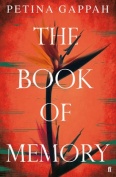
Zimbabwe: The Book of Memory, by Petina Gappah

Even though I'm reading more by current availability than by alphabetical order, I had intended to start filling in some of the gaps in the A's, B's and C's. But I had heard a lot about Petina Gappah, and then one of her books was available on the day I went to the library, so I picked it up. It certainly lived up to the hype.

Memory is an albino woman who has been convicted of the murder of a white man, and is locked up in Harare's Chikurubi Prison on death row. In preparation for her appeal, her lawyer has asked her to write down her story as she remember's it. What emerges is a fascinating account which takes Memory from her African family in one of the poorer parts of town, to live with a well-off white man from the age of nine years old. Thus she is able to get a good education and travel overseas to study, before returning to reconcile with her foster father Lloyd. So how did she come to be convicted of his murder? And is her memory of her past accurate?

The fact that the book encompasses a range of Zimbabweans both African and European in origin, of various economic classes, and covers several decades in which the political situation of the country was fast deteriorating, makes it a fascinating picture of the country - and very moving.

Petina Gappah has law degrees from Cambridge (England), Graz University (Switzerland) and the University of Zimbabwe. Her law background shows through in this book which appears to be well researched, although she comments in the afterword that she did not take up an opportunity to visit Chikurubi Prison as she would have had to sign the Official Secrets Act, and would not then have been able to write about it. So the book relies on her research of second hand accounts. Nevertheless, it is very vivid, and I look forward to reading more of her work.

Thursday, June 01, 2017

Andorra: The Mysterious Balloon Man, by Albert Salvado

Andorra is a tiny country between France and Spain with a population of some 70,000 people. So it was no surprise to find that there seems to be only one fiction writer from the country with works available in translation. Fortunately Albert Salvado is a highly prolific writer. I tried to find a book actually set in Andorra but had no luck, so I chose his most recent book, The Mysterious Balloon Man, which turns out to be the first in a series with the overarching title, "The Shadow of Ali Bey".

It is a spy story, but also a historical novel, set around the turn of the eighteenth century, and taking place mostly in Spain. Alfred Gordon, a civil servant employed by the British secret service, realises that the nobility, the traditional spies, are not doing a good job. He recruits Tom Headking, a young middle class Englishman living in Spain, where he is on the run after killing Lord Brookshield's son in a duel. What follows could be described as a "rollicking tale" in which women feature mainly as the object of lust for the male characters. It is enjoyable enough, if you can overlook the sometimes laughable characterisation of the women.

Headking discovers a treatise on hot air balloons written by Polindo Remigio. This turns out to be the pseudonym of a Catalan, Domingo Badia, who was to become a spy with the name Ali Bey, who is apparently an actual historical figure. It appears that he will figure more prominently in subsequent books in the series. However, I don't think I was captivated enough to seek them out.

The book was translated by Marc Brian Druckett but there is no publisher named on my copy, leading me to believe that it may have been self published. The translation is of reasonable quality, but the section at the end on "other books by the author" has been very poorly translated.

Still, given the lack of choice for this country, what I ended up with could have been a whole lot worse.