Pages

Saturday, February 25, 2017

Cameroon: Venus of Khala-Kanti, by Angèle Kingué

When I started looking on the internet for books for this project, the go-to author for Cameroon seemed to be Mongo Beti. However, his best known books were written in the 1950s. I wanted to find out if there was anything more recent out there. Then Imbolo Mbue burst on the literary scene with the publication of Behold the Dreamers - which I definitely plan on reading. However, although she is a young Cameroonian author, she lives in the United States, and I feel from the publicity that her book should really be counted as an American book, even though it centres on the immigrant experience.

So I kept looking, and eventually stumbles on Angèle Kingué's Venus of Khala-Kanti. It relates the lives of three women in an imaginary West African village. Although big promises of development are made by government officials, it is these three women who do the most to improve the economic lot of the village, using their ground up methods. Assumta, who has returned from the capital where she may have worked as a prostitute, sets up a small restaurant serving the needs of the drivers of the trucks sent to build new roads, and a small shop for the village. She takes in Bella and Clarisse, who have also faced hardship in their previous lives, and together they develop the Good Hope Center, which fuels the restoration and growth of the village's inhabitants.

The story is uplifting but not unrealistic. Although the women's endeavours greatly improve their lives, and those of others around them, there are also hardships and setbacks. And unlike Ishmael Beah's Radiance of Tomorrow, I felt that the story did not unnecessarily demonize the forces of progress, nor glorify tradition, offering a somewhat more balanced view.

The fact that I had to hunt rather hard to locate this book bears out that it is probably not destined to become great literature - but it is a well told tale, in its own way, and an enjoyable read.

Venus of Khala-Kanti was translated from French by Christine Schwartz Hartley and published by Bucknell University Press.

I have added a page to the blog with a list of countries, along with the books I have read for this project, and links to the reviews that I have written. I have also included the books that I read early in my world reading project, before I started posting reviews here. Possibly I will review these later, in the meantime I thought the titles might be of interest to others pursuing the same challenge.

Saturday, February 18, 2017

Lithuania: Breathing Into Marble, by Laura Sintija Cerniauskaite

Translations into English from Lithuania seemed rather thin on the ground, so I was delighted to read of the release in 2016 of this novel, which won the 2009 EU Prize for literature.

Isabel lives in a country cottage with her husband Liudas and frail son Gailius. When she decides to adopt a troubled young orphan, Ilya, she has no idea of the chain of dark events that will follow. I immersed myself in the beauty of this story - the prose is poetic and although the tale is tragic, it also ultimately seems redemptive, enabling Isabel to come to terms with her childhood and with the consequences of Ilya's adoption.

The translation on the whole was excellent - the English read smoothly and naturally. And yet, every so often, an odd, ungrammatical phrase cropped up which was not a typo that would have occurred if it had been originally written in English. These were infrequent enough that I can't locate one on a quick look through to quote, however, careful editing would have picked them up - they were all of a kind that could be easily corrected and did not really detract too much from the reading of the book.

Breathing Into Marble was translated from Lithuanian by Marija Marcinkute and published by Noir Press.

Monday, February 13, 2017

The Netherlands: Ten White Geese, by Gerbrand Bakker

A Dutch woman calling herself Emilie has rented a farm cottage near a small village in Wales. She has fled Amsterdam after admitting an affair with a student at the university where she was a professor, working on a study of Emily Dickinson. Gradually and quietly, her story is revealed, along with that of her husband and of the young man who is invited to stay the night, and doesn't leave. Initially "Emilie's" husband accepts her departure, but then he discovers something which causes him to set out in search of her.

This novel is full of moments of haunting beauty. It is both tragic and strangely uplifting. I had earlier started on "June", another of Gerbrand Bakker's novels, but somehow found it too slow and couldn't get into it. This one, however, I found quite compelling, and the pace of the telling just right.

Ten White Geese was translated from the Dutch by David Colmer, and published by Penguin Books in 2013 (originally published in Dutch in 2010 and in English by Harvill Secker in 2012).

Sunday, February 12, 2017

Antigua: Unburnable, by Marie-Elena John

The go-to writer for Antigua seems to be Jamaica Kincaid, but as I had already read some of her work, I wanted to find another writer from this country if possible. Marie-Elena John seemed to fit the bill - she was born in Antigua, grew up there before moving to the United States, and now lives part of the year in Antigua (and the other part in the US).

However, when her one novel, Unburnable, arrived in the post, it turns out to be set in Dominica. Although the acknowledgments at the back of the book appear to suggest that the author has family connections there, it wasn't quite clear what they were, nor did a google search help me. I decided to count the book for Antigua, anyway, although with reservations.

These reservations are as described above, and nothing to do with the quality of the writing. This is a powerful book. It recounts the return to Dominica of Lillian Baptiste, twenty years after she fled at the age of fourteen to escape her family heritage. Now she must confront the past - her half-crazy mother Iris, and grandmother Matilda, who are the subjects of chante mas songs sung at Carnival. Teddy, a man who has loved Lillian for many years, returns with her. To find the truth, however, they must look past the obvious, and come to an understanding of the island's history, and the culture of the Carib people, and the maroons (descendants of escaped slaves).

The ending of the book is left somewhat open. The reader learns the truth, but does Lillian? And can Teddy save her? I found the book fascinating, and regretted that the author had not written any more novels after the publication of Unburnable in 2006 - her primary profession was an Africa development specialist.

Sunday, January 29, 2017

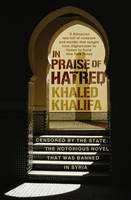
Syria: In Praise of Hatred, by Khaled Khalifa

This novel is set in the 1980s at the time of an uprising in Syria against Bashar al Assad's father, Hafez. The nameless teenage narrator lives in Aleppo with her three aunts Maryam, Marwa and Safaa. As hostilities escalate, she becomes increasingly involved with the Muslim brotherhood, an organisation of hard-line Sunni fundamentalists (referred to in the novel as "our sect") violently opposed to the ruling Alawite minority, and their brutal methods of imprisonment, torture and executions.

Many passages of the novel describe the narrator's state of mind, rather than events - her thoughts, perceptions, and visions. This makes for more challenging reading than a more action led plot. In the first part she often transits seamlessly between describing actual scenes and describing what are obviously mystic visions, so that I found it hard to follow the context of some of these visions. I also found it difficult to understand just why, initially, she felt that hatred was necessary, and that the only way to prevail against the "other sect" was to kill all their sons. Later, as violence becomes entrenched in the everyday life of Aleppo, there appears to be no going back for either side, and the path that she is on leads inevitably to disaster.

There is a wide range of viewpoints expressed, however, in the other characters in the story, some of whom believe still in the tolerance that Syria was historically renowned for, while others pursue pleasure more than religion. Besides the three aunts, there are parents, uncles, younger brothers, and others brought into the family by marriage. The narrator herself appears conflicted between the demands of religion and the demands of her body - despite her efforts to renounce her body, the novel is full of many passages of erotic sensuality.

The narrator, in the end, finds it hard to sustain the hatred that has fuelled her actions, after some years in prison:

"How hard it is to spend all your time believing what others want you to believe; they choose a name for you which you then have to love and defend, just as they choose the God you will worship, killing whoever opposes their version of His beauty, the people you call 'infidels'. Then a hail of bullets is released, which makes death into fact."

Khaled Khalifa was born in 1964 near Aleppo, Syria. The novel was first published secretly in Damascus, but was discovered by the regime after forty days, and was banned. It was published in Lebanon in 2008, and shortlisted for the International Prize for Arabic Fiction. It was translated by Leri Price and published by Transworld Publishers, a division of Random House, in 2012.

Friday, January 27, 2017

Singapore: Crazy Rich Asians, by Kevin Kwan


I read most of this on a wet Sunday, absorbed in the goings on of a group of super rich Straits Chinese (Chinese inhabitants of Singapore and Malaysia). This is not high literature. It verges on the women's magazine romance type of story. Rachel is a university professor in New York, with a Singaporean boyfriend Nicholas, also a university professor. He invites her to Singapore to attend his best friend's wedding and meet his family. What she doesn't know is how wealthy they are, and that they have very firm ideas on who Nicholas, the only male grandchild to bear the family surname, might marry.

I have no way of gauging the accuracy of the depiction of the lifestyle of the super rich in Singapore, but it seemed to ring true, and there was an entertaining range of characters. The author neatly sidesteps the fact that some picky readers might check out the possibility of his grandmother's mansion with huge park like grounds on google maps, by having it mysteriously not appear on google maps or on a car's GPS system. There is a good deal of eating in this book - apparently Singaporeans are passionate about food. (I could have done with reading it before a Singapore stopover some years back, to find out before we went where all the best street hawker food was to be found). There is also something of an obsession with designer fashion, and plenty of flash yachts and private jets. A good many footnotes, particularly in the first part of the book, explain Malay and Hokkien names for dishes, slang and abbreviations,and offer witty asides. I did find it better to skip some of the footnotes though, for smoother reading.

About three quarters of the way through, I began to feel rather glutted, as if I had eaten too much of one of the multi course banquets described in the book. And yet, somehow I find myself wanting to read the next in the series, to find out what happens next to Rachel, Nick, Nick's cousin Astrid and the rest of the cast - variously nice and awful.

Kevin Kwan was born and brought up in Singapore (apparently he attended the elite boys school where Nick met his best friend Colin Khoo), and now lives in Manhattan. That's all the background I can find on him on the internet - if some of this story is based on real lives, there would be reason for him to be discreet.

Wednesday, January 25, 2017

India: Sleeping on Jupiter, by Anuradha Roy


In the prologue of this beautifully written novel, a young girl's father is shot by armed men, her brother disappears and her mother abandons her, all in the space of a couple of days. There appears to be a war on, although exactly where and when is never made quite clear.

The book then cuts back and forth between various points of view, many years later. Three elderly widows travel by train for a holiday in Jarmuli, a temple town on the Bay of Bengal. On the train they encounter a young girl, Nomita, who seems Indian, but somehow not quite Indian. On arrival in Jarmuli, other lives cross paths - the three women, Latika, Gouri and Vidya - the temple guide, Badal who is in the throes of a forbidden love for a young boy - the seaside tea vendor, Johnny Toppo - and Suraj, who has been hired to assist Nomita in her research of locations for a documentary on spiritual tourism.

Nomita is the girl who lost her parents when she was seven years old. We learn how she was taken into an orphanage in Jarmuli, run by an internationally renowned guru - how she was sexually abused, later escaped the orphanage, and was adopted by an English woman, and taken to live in Norway. Now she is trying to uncover the secrets of her past.

The story could have been harrowing, but the beauty of the prose, lifts it to another level, making it heartbreaking but at the same time tender and even hopeful in the midst of ugliness. The writing is full of sensory detail, evoking the sights, sounds and smells of India.

There is an excellent review here.

Sunday, January 22, 2017

Indonesia: The Rainbow Troops, by Andrea Hirata

This book was apparently a runaway best-seller in Indonesia, selling five million copies (and fifteen million more pirated copies). It was also turned into a movie which became the highest ever grossing film in Indonesia. It is easy to see why, as many people would find the story inspirational.

The book was written as a tribute to an inspirational teacher - two teachers, in fact. Although described as a novel, the two teachers named in the dedication are the same names as the two teachers in the book. It appears that the book is quite closely based on the author's own story. It follows a group of ten children from their first day at school on the island of Belitong. Paradoxically, although it is Indonesia's richest island in terms of natural resources, the local people are very poor, the riches from the tin mined there being appropriated by a state owned company for the benefit of a few. These poverty stricken families could not access the company run school, and the nearest state school was too far away, so the school which is central to the story is a Muhammadiyah or religious school, run by teachers almost as poverty stricken as the pupils. There is no jihad taught here - the ethics class impressed on the children standards of behaviour which would be exemplary in any setting (although, as mischievous boys, they do not always live up to the standards taught).

And yet among the students is a young maths genius, and other students with extraordinary talents in different areas. I discovered a review which likened the story to "Slum Dog Millionaire" - but no one wins a million, and for some of the students, one wonders if they ended up any better off for their education. The author however, did manage to obtain a scholarship to attend university overseas, not as a writer but as an economist, and eventually wrote the book and went on to study at the University of Iowa's prestigious Creative Writing Institute.

As his first book, this is a fairly straight forward account, more populist than literary. I did feel that in some of the descriptive passages, the metaphors used felt a bit strained, as if the author was trying too hard to come up with an unusual description.

I mentioned in another post, that the Guatemalan author Rigoberta Menchu had attracted controversy by possibly inventing some of the details in her memoirs. One might think turning one's story into a novel would avoid this criticism. But in the end, either approach leaves me with the same problem - that of wondering just how much of the story is true. (And in a western society, a thinly disguised novelisation might well attract lawsuits if readily identified characters feel they have been libelled).

Nevertheless, despite these problems, the book is a thoroughly enjoyable read, if a little saddening regarding the fate of some of the author's classmates.

The Rainbow Troops (Laskar Pelangi)was translated from Indonesian by Angie Kilbane and published by Vintage Books Australia in 2013. (There may be other editions elsewhere).

Friday, January 20, 2017

Norway: Echoland, by Per Petterson


This slim book is told from the point of view of twelve year old Arvid, who has travelled from Norway with his family to stay with his maternal grandparents in Denmark for the summer. He is feeling awkward and confused. His slightly older friend, Mogens, is attracted to Arvid's older sister, Gry. There is tension, never fully explained, between his mother and his grandmother. This tension appears to be longstanding, relating to events before Arvid was born, when his mother returned from Norway urgently, alone and in trouble.

Arvid's complex feelings are depicted with tenderness and beauty, and the rest of the characters also seem to be well developed and realistic. The time period of the book is not explicitly stated, but it appears that Arvid may have been born around the late 1950s, which would date the book in the early seventies, although it was first published in Norway in 1989. Perhaps the author wrote of the time period when he himself was growing up.

Echoland is translated from Norwegian by Don Bartlett, and published by Harvill Secker (part of Penguin Random House) in 2016.

Tuesday, January 17, 2017

Guatemala: The Girl from Chimel, by Rigoberta Menchu

Something easy to follow the last two books, which were rather challenging. With my book-buying budget somewhat depleted, I turned to our local library and found two options for Guatemala: Severina, by Rodrigo Ray Rosa, or Rigoberta Menchu's The Girl from Chimel. Unfortunately the first was in Spanish, and my Spanish is pretty minimal at this point (although I do want to learn more). And "The Girl from Chimel" is a children's book, but I thought I would read it anyway - I can always read something else later.

Rigoberta Menchu is an indigenous Maya Indian, born into an impoverished Indian peasant family in 1952. She is a noted Maya activist and won the Nobel Peace Prize in 1992 for her work, despite being forced into exile several times during the vicious 36 year long war. "The Girl from Chimel" is an account of her village childhood, of stories told by her family, of harmony with nature, of a lost world that has been changed forever by conflict and brutal genocide.

As it's a children's book, these atrocities are only hinted at. For instance she says "since bees are sacred, their escape could lead to an evil curse. And that's just what happened. But I'm not going to talk about that now. Maybe later."

In another chapter, she says "..when the war began and the villagers had to hide out in the mountains, something magical and unbelievable happened. The river disappeared." She attributes this to the river being scared, and suggests "since a great act of wickedness made it escape, only a great act of kindness can make it come back."

The authors very name, Rigoberta, is a result of discounting the ways of the native people. Although given the name of her grandmother, Li Mi'n (which means "Sunday"), the clerk refused to register this name because it "doesn't exist". As she was born on St Rigoberta's Day, this is the name under which her birth was registered.

The book is illustrated by Domi and translated by David Unger. It was published by House of Anansi Press. I found it quite delightful and was left wanting to know more - perhaps I will seek out her memoir, "I, Rigoberta Menchu" for more of the story behind the disappearance of the river and other events. (I have just found that her account is quite controversial - will have to do more research into this).

Monday, January 16, 2017

Croatia: Leica Format, by Daša Drndić

This was the second challenging book in a row on my round the world reading tour. It took me quite a while to get into it, due to the collage style format. The book is introduced with three definitions of the word "fugue" - musical, psychological and architectural. This is followed by a brief account of a woman who believes herself to be one person, and obtains a job under that name, but turns out to be someone else. How this story relates to what follows is not entirely clear. The narrator of the book (most of it) is a woman living in a harbour town in Northern Croatia that is in decline - Fiume in Italian, Riveka in Croatian. It was once an important departure point for European emigration to the United States. Long descriptions of the life and landscapes of the town seem to require the sort of concentrated attention that one gives to poetry.

Gradually a picture is built up of the past of the woman, her family, the town. The book encompasses the horrors of the Holocaust, and of medical research on human guinea pigs, both by the Germans during World War II and other nations including the United States. It makes use of multiple fragments of text from various sources, such as poetry, medical textbooks, and other documents. Some of these have their sources acknowledged at the back, others do not and were perhaps constructed by the author.

I did, after the first fifty to hundred pages, get immersed in the book, more so than in the previous one ("Census" by Panos Ioannides). It was intriguing to see how all the fragments linked up, and to ponder whether or not Ludwig Jacob Fritz was or was not Uncle Luigi, among other puzzles. By the end of the book, I was still quite unclear on some components, and how they fitted in, for instance was Lea Moser/Tessa Koller who appears at the end of the book the same person as the narrator or not? And if not, where does she fit in the story? The atmosphere of the declining port town seemed to be evoked quite successfully, and the lingering effects of the break up of the former Yugoslavia cast a long shadow over the lives of the narrator and other people around her.

Leica Format was translated from Croatian by Celia Hawkesworth and published by Maclehose Press in 2015. It was first published in Croatia in 2003.

Sunday, January 15, 2017

Cyprus: Census, by Panos Ioannides

This proved to be a difficult book, fragmentary in style, with a good deal of metaphysical discussion between the characters overlaid on the narrative. Conversations did not have the speaker identified, so that sometimes I had to stop and work out just who was saying what. Nevertheless there is a powerful story underlying the text.

Joseph Akritas is a burned out war correspondent. His wife Maria is ill with cancer. Together they retreat to a small village in the mountains of Cyprus. On the way, that meet Michael, from the island of Patmos (the island where the Revelation of St John was written. Maria becomes pregnant to Michael. In the village a mysterious couple, Piotr and Hanna Archangielsk, are working on the restoration of medieval wall paintings in a local chapel, and Maria takes up the task of assisting them by writing down descriptions of what they find.

Eventually Maria gives birth, not to a child but to a mysterious life force. While she dies in the process, spiritual healing is released for those who are able to accept it.

While it is a challenging book to read, and I found much of the philosophy hard to follow, overall I felt it was worth the effort involved and may go back to re-read this one later.

"Census" received the Cyprus National Prize for Literature in 1973. Panos Ioannides was born in Famagusta, Cyprus in 1935 and lives in Nicosia. "Census" was translated by Despina Pirketti and published by Armida Publications Ltd.

Thursday, January 12, 2017

Cuba: Pig's Foot, by Carlos Acosta

This was a delightful find in our local library, a glorious, exuberant romp through more than a century of Cuban history, through the eyes of the narrator who finds himself alone in the world and makes a journey to the forgotten settlement of Pata de Puerco (pig's foot) to trace his roots, and the origins of the mysterious pigs foot amulet that has been passed down to him. But all is not quite as it seems. "My name is Oscar Mandinga" says the narrator. "Don't forget it". But is he really who he claims to be?

Whether or not he is Oscar Mandinga, and whether or not the town of Pata de Puerco exists, or whether it is an invention of his troubled brain, the lives of its inhabitants are always fascinating, and the way in which the author weaves in the strands of Cuban history contributes skilfully to the story (there are distortions, fully acknowledged in the author's notes, for instance works of a real life architect are attributed to one of the fictional characters in the story).

Carlos Acosta, interestingly, is a Cuban ballet dancer. Besides his one novel he has written a memoir, No Way Home. (This sounds intriguing - how a delinquent kid from Havana, dreaming of becoming a soccer player, became one of the world's best ballet dancers). Pig's Foot is published by Bloomsbury and translated from Spanish by Frank Wynne.

Monday, January 09, 2017

East Timor: Resistance, by Naldo Rei

It didn't seem as if I could find any fiction that originated from the relatively new nation of East Timor*. I did, however, manage to locate several memoirs in our local library: The Crossing, by Luis Cardoso, Kirsty Sword Gusmao's book A Woman of Independence, and lastly Naldo Rei's Resistance.

Kirsty Sword, who married the East Timorese leader Xanana Gusmao (she met him when he was in prison in Indonesia), is an Australian. And Luis Cardoso's book was already reviewed on line - plus, it seems that he spent quite a lot of time in Portugal - so I chose Naldo Rei. East Timor - the Eastern half of an island to the north of Australia - was a Portuguese territory for 450 years. When the Portuguese left in 1975, the Indonesians invaded the island, under the guise of "developing" it. Naldo Rei's family fled to the jungle, where he lived for the first three years of his life. When he was nine, his father was shot by the Indonesian army along with other village leaders. While still at school, he became active in the resistance movement, acting as a trusted courier. He was captured and tortured by the Indonesians on a number of occasions but managed to survive through to the country's independence in 2002.

The author became a journalist and his journalism training shows in the book which is often journalistic in style rather than literary - a fairly straight forward account. This does not mean it is not emotionally gripping. It becomes quite harrowing towards the end when he recounts the torture methods used by the Indonesians, and the destruction that occurred after the East Timorese voted for independence, before the Indonesians left the country. Earlier on, some parts were a little more hard to follow, and I found myself flipping to the back of the book quite often, where there is an appendix of acronyms and terms used by the Indonesian military and the local resistance movement. I also had a little trouble keeping track of who was who, among Naldo's many relations, and colleagues in the resistance movement.

However, overall it was a very well written account, and although I was vaguely aware of the recent history of East Timor, this book really brought home the challenging path the country followed to gain its independence, and the heroism of many of the local people.

*I did locate one novel "The Redundance of Courage" set on an island that is a fictionalized version of East Timor - however, the author, Timothy Mo, is a Hong Kong born British resident. So it didn't quite qualify, though it sounds well worth reading.

Sunday, January 08, 2017

China: UFO In Her Eyes, by Xiaolu Guo

The blurb on this book looked promising when I picked it up in the library. It is described as a "brilliantly structured and darkly humorous narrative" - which is true, in a way, although I didn't feel that the book quite lived up to the dazzling promise of the dust jacket.

In Silver Hill village, Kwok Yun, an unmarried woman in her thirties, is making her way across the fields when she spots a spinning plate in the sky and hears a loud noise. She faints, and when she comes to, she finds a strange Westerner lying on the ground in the shade of one of the village's "hundred arm trees". She assists the Westerner, who is injured, but he then disappears. When she makes her report to the village chief, the attention of the authorities is attracted to this hitherto neglected village. The subsequent investigation turns the villagers' lives upside down, attracting development to the village, in a way that is not always welcomed.

I enjoyed the book, which is structured in the form of intelligence reports from official files, including interviews with the villagers. I felt, though, that it was a "once over lightly" look at events. And I was a little dissatisfied with the UFO device. I was expecting the mysterious westerner to be an airman from a crashed spy craft but in fact he turned out to have nothing to do with the UFO, which is never explained. There's nothing wrong with a bit of mystery or fantasy in a story, but since everything else in this book is quite explainable, the mystery of the UFO felt quite out of place.

There is a timeline at the back of the book showing events as taking place between 2012 and 2015 - relevant, since the book was published in 2009. So it is set as taking place slightly in the future.

Xiaolu Guo was born in a fishing village in South China. She published six books in China before moving to London in 2002. UFO In Her Eyes was published by Chatto and Windus.

Saturday, January 07, 2017

Nicaragua: Infinity in the Palm of Her Hand, by Gioconda Belli

When I discovered Ann Morgan's project, in which she read a book from every country in the world in the space of a year, I had already embarked on my world reading project. I found her list both a help and a hindrance - a help in locating books for hard to find countries, and a hindrance because I kept feeling obliged to find "something else" as I didn't just want to make my way through someone else's reading list.

For Nicaragua, however, I thought I had found Gioconda Belli all on my own - and then found I had ordered the exact same book that Ann Morgan had chosen - a retelling of the Biblical Adam and Eve story, in which the author imagines them adapting to the difficulties of life outside Paradise, and mortality. It is a rich and satisfyingly imagined tale, which introduces us to Adam and Eve, their sons Cain and Abel, and daughters Lululwa and Aklia, each the twin to one of the brothers.

There is a full review on Ann's blog, which reflects my opinions fairly accurately. Like Ann, I found one or two incidents where Adam and Eve just happened to find what they needed lying around, a bit far fetched. Were we to believe that God had relented slightly on his punishment, and made it slightly easier for them at first? Also, I didn't quite understand the fate of Aklia. This may or may not reflect the apocryphal tale of Adam and Eve that the author was working from (a book that she found in her father-in-law's extensive library). I had not previously come across the two girls Lululwa and Aklia, but had come across mention of a third son, Seth (who is missing from this account). My final quibble was that I felt that Adam and Eve fell rather too neatly into traditional gender stereotypes at times, although Eve's personality was by no means passive. Despite these points, I found the book thoroughly absorbing. The descriptive passages no doubt reflect the fact that the author is an accomplished poet.

Gioconda Belli was born in 1948 in Managua, Nicaragua. Though educated by nuns and moving in society, in her twenties she joined the revolutionary Sandinistas and became a leader in the underground resistance. Her autobiography, "The Country Under My Skin", is also available in English, and is high on my "to read" list.

Infinity in the Palm of Her Hand (the title comes from a William Blake poem) is translated into English by Margaret Sayers Peden and published by Harper Collins. It won the 2008 Biblioteca Breve Prize and also the Sor Juana Ines de la Cruz Prize in the same year.

Thursday, January 05, 2017

Sri Lanka: The Story of a Brief Marriage, by Anuk Arudpragasam

This fairly slim novel is set in the last days of the civil war between the Sri Lankan government forces and the rebel forces known as the Tamil Tigers. It takes place in a refugee camp where fleeing civilians, pushed by the conflict further and further to the north east coast of the island, are trapped between the rebel and government forces. Having long since abandoned their meagre possessions, subject to nightly shelling, they are reduced to sleeping, eating what they can and trying to survive.

Dinesh, who helps in the clinic at times but mostly keeps to himself to avoid being conscripted by either side, is approached one day by a man who asks him to marry his daughter. He agrees, and the novel takes place over the space of around twenty four hours. It is intensely detail packed and poetic. The smallest gesture is beautifully described and Dinesh's thought processes closely explored. While set in an area of intense conflict, it is not so much a war story as a deep exploration of what makes us human.

Anuk Arudpragasam is from Colombo, Sri Lanka and this is his debut novel. The blurb states that he writes in English and Tamil, however no translator is cited so I presume this book was written in English. It was published by Granta Books in 2016.

Barbados: Tracing Jaja, by Anthony Kellman

It's summer holidays and unseasonably cool, so I have a backlog of completed books to review. Top of the list is my selection for Barbados. Anthony Kellman is a Barbadian poet and novelist, who has written poems in "Tuk verse" based on the rhythms of the island's indigenous music. In Tracing Jaja, he turns his attention to a little known historical episode. The British, seeking control of the palm oil trade in Nigeria, illegally captured Jubo Jubogha, the King of Opobo (King Jaja) and exiled him to the Caribbean.

In Barbados, where they moved him after an initial time in St Vincent, he formed a bond with his young maid, Becka, and she became pregnant to him. Jaja however, longed to return to his home.

Jaja's position in Barbadian society was deeply ambiguous, his status as a king being at odds with the racial prejudice of the time. The book is a well-researched, fairly straight-forward account, enriched with dialogue in the local dialect, which appears to be accurate as far as I could tell. The story is told with great warmth of characterisation.

"Tracing Jaja" was published in 2016 by Peepal Tree Press.

Tuesday, January 03, 2017

Reading the World: Best of 2016

I did a lot of reading in 2016, much more than usual. Which gives me ample choice for a "top ten" list. I'll interpret that fairly loosely, though. I always find ranking books difficult especially when they are quite diverse. So this will be a list of ten books I liked and would be happy to re-read, in no particular order (except for my number 1 which really stood out). Some of these I have already blogged about, some I read before I started recording my reading here.

1. The Gamal, by Ciaran Collins
This is the one that really stood out for me out of my year's reading. From Ireland

2. Gold Fame Citrus, by Claire Vaye Watkins
I read this early in the year. It's a dystopian novel set in a future California, where water is scarce and a huge shifting sand dune has cut the state off from the rest of the country. Military deserter Ray and his girlfriend Luz set off into the desert in the hopes of finding their way out past the giant dune. A credible and well-imagined look at the future.

3. That Other Me, by Maha Gargash
From United Arab Emirates

4. Purge, by Sofi Oksanen
The author is from Finland, but I listed it as Estonia, as she is of Estonian heritage and the book is set there.

5. The Bones of Grace, by Tahmina Anam
Set in Bangladesh

6. The Many Selves of Katherine North, by Emma Geen
This is the debut novel from a young British writer. It is set in a future when technology allows people to be projected into the minds of animals. So far, this has been used for scientific study, but the profit motive will soon see it expanded to tourism. Katherine North (Kit) is the longest serving phenomenaut at ShenCorp. At the start of the book, she's a fox. Later we see her as a bird, a spider, an octopus, and more. But what is the cost to her identity of all this species-hopping? And do her employers have her best interests at heart?
A wholly original and immensely readable novel.

7. Stork Mountain, by Miroslav Penkov
Set in Bulgaria - a Bulgarian student in the USA returning home. I really loved this book, though thought it had an American flavour to it.

8. Down Among the Fishes, by Natalka Babina
From Belarus. A fascinating insight into a little-known country.

9. News of the World, by Paulette Jiles
Delightful historical novel from the United States.

10. The Elephant's Journey, by Jose Saramago
From Portugal.

When I started to write this post, I had over twenty books on my preliminary list, so there may be a follow up post with the "next ten" (or twelve). It could well be, that on another day, my preferences would be different.


Friday, December 30, 2016

Portugal: The Elephant's Journey, by José Saramago

In the previous post, I said that "enjoyable" wasn't the right word to describe "The Blind Owl". It is, however, exactly the right word to describe Saramago's delightful account of "The Elephant's Journey". In it, he weaves a whimsical fantasy around the true story of an elephant given by the king of Portugal in 1551 as a wedding gift to the Hapsburg Archduke Maximilian, later to become Emperor Maximilian. To achieve this gift, the elephant had to be transported largely on foot (with a brief sea interlude between Rosas in Spain and Genoa in Italy) from Lisbon to Vienna, across the plains of Spain and over the Italian Alps to Austria.

The style is charming, if at times a little confusing. A minimal amount of punctuation and capitals means that occasionally it is difficult in a dialogue to tell exactly who is speaking, and where the shift from one speaker to another takes place. The narrator stands back and comments from a modern viewpoint, so that we read comments such as "Having to spend the night in villages meant finding in them a covered area large enough to shelter the horses and the elephant, the four oxen, and several dozen men, and that, as you can imagine, was not easy to find in sixteenth-century portugal, where they had not yet learned to build industrial warehouses or inns for tourists."

Saramago was born in Portugal in 1922 and came to prominence as a writer in his fifties. He has produced a large body of work including plays, poetry, short stories, non-fiction and over a dozen novels, and was awarded the Nobel Prize for Literature in 1998. He died in 2010. "The Elephant's Journey" is no doubt not the greatest of his novels, but is well worth reading. It was translated by Margaret Jull Costa and published by Vintage Books.

Thursday, December 29, 2016

Iran: The Blind Owl, by Sadeq Hedayat


The Blind Owl was initially banned in the author's native Iran, and became a best seller after it first appeared in 1941. It reminded me, a little, of my choice for Afghanistan - Atiq Rahimi's "A Curse on Dostoevsky". It is hallucinatory, nightmarish, circular - one is never quite sure what is being presented as having actually occurred and what is being presented as occurring only in the opium fuelled visions of the narrator, a solitary man disillusioned with life.

His occupation is a maker of pen cases, on which he paints images of an old man beneath a cypress tree. A young girl in a long black dress offers him a blue flower of morning glory. These characters and images - the old man, the young girl, the blue morning glory - appear repetitively through the book, as living characters, as images on a pottery jar, as a corpse, as the narrator himself. Similarly, tastes and smells recur such as "bitter as the stub end of a cucumber".

To say I enjoyed the book would not do it justice (and would not be quite true) but it is certainly a powerful book which lingers in the mind.

Sadeq Hedayat lived from 1903-1951, when he committed suicide. He was the founder of modernism in Persian fiction and is considered the greatest modern Persian writer.

I read the edition translated by D P Costello and published by Alma Classics.

Tuesday, December 27, 2016

United Arab Emirates: That Other Me, by Maha Gargash

"That Other Me" explores the position of women in Emirati society through the eyes of three people. Majed Al-Naseemy is a wealthy businessman from Dubai, struggling to retain control of his life. His niece Mariam, daughter of his deceased brother Hareb, is studying dentistry in Cairo, in the hopes of making a life for herself away from the influence of her hated uncle. Dalal, daughter of Majed's second secret marriage, is also living in Cairo with her divorced mother, attempting to make it as a singer into the world of Arab popular music.

As Majed attempts to exert his authority over Dalal and Mariam, things start to unravel for all three of them. Dalal refuses his commands to abandon her career. Mariam is recalled to Dubai, where a marriage is arranged for her to a considerably older man, the only son of a rich widow. At her wedding there is an explosive showdown when Dalal appears among the guests.

This is an enormously readable book and provides a fascinating insight into the lives of Arab women. I found it interesting that dates of events are specified very exactly, so that we learn that it takes place between 1995 and 1998, even though it was published in 2016. There are no obvious political events that require those dates, which makes me wonder if the author has perhaps set it at the time when she was roughly the same age as the two girls.

Maha Gargash was born in Dubai to a prominent business family, studied in the United States and London, and joined Dubai Television where she directed documentaries dealing mainly with traditional Arab societies. Her first novel, "The Sand Fish" was an international best seller.

Tuesday, December 20, 2016

Hungary: The Door, by Magda Szabó

This is the story of the relationship between a writer and her housekeeper, Emerence, an elderly woman about whom at first we (and the narrator) know very little. Everyone in the neighbourhood knows and respects Emerence, but Emerence has some very unusual habits and reveals little of herself to those around her. No one has ever been inside her door - she entertains visitors on her front porch. Gradually however, she comes to trust the writer and her husband, and to reveal to them events from her past life, which explain why she lives the way she does.

The first brief chapter starts "I seldom dream. When I do, I wake with a start, bathed in sweat" and ends "I killed Emerence. The fact that I was trying to save her rather than destroy her changes nothing". With that beginning, one is compelled to read on and discover the reasons for the narrator's statement. The book is a brilliant character study of the two women, and of those around them, as events unfold towards their tragic end.

Undoubtedly this will be on my top ten list this year. I can find no way to expand on the brief summary above, which does not do justice to the plot or to the complexity of the characters."The Door" is translated by Len Rix and published by Vintage Books in 2005. The original Hungarian version was published in 1987. Magda Szabó was born in 1917 in Debrecen, Hungary and died in 2007. She started as a poet, moved to writing fiction and has been awarded many prizes.

Monday, December 12, 2016

Fiji: Black Ice Matter, by Gina Cole


I thought it wouldn't be too difficult too find fiction from Fiji, given that it is one of the larger Pacific nations. It turns out I was wrong. While there are a number of well-known Samoan authors, Fiji was proving far more elusive. Our library had two books - Peter Thomson's memoir Kava in the Blood, which Ann Morgan read for her year long project, and a poetry collection The Lives of Coathangers by Sudesh Mishra.

I felt there should be something else out there - then I came across publicity for the release of Gina Cole's collection of short stories, published by Huia Publishers. Gina Cole is described variously on the sites I found, as either "of Fijian, Scottish and Welsh heritage but identifying most strongly with her Fijian heritage", or more simply, Fijian. I was unable to find where she was born or how long she has lived in New Zealand, where she now lives and works as a lawyer, and has studied creative writing. However, I decided that this book was as good as I was going to find for Fiji in the meantime.

Given that the Fijian link is strong in the book, and Fiji is a tropical nation, there is also a surprising amount of ice in the stories. There are glaciers, black ice making roads treacherous, the art of ice sculpture, and a story simply called "Ice" which turns out to be the drug ice, or crystal methamphetamine. Despite this repeating motif, the stories are wonderfully varied. Some are set in Fiji, others are set in New Zealand with characters of Fijian origin, and one is set in a Chinese factory and written in the voice of a young girl making Barbie doll costumes for export to the west. Nearly all are original and surprising. I loved "Till" in which a Fijian glaciologist falls into a crevasse and discovers something unexpected. (How does a Fijian become a glaciologist? "At the end of high school, he joined the other students in his year clamouring to escape the suffocating coup culture of Fiji. They hawked their prodigious intellects around the universities with no embargoes on Fijian students" - in this case, developing his maths talents at the university of Sapporo, in Hokkaido).

It wasn't the many occurences of ice that struck me as repetitive - rather, the positioning of a story "Rabbit Shoot", immediately after "Pigeon Shoot". While they are somewhat different stories, I felt the book would have been strengthened by omitting one - probably the first. Even though it was the more "Fijian" of the two, I found "Rabbit Shoot" more compelling. This was a minor quibble.

However, when I came to the story "Home Detention", I found myself constantly picking holes in the author's veracity. Although the city isn't named, this is clearly set in Christchurch - the very specific time 12.51 gives it away, and the phrase "threatening to fall in every aftershock since the big one had hit five months ago". This is set in the earthquake of February 22nd 2011, which followed the earlier quake of September 4th, 2010. And as soon as I read "it should have stopped after a few minutes, but it kept on going", I couldn't stop myself from looking for errors. For a start, the quake lasted around forty seconds, not minutes. (The more recent Kaikoura quake took about two minutes, and that was a very long shake). Then, I felt that there were far too many houses that were completely falling apart - all the worst damage crammed for the convenience of the story into one or two streets. But the clincher was when Lucas reached the police station and found it had caved in. In fact, the police headquarters was still usable for some months after the quakes, although the police did eventually move out and the building was demolished. Granted, it is fiction, but it was a real event in which 189 people lost their lives, and I felt the facts were twisted a little too much in order to suit the story. It also made me wonder where else the facts might have been twisted, though when I checked some other stories they seemed to be accurate enough - in particular in the last story in the collection, where Rena comes from Rabi - an island I had never heard of, but which turns out to be a real island in Fiji, with some interesting history as the place of resettlement of the inhabitants of Banaba (also a real island).

In any case, "Home Detention" is a good story, but I felt that it would be improved by fictionalizing the quake more, and setting it, say, in a future earthquake in Wellington (where a large quake has long been thought to be overdue).

"Black Ice Matter" is Gina Cole's first book, and I am looking forward to what she may write next.
Saturday, December 10, 2016

Democratic Republic of the Congo: Tram 83 by Fiston Mwanza Mujila

This was a fascinating book to read shortly after Ishmael Beah's "Radiance of Tomorrow", as it gave a completely different view of the seedy underbelly of an African city, being set in a nightclub - Tram 83 - with its varied cast of miners, students, "baby chicks", gangsters, profit seeking tourists, musicians and others. "Radiance of Tomorrow" showed the old village ways as wise, and judged the evening drunkenness of the miners harshly. Tram 83 appears to make no moral judgments. It's structure, too, is quite different. There is a narrative of sorts, but language is central. Reading it is a heady experience, in which it doesn't pay to stop and puzzle over the meaning of each sentence - rather, let yourself be immersed in the rhythms, an experience rather like being in a night club full of jazz rhythms, noise, laughter, music, fights, snatches of conversations in which you are not quite sure who is talking...

Lucien is a writer home from abroad. His childhood friend Requiem has ambitions to make money in any way possible. Although it seems there is bad blood between these two. The phrase "keep your friends close and your enemies closer" comes to mind. The location of Tram 83 is "The City State" ruled by "the Dissident General" while the land outside the "City State" is the "Back Country". Mining is the source of riches in this country.

It's not a book for the faint hearted. Another character, the publisher, Malingeau, says "the main character in the African novel is always single, neurotic, perverse, depressive, childless, homeless and overburdened with debt. Here, we live, we fuck, we're happy. There needs to be fucking in African literature too!" There is plenty of that, and drugs, illegal firearms, wheeling and dealing, the eating of dog kebabs and much more besides.

Underneath it all the phrases that repeat themselves like the bass to a jazz riff such as "the station with its unfinished metal structure, gutted by artillery, train tracks, and locomotives that called to mind the railroad built by Stanley, cassava fields, cut-rate hotels, greasy spoons, bordellos, Pentecostal churches, bakeries, and noise engineered by men of all generations and nationalities combined" - a passage which repeats throughout the book, occasionally in full but mostly in truncated form, like a fragment of a theme repeating, now on trumpet, now on saxophone, now on bass.

Not a book I would have ever read if I was not doing this challenge. But a fascinating experience, nevertheless.

Fiston Mwanza Mujila was born in Lubumbashi in 1981 and now lives in Graz, Austria. Tram 83 was written in French and translated by Roland Glasser. It was published in the US by Deep Vellum publishing. I read the edition published in Australia and New Zealand by Scribe Publishing.

Friday, December 02, 2016

Sweden: My Grandmother Sends Her Regards and Apologises, by Fredrik Backman

Seven year old Elsa is different. She lives with her mother and stepfather George, in a block of flats in an unnamed Swedish town. Elsa's mother is very busy running the hospital, so she spends a lot of time with her grandmother who lives in the next flat. Her grandmother is slightly crazy (in a good way), getting up to all sorts of antics such as busting into a zoo, firing paintball guns and making snowmen who look like real men who have fallen from the roof. She also tells Elsa stories about the magical kingdom of Miamas. In short, she is Elsa's superhero, and every seven year old who is different needs a superhero.

When Granny becomes ill, she leaves a trail of letters for Elsa to deliver. Each time Elsa delivers a letter to one of the inhabitants of the block of flats, she hears their story, and receives another letter to deliver. Gradually we learn more about her grandmother and about all the other people in the block of flats.

This is a wonderful story full of understanding of the complexities of human nature. I did have to suspend my tendency to nitpick a bit. For instance, Elsa meets and rescues the wurse (who seems to be actually a very large dog) but it is never quite explained why the wurse seemed to have been living in a flat on its own. Or why the wurse is so remarkably accommodating and well behaved when Elsa hides him in various places such as the garage or a wardrobe.

And I did feel a bit sceptical at times about Elsa herself. She is not supposed to be a typical seven year old. She is very smart (though the school does not seem to think so, due to institutional tunnel vision that is concerned only with whether a child "fits in"). Nevertheless - and I've known some pretty smart children - at times I thought her behaviour and wisdom was stretching it a bit even for a very smart seven year old. Still - it's within the bounds of possibility that somewhere in the world is a child who is as smart as that (I'm talking emotional intelligence rather than solving complex mathematical equations, although Elsa is also a prodigious reader).

Still - a great read for the not too cynical reader. My Grandmother Sends Her Regards and Apologises was translated by Henning Koch.

Sierra Leone: Radiance of Tomorrow, by Ishmael Beah

Ishmael Beah's first book, apparently much acclaimed (I haven't read it) was "Long Way Gone", a memoir of his experiences as a child soldier in the Sierra Leonean civil war. This is his second book, a novel set in the aftermath of that war. It tells of the life of a small town, Imperi, as the people gradually return to the houses they have fled during the war, and try to rebuild and resume their former lives. But they are hampered by the depradations of a mining company and of corrupt politicians.

I felt this book came from the tradition of story telling as a teaching method. Thus, I found parts of it a bit simplistic. The elders are always wise, their earlier ways are the best ways, the mining company is totally evil and the actions of its workers, who come into town drunk at night, are totally bad. The two teachers, Benjamin and Bockarie, who are the central characters, are good men trying to do their best under difficult circumstances. This may or may not be a true reflection of what was going on in Sierra Leone after the war, but as the basis for a novel, I found it somewhat unsatisfying. Perhaps a well researched non-fiction book would be a better way of bringing home the message. Or perhaps not. Apparently there was some dispute about the truth of Beah's memoir. It's easier, in a novel, to say "these things happened - not necessarily to me"- and to amalgamate all the sorts of things that happened and present them as happening to one small group of people.

The other thing that bothered me about the book was that the language felt somewhat stilted. I think this arose from the method of telling it - the omniscient third person narrator - and the need the author seemed to feel to teach facts - so we have passages that felt more at home in an encyclopedia. Passages such as
"they had come to mine rutile, a black or reddish-brown mineral consisting of titanium dioxide, which forms needle-like crystals in rocks in the earth. Rutile is used as a coating on welding rods; as pigment in paints, plastics, paper and foods; and in sunscreen to protect against ultraviolet rays. And wherever rutile is found, you also find zircon, ilmenite, bauxite, and in the case of Lion Mountain, diamonds. Not that the mining companies reveal they are mining all of these minerals. They obtain permits to dig up only one - rutile. So it is rutile alone that is mentioned in the reports it sends out, but the workers come to learn the truth."

I too, would have appreciated the chance to "come to learn" rather than being fed such undigested chunks of information, and I believe a skilled writer could achieve this. Nevertheless I enjoyed the book, particularly some of the passages where the elders told their stories from an earlier time, and where the author used expressions from his native Mende language such as "the sky rolled over and changed its sides" which means, as explained in the preface, "night came suddenly". And what I found most astonishing at the book, is the way in which it ends with Bockarie's family full of hope for the future, despite the fact that to our eyes they are at rock bottom with little to hope for. Not for nothing is the book titled "Radiance of Tomorrow".

Friday, November 25, 2016

Bolivia: Affections, by Rodrigo Hasbun

This slim novel centers on Hans Ertl, a German mountaineer, adventurer and film maker, and his three daughters Monika, Heidi and Trixi. Hans Ertl was forced to leave Germany after the World War II, seen as a Nazi due to his work as cameraman on Leni Reifenstahl's propaganda documentary of the 1936 Olympics, and his later work as a war photographer. In Bolivia, Hans sets out to find the legendary Inca city of Paititi, deep in the Amazon jungle. Two of his daughters accompany him on this expedition. Later, the three girls take very different paths, Monika as a guerilla revolutionary, Heidi marrying and returning to Germany to raise four children, and Trixi living a somewhat aimless life in La Paz.

Hasbun, who was born in Bolivia in 1981, states at the beginning "although inspired by historical figures, this novel is a work of fiction. As such it is not, nor does it attempt to be, a faithful portrait of any member of the Ertl family or the other characters who appear in its pages". I found this an interesting approach, given the recent time frame of the events - it appears from a google search that Trixi at least may still be alive. It's one thing to fictionalize the lives of 17th century English kings and queens, and quite another for twentieth century characters - after all, in the former case, we know when the author describes what someone is thinking that there is in fact no way they could know that. With more recent events, and possible live informants, the boundaries seem somewhat more blurred.

Whatever the truth of the story, I found it intriguing and compelling, and well told. I was interested to see that the translator was Sophie Hughes, who is also the translator of Umami, the book from Mexico that I had just finished reading before this one. She must be very busy!

Monday, November 21, 2016

Mexico: Umami, by Laia Jufresa

Moving on down the North American continent, I arrived (at least in the pages of a book) in Mexico."Umami" tells the story of the residents of a mews complex in Mexico City. Alfonso, the owner and designer of the complex, is an expert in Meso-American dietary habits, and has named the five apartments after the five principal tastes - umami (savoury), sweet, sour, salty and bitter). His wife Noelia, a cardiologist, has died. The Perez-Walker family live in one apartment and run a music school in another. Then there is Beto, wife Chela and daughter Pina, and in the fourth apartment Marina, a depressed young artist.

One summer Ana, the eldest daughter of the Perez-Walker family, begs to be allowed to stay for the summer rather than going to her grandma Emma's in Michigan with her brothers. As her summer project, she plants a milpa (traditional Mexican garden). Ana also had a younger sister Luz, but Luz drowned three summers ago in the lake at her grandmother's.

The book moves back and forth in time over a period of four years, and changes narrators from chapter to chapter. We see the points of view of Ana, Alfonso, Pina, Luz and Marina in particular. They are all interesting characters - no stereotypes here! I found myself wondering at the task of the translator in some of the use of language. For instance Marina likes to invent colours. "Briefoamite is the ephemeral white of seafoam...burgunlip is the colour of your mouth after a few glasses of red wine...cantalight is that melony orange you only see at twilight." Reading these made me wonder what they were in the original Spanish, and whether the translator (Sophie Hughes) had to invent an entirely new set of colour names in English.

Then, in the chapters told by Luz, there are some intriguing words which arise out of a five year old's misunderstanding - "camuflash" appears to be her version of "camouflage". "Ziplings" had me wondering for a bit - your "ziplings" are the people you live with who are a similar size to you - then I realised it is "siblings". It's possible these are the same in the original, as the children do speak English when at their grandmother's for the summer. Whether English or Spanish though, I found the use of language great fun. And the book overall, funny, sad, tender, lyrical and poetic.

Laia Jufresa was born in Mexico City, and spent her adolescence in Paris. She returned to Mexico City in 2001. She currently lives in Cologne, Germany.

Friday, November 18, 2016

Canada: The Gallery of Lost Species, by Nina Berkhout

I'm a bit of a sucker for quirky plots and interesting titles. So when I found this on the library shelves, and saw that it was written by a Canadian author, I decided to make it my Canada pick. (I find that my knowledge of Canadian writers is suprisingly limited, apart from Margaret Atwood, and I had already read a number of her books so wanted something new).

The title is rather reminiscent of Alice Hoffman's "The Museum of Extraordinary Things", which I had enjoyed very much. However it turns out to be very different, and much less strange. The first sentence is "When I was thirteen, I saw a unicorn". We quickly learn, however, that the unicorn is a goat. Edith, the narrator, is the younger daughter of Henry,an artist and Constance, a would be model, originally from France. Her older sister Vivienne is pushed by her mother into becoming a child beauty pageant star. Vivienne has inherited her father's artistic talent but rebels against her mother and sinks into alcoholism. Edith, feeling herself to lack talent, and nurturing a doomed passion for Liam, who yearns for Vivenne, studies museum conservation and obtains a job in the National Gallery of Canada. There she meets Theo, an elderly crypto zoologist, who studies mythical creatures. He is searching for a bird seen in Gauguin's paintings. (What happens if you find it, Edith asks his young colleague Jonathon. - Then it becomes a conservation problem no one wants to deal with).

I began to feel that this was not my sort of book at all - too much contemporary life, too much alcohol, drugs and general grittiness - but when I let go the expectations the title raised in me, I found it absorbing. It could have been sad and depressing. Instead, the ending, while not exactly uplifting, seemed to offer a resolution of sorts, and at least a measure of peace.

Nina Berkhout is a poet and this is her first novel, but the poetic sensibility shows through.

Friday, November 11, 2016

United States: News of the World, by Paulette Jiles

I decided there wasn't much point in trying to select the "best" book to represent the United States on my round the world reading tour. With so many excellent books coming out of the US, it would be an impossible task, so I just picked up a copy of the most recent book that had attracted me, from our local library.

Captain Jefferson Kyle Kidd lost his printing business in the Civil War. He is an elderly widower who has lived through three wars and fought in two of them. He now makes a living travelling through North Texas with a collection of newspapers, setting up in small towns and reading extracts to the local residents for a dime apiece. In Wichita Falls, he is offered fifty dollars to take a young girl, rescued after four years with the Kiowa tribe, to her relatives in San Antonio.

Johanna has completely forgotten her former life and believes she is a Kiowa. Gradually, as they journey south through dangerous wild country, she comes to trust the "Kepdun" and they build a relationship.

This is a beautifully told story. The descriptions of the countryside and of the growing relationship are lyrical and poetic, while there is enough action to sustain the tension. I found the style interesting - the author does not use any quotation marks in conversation. This could have been confusing, but wasn't, and somehow managed to give an old fashioned, slightly outback tone to the narrative. And it seemed a fitting week to come across a list of the events of 1870 that the Captain was selecting to relate to his audience - among them the first female law graduate, the first professional baseball team, and the adoption of the donkey as the symbol of the Democratic Party. (Why a donkey? Maybe someone can enlighten me).

Monday, November 07, 2016

Belarus: Down Among the Fishes, by Natalka Babina

The blurb on the back of this book was a bit misleading. "Two twin sisters, natives of Dobratyche, a small Belarusian village on the Buh river close to the border with Poland, set out to examine the events that led to granny Makrynya's unexpected death. Their trek quickly turns into a murder investigation."

After reading that, I was expecting a murder mystery along the lines of Agatha Christie, or Midsomer Murders. In fact, there is very little direct investigation of the murder in the book, although it does get solved in the end. Instead, there is a rich tapestry of other events - politics (one of the sisters is the local electoral agent for an opposition candidate in the upcoming Presidential elections), a treasure hunt, and the general daily life of the small village. This is a modern village. So there are not only cows, pigs, and mushroom hunting in the forest, but also the internet, crooked property developers, corrupt politicians and so on, with elements of magical realism and glimpses of history thrown in.

I found the mix enormously entertaining, and also fascinating in its look at life in a little known country. What intrigued me was that the book managed to get published in Belarus, despite its hugely critical attitude towards politics in that country. Despite a fictional name being used for the president of the country, the description of the election process, of vote rigging and of trumped up criminal charges and violent attacks on opposition candidates, it does seem to target the current President Alexander Lukashenko, who has been president since 1994, and is widely believed to be involved in vote rigging and other undemocratic processes (known by some as "Europe's last dictator"). All this makes the book sound rather grim, but it's not - in fact, all ends joyfully and the human spirit triumphs.

the author is a journalist for Nasha Niva, one of the leading independent newspapers in Belarus.

"Down Among the Fishes" by Natalka Babina, translated from the Belarusian by Jim Dingley, published by Glagoslav Publications 2013.

Monday, October 31, 2016

Estonia: The Ropewalker, by Jaan Kross

I read a book earlier in the year which I posted under the heading Estonia - but I decided to revisit the country for two reasons. Firstly, the author of the first book, Sofi Oksanen, is actually Finnish, though the book was set in Estonia and the author has Estonian ancestry.

Secondly, I spotted Jaan Kross's newly translated book in the library, and it looked too inviting to pass by. It is the first volume of a major historical trilogy with the overall title "Between Three Plagues". Parts 2 and 3 are apparently due to appear in English in 2017 and 2018 respectively.

Jaan Kross was born in Tallinn, Estonia in 1920. At the time he was writing his historical fiction, Estonia was part of the USSR and writers were severely restricted in what they could publish. Kross withdrew into writing historical fiction, in order to become less visible to the authorities. At the time in the mid 1500s when this story is set, Estonia was part of Old Livonia, a territory which was squabbled over by several major powers, jostling for control - Russia, Sweden, Poland, Denmark, and Poland-Lithuania. The series concerns the life of Balthasar Russow, the author of the "Chronicle of the Province of Livonia" which recounts the history of Livonia from 1156- 1583. Balthasar was a remarkable man, of peasant stock but very intelligent, with the knack of being in the right place, and saying the right thing, at the right time. The first volume ends when he is still a young man in his mid twenties, returning to Livonia after a period studying theology in Germany.

The book is quite lengthy and is packed with description. Apparently Kross was often seen walking around old Tallinn, peering at the details of buildings in order to better describe them, as many were just as they had been in Russow's day. Description can be tedious and often the reader tends to skip it. That wasn't the case for me with "The Ropewalker". Without the language standing out and drawing attention to itself, the description seemed to be an integral part of the story, easy to read and blending seamlessly with the narrative. Only occasionally did I stop over a particular phrase which seemed particularly vivid
eg "a reddish brown beard so sparse that each hair had to shout to its neighbour to be heard".

I will be looking forward to the next volume in the series, as eagerly as I am awaiting the final part of Hilary Mantel's Thomas Cromwell trilogy.

The Ropewalker, by Jaan Kross, translated by Merike Lepasaar Beecher, published by MacLehose Press 2016

Sunday, October 23, 2016

Ireland: The Gamal, by Ciarán Collins

The narrator of this book is Charlie, who is known in his small Irish village as "the gamal". This is short for "gamallogue", an Irish word that seems to mean simpleton or village idiot. Charlie has witnessed traumatic events and is writing 1000 words a day at the request of his "head shrink" who believes it will help him with his PTSD. Gradually, the tragedies that beset his best friends James and Sinead, are revealed.

I loved this book. Not for the plot, which is in the end, based on fairly universal themes. In fact, towards the end, I found myself thinking of Shakespeare. Not in the sense of one Shakespeare play modernised (as in West Side Story, for instance). I did think "Romeo and Juliet" but then I found myself recognising elements of several more Shakespearean tragedies - I won't say which for fear of spoilers. What is more amazing about this book is the sense of voice. The way in which Charlie is brought to life as an observer who sees and understands a good deal more than the locals give him credit for. He is largely silent but not unintelligent. The way in which the book is cast as a sort of stream of consciousness - the "thousand words a day" device - basically a "shitty first draft" as Ann Lamott would say without it actually being shitty to read. It's in a way, a similar difficulty to writing conversation. If you transcribed what people actually say, it would be tedious and boring. The skill is in making it sound conversational, without it being actually so. In the same way, the style of this book has to convince as a first draft, and yet manage to reveal the story in a way that is not too baffling and not too repetitive. Which it does, admirably. There is enough of the nonsense that Charlie types just to fill his word count to make it sound like a first draft, and enough jumping back and forward in time, but not so much that the story suffers. In fact it only serves to enhance the tension - what did actually happen to Sinead and James? Why is Charlie so distraught that he barely left his room for two years?

Ciarán Collins was born in County Cork, where he is a teacher, in 1977. This is his first novel. I will certainly be on the lookout for the next.

Afghanistan: A Curse on Dostoevsky, by Atiq Rahimi

Initially I thought Afghanistan would be easy, but it turns out that most books set in Afghanistan are written by non Afghanis. Nadia Hashimi visited Christchurch in the last readers and writers festival, but it turns out that she was born in America of Afghani parents. (I do have one of her books waiting to be read). In the end, it came down to Khaled Hosseini - now living in the US - and Atiq Rahimi - now living in France. I had already read several books by Hosseini, so Atiq Rahimi was the pick.

I found this book quite difficult from a Western perspective. The protagonist seemed neither likeable nor sympathetic. The book starts with him committing a murder. Gradually, his reasons for the murder, and his unravelling state of mind afterwards, are revealed. He identifies with Raskolnikov, the protagonist in Dostoevsky's "Crime and Punishment" (which I have not read, so have to take the parallels on the authors say so). Eventually though, I came to believe that the main theme of the book was to point out the differences between Western and Afghani justice. When Rassoul tries to turn himself in, the authorities don't take him seriously. Murder is a civil matter, between the murderer and the family of the victim. Other crimes, which we would consider far more trivial, turn out to be taken much more seriously in the eyes of the authorities. For instance, the accusation that he is a communist, and that he took a prostitute to a sacred site.

One can see why the author may have had to leave Afghanistan. Passages such as: "You know, the communists spent ten years doing everything they could to turn this nation against Allah,without success. The Muslims, on the other hand, have achieved it in a single year!" could hardly endear him to the authorities.

In the end, I found the book offered an interesting perspective on a very different world view, even if the thinking was hard to follow at times. Would I read more by the same author? I'm not sure. Though this book proclaims "winner of the Prix Goncourt", so clearly there are plenty of fans out there.

The translator (from French) is Polly McLean.

Sunday, October 16, 2016

Brazil: Crow Blue, by Adriana Lisboa

This book is narrated by Vanja (short for Evangelina), a young woman of around twenty two, telling of the events of her life at the age of about thirteen to fourteen. When her mother dies, she is taken in first by her foster aunt, and then she contacts her mother's ex husband Fernando, living in the United States, and travels to Colorado to live with him. Fernando was named as the father on Vanja's birth certificate, but he was not in fact her father, having already separated from her mother quite some time before she was born.

Vanja's motive in going to live with Fernando is to look for her birth father. This quest forms one thread of the story. Another is the back story of Fernando's past as a Communist guerilla in the Amazonian jungle. There are plenty of Latin American books in which violence - whether from, and inflicted upon, guerillas in the jungle, or in the crime ridden cities, features heavily. In this book it didn't feel particularly horrific because of the way it was told at a couple of removes from the action - filtered through Fernando's memories, and then through Vanja's, some years after the telling of it to her.

I read the book quickly, for the story. I would like to go back and read it again, for the language. In places it becomes quite poetic and, I felt, deserves deeper reflection. The title of the book comes from a poem, "The Fish" whose author is not named. I was thinking of Elizabeth Bishop but when I searched online, I realised it was another fish poem - Marianne Moore's. The crow blue shells of the ocean off Copacabana beach are referred to, and then later the shell blue crows of Colorado.

The descriptions of the ocean are quite lyrical - in contrast to the publicity at the time of the Rio Olympics, which suggested that the water of Copacabana beach is so heavily polluted that no one swims there, lest they get sick. Perhaps it was cleaner fifteen years or so ago, when Vanja was a child.

I chose Crow Blue because it was the most readily available of Adriana Lisboa's books. I located a couple more at online bookstores, but only in hardback, making them a little pricy. Adriana Lisboa was born in Rio de Janeiro, and has published eleven books including six novels. She currently lives in the United States. Her novel Symphony in White won the José Saramago prize. That one is set entirely in Brazil. I'm wondering if I can persuade our library to purchase a copy, as I'd like to read more of her work.

Crow Blue, by Adriana Lisboa, translated from Portuguese by Alison Entrekin, published by Bloomsbury Circus 2013.

Saturday, October 15, 2016

Belgium: The Guard, by Peter Terrin

I wanted to keep a good gender balance on my world reading list. After all, well over fifty percent of the books by British and American writers that I most enjoy are by women. For some countries, it's hard to find any books at all, so if I can find one author, and it's a man, I'll read it. But for Belgium, I figured there must be some good women authors out there. However, all my googling revealed one: Amélie Nothomb. And as she was raised as a diplomat's daughter, most of her books seem to involve foreigners in Japan. Which wasn't quite what I was after.

In the end I settled for Peter Terrin, as his books are readily available in our library. I will just have to address the gender balance elsewhere.(Which reminds me, it might be time to do a count up and see how I am progressing on that score).

"The Guard" is set in a dystopian future, at an unspecified date, in an unnamed city. Harry and Michel are guards who live in the basement of a block of luxury apartments. It is their job to ensure the security of the apartment owners, in the face of nameless threats from outside - a plague? a nuclear war? Rioting and looting? They never leave the basement. At least one of them must be on guard at all times, so they take turns sleeping. One weekend all the residents but one leave the building and do not return. But Harry and Michel remain on post, faithfully guarding and ensuring the security of the one remaining tenant. If they do their job well, they hope to be rewarded by "the organisation" with promotion to "the elite" - the guards who are given jobs on spacious country estates, with fresh air and gardens.

This is a fascinating study of the effects of extreme isolation and sensory deprivation on the human brain. The tension mounts. At first it is clear when Michel is fantasising and when his thoughts are about reality. Towards the end of the book, his mind ever more confused, the reader is left wondering. Is that what happened, or is that in Michel's mind?

There was only one plot line which I felt struck a false note. Eventually the organisation provides a third guard. However, this is not till after most of the residents have left. The story would have made sense if the organisation had forgotten about Harry and Michel, or if some nameless misfortune had made them unable to provide for them. Since they dropped off a third guard, clearly they haven't forgotten about them. But why do it, when nearly all the residents have left, without also providing supplies? Why not relieve Harry and Michel from their posts completely, or drop off supplies? I felt that the third guard was merely a device to rack up the tension, an unnecessary one. Other than that, the writer depicts Michel's state of mind, and the events that took place, with great skill.

Tuesday, October 11, 2016

Burundi: Baho, by Roland Rugero

This is I think the first book in my project that I had to buy, rather than borrowing from our local library. It is the first novel from Burundi ever to be translated into English. when it arrived in my mail box, I found a very slim package. The story itself finishes on page 90, and then we have a translator's note. So I expected the reading to go quickly, especially after being drawn in by the opening:

It's November, and the heavens are naked.
Ashamed, they try to tug a few clouds over to cover up under the merciless sun, which brings their nakedness unflinchingly to light.

I wasn't as gripped, however, by the rest of the story. Really, the narrative content amounts to enough for a short story. Nyamuragi, the mute, tries to ask a girl in sign language where he can relieve himself. She mistakes his gestures for a rape attempt. A crowd forms and almost lynches him. The story moves on from there - but not much. There are countless philosophical digressions, and proverbs in Kirundi, the local language (the book was actually written in French). Even though the translation of the proverbs is given, I found it hard to follow the relevance of many of them.

All this sounds a bit harsh. I did actually enjoy the book, and learnt quite a bit about the country from the story and the end note. Roland Rugero was born in Burundi in 1986 and works there as a journalist. He has held a residency at the Iowa International Writing Program. So clearly he has encountered western writing styles, and I am not sure how much the style of this book owes to the culture and story telling style of Burundi, and how much it is just his own personal style. But I would have preferred more complexity to the story at the heart of the book, and fewer digressions on the nature of language, time, proverbs and this that and the other.

Monday, October 10, 2016

Nigeria: Taduno's Song, by Odafe Atogun

Nigeria is one of the easier African countries to find books from. I had already read two by Chimamanda Ngozi Adichie - "Half of a Yellow Sun" and "Americanah", and last year's acclaimed "The Fisherman" by Chigozie Obioma. So that left me looking for something else, and I was delighted to see a new Nigerian author in our library.

What's more, Odafe Atogun was not only born in the town of Lokoja, in Nigeria, but still lives there, in the capital of Abuja. That was a bonus since so many other Nigerian authors seem to have left the country to settle in America or the UK.

Taduno's song is rather different in style from the others mentioned above. Taduno is a musician, living in exile in an unnamed country, in a lonely town seemingly empty of people. One day a letter arrives, and he realizes it is time to return home. But when he does so, he finds that all his friends and neighbours have forgotten him, even though he left only three months before, and remembers them all clearly. Taduno has lost his voice after a beating by the soldiers of his country's brutal dictator. To rescue his girlfriend Lela, who is in prison, he must find his voice and sing again.

Mostly the book is fairly non specific about names and places. However it does, once in a while, specify that the country is Nigeria, and that the city that Taduno has returned to is Lagos. It also mentions the annulment of the June 12th elections, which enabled me to search on google and find that the elections concerned were held on June 12th 1993, and that Nigeria's most brutal and corrupt dictator, General Sani Abacha, came to power after the elections were annulled.

The book is less complex than "Half of a Yellow Sun" or "The Fishermen". It has the style of a fable, and thus it is fairly black and white, and there is not a great deal of character development. Nevertheless, it was an enjoyable read, with a simple but powerful message, and added more detail to my knowledge of this large African country.

Saturday, October 08, 2016

Israel: The People of Forever are Not Afraid, by Shani Boianjiu

I picked this book by my favourite method of wandering round the library shelves, looking for interesting titles with authors' names that sound foreign. Then if the blurb matches in interest, I borrow it. This one described the author as born in Jerusalem in 1987 (so, still in her mid twenties when the book was published in 2012)and living in Israel. She is the youngest ever recipient of the US National Book Foundation's 5 under 35 Award.

The author served in the Israeli Defence Force for two years. As the book makes clear, that is not unusual - in fact all young Israeli men and women are drafted for two years at the age of eighteen. The book follows three young women - Yael, Lea and Avishag - during their two years in the army, and to some extent, afterwards. Given the author's background, it might be thought that the book is thinly covered autobiography, however, since the three girls serve in different branches of the army, and have different personalities and different experiences, I suspect that there is a lot more imaginative skill that went into the story. I found all three fascinating, complex characters.

At the beginning they are all in school in a small village where the Lebanese border, where nearly everyone works "in a factory that makes parts that go in machines that help make machines that can make planes". The village, and the factory, have been built in the north near the border about thirty years previously. "There is one empty brown hill after another in that region, the government said, and if we are a country, we can't all live in just one part of it". So the girls grow up with missiles coming over the border, and with very little in the way of entertainment. Which may be why they grow up with such vivid imaginations.

The last two chapters felt a bit odd, as if the author did not quite know how to finish off the story. The second to last chapter sees the girls drafted back into the army, briefly, during a war with Lebanon. The final chapters goes back to when Yael was eighteen and waiting to enter the army, listening to her mother's story of her service in the air force as an air traffic controller, at the time when a hijacked plane was rescued from Entebbe in Uganda. It seemed to leave everything hanging in mid air, as far as the girls' lives went - but then, that is life which is never quite neatly wrapped up.

All in all, I found it an enthralling book, and I will be very interesting to see what the author comes up with as a follow up.

Wednesday, October 05, 2016

Korea: The Vegetarian, by Han Kang

"Before my wife turned vegetarian, I'd always thought of her as completely unremarkable in every way" is the opening sentence of this award winning book. It was published in Korea in 2007 but not translated into English until 2015. Early one morning the husband referred to later in the book only as "Mr Cheong" wakes to find his wife in the kitchen throwing out all the meat in the house. Her only explanation is "I had a dream".
But this is extreme vegetarianism, which appears to be a form of anorexia. The book is narrated by three different characters in three different sections (although we never hear directly from Yeong-hye herself.
Bodies, and our relationship to them, appear to be central themes of the book. Yeong-hye appears to wish to obliterate her body by not eating. Eventually she wishes only for water, and it appears that she wants to merge with the forest where the mental hospital to which she is eventually committed is situated. The second section is narrated by her brother-in-law, an artist. He creates a video piece in which he covers Yeong-hye's body and his own with gigantic colourful flowers and makes an erotic video of the two of them - but he too, seems to want to obliterate the actual bodies beneath the layers of flowers. The third section is narrated by Yeong-hye's elder sister, In-hye, a successful businesswoman who takes on the responsibility of Yeong-hye after Mr Cheong divorces her. In-hye is seemingly the normal of the two - or is she? Does she too, harbour dark secrets?

I read the first two sections in one sitting and then went to bed only to find that I couldn't sleep. Not because of nightmarish visions but because my mind was just ticking over so much with the complex layers of the story. It is both compelling and disturbing, a worthy winner of the Man Booker International Prize.

Incidentally it is In-hye's mention of her sisters "Mongolian mark" that first triggers her husband's fascination with his sister-in-law's body, and vision to paint huge fantasy flowers over her. I would like many Westerners have had no clue what this was had it not been for the fact that years ago a friend adopted a half-Greek baby. R had a "Mongolian blue spot" which is apparently common to Asian and Mediterrean races. It is a bruise-like birth mark, which has been responsible in Western societies for some cases of unjust accusations of child abuse against immigrant families. It usually fades after a few years, but Yeong-hye still has hers as an adult.

I have been a bit remiss in not acknowledging the translators of the books I have been reading. The Vegetarian is translated by Deborah Smith and published by Hogarth.