I have been intrigued by the area of Northern Chile that surrounds the Atacama Desert, the dryest place on earth, every since discovering that my great grandmother's brother, a Scottish mining engineer, settled there in the late 1800's. So when I read of this book, the author's first novel, I ordered it.
When it arrived I found a very slim volume of a little over a hundred pages, many of which carry only a few lines of text. The book tells of its teenage narrator, living with his mother in Santiago, invited by his father in the northern city of Iquique to visit him and take a road trip with him. The camanchaca is a low sea fog that is the only source of moisture in the desert. The story is told in fragments as if seen through fog, fragmented, elusive and with its outlines blurred.
I found the narrator a somewhat unappealing character - overweight, with bad teeth, uncertain about life. But the writing is compelling, with a sense of mystery about it, which is never quite solved. A quick, but not necessarily easy, read, which I found myself appreciating very much. The author was born in 1987, so it will be interesting to see what path his writing takes in future.
Camanchaca is translated from the Spanish by Megan McDowell, and published in 2017 by Coffee House Press.
Saturday, March 24, 2018
Sunday, March 11, 2018
Cape Verde: The Last Will and Testament of Senhor da Silva Araujo, by Germano Almeida
I knew little about the Cape Verde Islands before reading this book, apart from the fact that I have a CD of songs by the "barefoot diva" Cesaria Evora, who comes from there. It turns out that the islands are somewhat different to the rest of Africa. They were uninhabited until discovered by the Portuguese in the 15th century. It was ideally situated for the Atlantic slave trade, and its modern population has a mixture of Portuguese, Moorish, Arab and African heritage.
This was an easily readable book. The title character has been single all his life,a comfortably off business man and appeared to be a model of rectitude. But when he dies, he leaves a will of some three hundred pages, which reveals his life story, including the existence of an illegitimate daughter. This is rather unwelcome news to his nephew, who had expected to inherit his uncle's estate.
As the book proceeds, the daughter, Maria da Graca, and nephew Carlos, gradually learn more of their uncle's life, along with the reader. It is a rich picture of a life. The blurb suggests that the book moves along a blurry line between farce and tragedy. But one thing made me uncomfortable about this book - the description of the conception of Maria da Graca. Despite her mother saying "it wouldn't have happened if I hadn't wanted it", the description suggests that she had little choice in the matter, in fact it was uncomfortably close to a rape scene between an employer and a powerless employee. The book was originally written in 1991, and perhaps it didn't seem a problem then, but today this scene is disturbing.
The book was translated from the Portuguese by Sheila Faria Glaser and published by New Directions in 2004
This was an easily readable book. The title character has been single all his life,a comfortably off business man and appeared to be a model of rectitude. But when he dies, he leaves a will of some three hundred pages, which reveals his life story, including the existence of an illegitimate daughter. This is rather unwelcome news to his nephew, who had expected to inherit his uncle's estate.
As the book proceeds, the daughter, Maria da Graca, and nephew Carlos, gradually learn more of their uncle's life, along with the reader. It is a rich picture of a life. The blurb suggests that the book moves along a blurry line between farce and tragedy. But one thing made me uncomfortable about this book - the description of the conception of Maria da Graca. Despite her mother saying "it wouldn't have happened if I hadn't wanted it", the description suggests that she had little choice in the matter, in fact it was uncomfortably close to a rape scene between an employer and a powerless employee. The book was originally written in 1991, and perhaps it didn't seem a problem then, but today this scene is disturbing.
The book was translated from the Portuguese by Sheila Faria Glaser and published by New Directions in 2004
Labels:
Cape Verde,
Germano Almeida,
world reading
Friday, March 02, 2018
Brazil: The Invisible Life of Euridice Gusmao, by Martha Batalha
Crow Blue, the first book I read from a Brazilian author, had large parts set out of the country. And when Martha Batalha's newly translated book appeared in our library, it looked intriguing, so I thought I would give it a go.
Euridice Gusmao and her elder sister Guida are two very different people, growing up in Rio de Janeiro in the 1940s, the daughters of Portuguese immigrant merchants. Guida reads womens magazines and styles her sister's hair. Euridice is a talented musician and dreams of fame and fortune. One day Guida disappears. Euridice gives up her ambitions to marry and live the conventional life of a wife and mother. But Euridice is bored. The book tells the story of the various projects Euridice adpots to inject some interest into her humdrum life. And what happens when Guida turns up again with her young son? (But without her husband).
I found the book entertaining and amusing. The reader cannot but feel sympathetic towards the spirited Euridice, and wish that she had lived in more enlightened times, when she might have better fulfilled her potential. For although all her schemes occupy her for a time, ultimately she does not have the means to carry any through to its completion. Perhaps her final project, writing a book, will have a better outcome? We are left to wonder...
The Invisible Life of Euridice Gusmao was translated from the Portuguese by Eric M B Becker and published by Oneworld Publications in 2017.
Euridice Gusmao and her elder sister Guida are two very different people, growing up in Rio de Janeiro in the 1940s, the daughters of Portuguese immigrant merchants. Guida reads womens magazines and styles her sister's hair. Euridice is a talented musician and dreams of fame and fortune. One day Guida disappears. Euridice gives up her ambitions to marry and live the conventional life of a wife and mother. But Euridice is bored. The book tells the story of the various projects Euridice adpots to inject some interest into her humdrum life. And what happens when Guida turns up again with her young son? (But without her husband).
I found the book entertaining and amusing. The reader cannot but feel sympathetic towards the spirited Euridice, and wish that she had lived in more enlightened times, when she might have better fulfilled her potential. For although all her schemes occupy her for a time, ultimately she does not have the means to carry any through to its completion. Perhaps her final project, writing a book, will have a better outcome? We are left to wonder...
The Invisible Life of Euridice Gusmao was translated from the Portuguese by Eric M B Becker and published by Oneworld Publications in 2017.
Labels:
Brazil,
Martha Batalha,
world reading
Sunday, February 18, 2018
United Kingdom: Elmet, by Fiona Mozley
The United Kingdom is a tricky one (in fact, I've considered splitting it up and reading a book each for England, Scotland and Wales). It's not, of course, that there is a lack of choice but that there is too much choice. I wanted something that could only come from the UK - not a generic "modern big city" sort of book. The Booker Prize long-listed Elmet seemed to fit the bill.
It is set in rural Yorkshire, in the vale of Elmet, the site of the last independent Celtic kingdom in England. Here Daniel and his sister Cathy live with their father apart from modern life, in a house that Daniel's father has built by hand. They live by hunting and fishing. But even though they wish it, they cannot keep themselves apart from the outside world. Though Daniel's father is tender with his children, violence lurks inside him. And men in the outside world are threatened by their presence, and want to control their lives. A terrible denouement is coming.
It's a powerful and unsettling book but also very lyrical. Cathy takes after their father and prefers the outdoors. Daniel likes the indoors and their idiosyncratic schooling with Vivien, a neighbour. He is watchful and observant. Even so, I found him puzzling as a narrator, and couldn't quite decide if the "voice" of the book, with its impressive and precise vocabulary, was true to what he might have learnt in his year or so of being schooled this way. The other thing that I found a little unrealistic was that everyone wanted to solve their issues without the intervention of the police. But some of the events that took place would surely attract very prompt police intervention in the modern world, and this didn't happen. Or perhaps it did, just not within the time frame of the story. At any rate, as the story unfolded, I was totally gripped by the narrative, and by the beauty of the language and description.
Fiona Mozley grew up in York and is studying for a degree in medieval history. Elmet is her debut novel and is published by John Murray (Hachette UK), 2017.
It is set in rural Yorkshire, in the vale of Elmet, the site of the last independent Celtic kingdom in England. Here Daniel and his sister Cathy live with their father apart from modern life, in a house that Daniel's father has built by hand. They live by hunting and fishing. But even though they wish it, they cannot keep themselves apart from the outside world. Though Daniel's father is tender with his children, violence lurks inside him. And men in the outside world are threatened by their presence, and want to control their lives. A terrible denouement is coming.
It's a powerful and unsettling book but also very lyrical. Cathy takes after their father and prefers the outdoors. Daniel likes the indoors and their idiosyncratic schooling with Vivien, a neighbour. He is watchful and observant. Even so, I found him puzzling as a narrator, and couldn't quite decide if the "voice" of the book, with its impressive and precise vocabulary, was true to what he might have learnt in his year or so of being schooled this way. The other thing that I found a little unrealistic was that everyone wanted to solve their issues without the intervention of the police. But some of the events that took place would surely attract very prompt police intervention in the modern world, and this didn't happen. Or perhaps it did, just not within the time frame of the story. At any rate, as the story unfolded, I was totally gripped by the narrative, and by the beauty of the language and description.
Fiona Mozley grew up in York and is studying for a degree in medieval history. Elmet is her debut novel and is published by John Murray (Hachette UK), 2017.
Labels:
Fiona Mozley,
United Kingdom,
world reading
Monday, February 12, 2018
Bahrain: Yummah, by Sarah A Al Shafei
I'm slowing down on the world reading because I have a lot of other books on my "to be read" list that don't fit this project. However, I thought I should try and fill in some of the gaps among the B's and C's - Bahrain being first on the list.
It came down to a choice of two books, after I searched extensively and couldn't find any others. Either QixotiQ, by Ali Al Saeed, or Yummah. And after reading Ann Morgan's review of QixotiQ, I thought Yummah would be the better bet.
Mind you, it is not without flaws. The story tells of the life of Khadeeja, a Bahraini woman growing up in a traditional society, raising her children and becoming the matriarch of a large family of grandchildren and greatgrandchildren as times change and modern influences affect their lives. "Yummah" it appears is an Arabic term for "grandmother". It's the sort of story that you might write for your family to tell of your family history. As a description of Bahraini life it was interesting enough, but there was not a lot of drama in the way events unfolded. And I found Khadeeja to be an infuriatingly perfect woman - patient and forgiving. When her husband, going through financial difficulties, leaves her to travel to Dubai where he remarries a rich woman, she never stops loving him. And when he is old and ill, she takes him back and nurses him. There were flaws too, in the maths. In places, time intervals between children are clearly stated - two years after her first daughter, she is pregnant again. She has a third daughter, and then a son, and a couple more after that - she is nursing a baby when her five year old son is bitten by a scorpion and dies. So her eldest must now be about ten years old at least - but several more children follow, and her eldest is still around eleven or twelve years old and approaching marriageable age.
The author studied in Boston and Miami and received a BA there. I presume that the book has not been translated, but written in English. It would have benefitted from editing but mostly the mistakes do not get too much in the way of the reader. I often noticed a lack of punctuation so that where I would have expected a full stop between sentences, there was none, and the two sentences were written as one. In spoken English, this would have been less obvious. The most charming quirk that I noticed on several occasions was the use of the phrase "to go behind" which floored me briefly, until I realised the author meant "to go after" eg someone "went behind" money instead of "going after" money.
But the lack of editing is an inevitable consequence of the fact that many of the books I am reading for this project are produced on low budgets, in a world where the big publishers concentrate on a few titles likely to achieve mass market success. My copy, which I had to pursue rather diligently in various corners of the internet, was I think a "print on demand" title (it does seem to be available on Amazon, but I don't purchase from there as the shipping rates to New Zealand make their prices ridiculously expensive).
At any rate, despite its flaws, I found the book an enjoyable enough read. And as the author is apparently only twenty four years old, or was at the time of its publication, perhaps there will be more to come from her, and she will improve as she goes on.
It came down to a choice of two books, after I searched extensively and couldn't find any others. Either QixotiQ, by Ali Al Saeed, or Yummah. And after reading Ann Morgan's review of QixotiQ, I thought Yummah would be the better bet.
Mind you, it is not without flaws. The story tells of the life of Khadeeja, a Bahraini woman growing up in a traditional society, raising her children and becoming the matriarch of a large family of grandchildren and greatgrandchildren as times change and modern influences affect their lives. "Yummah" it appears is an Arabic term for "grandmother". It's the sort of story that you might write for your family to tell of your family history. As a description of Bahraini life it was interesting enough, but there was not a lot of drama in the way events unfolded. And I found Khadeeja to be an infuriatingly perfect woman - patient and forgiving. When her husband, going through financial difficulties, leaves her to travel to Dubai where he remarries a rich woman, she never stops loving him. And when he is old and ill, she takes him back and nurses him. There were flaws too, in the maths. In places, time intervals between children are clearly stated - two years after her first daughter, she is pregnant again. She has a third daughter, and then a son, and a couple more after that - she is nursing a baby when her five year old son is bitten by a scorpion and dies. So her eldest must now be about ten years old at least - but several more children follow, and her eldest is still around eleven or twelve years old and approaching marriageable age.
The author studied in Boston and Miami and received a BA there. I presume that the book has not been translated, but written in English. It would have benefitted from editing but mostly the mistakes do not get too much in the way of the reader. I often noticed a lack of punctuation so that where I would have expected a full stop between sentences, there was none, and the two sentences were written as one. In spoken English, this would have been less obvious. The most charming quirk that I noticed on several occasions was the use of the phrase "to go behind" which floored me briefly, until I realised the author meant "to go after" eg someone "went behind" money instead of "going after" money.
But the lack of editing is an inevitable consequence of the fact that many of the books I am reading for this project are produced on low budgets, in a world where the big publishers concentrate on a few titles likely to achieve mass market success. My copy, which I had to pursue rather diligently in various corners of the internet, was I think a "print on demand" title (it does seem to be available on Amazon, but I don't purchase from there as the shipping rates to New Zealand make their prices ridiculously expensive).
At any rate, despite its flaws, I found the book an enjoyable enough read. And as the author is apparently only twenty four years old, or was at the time of its publication, perhaps there will be more to come from her, and she will improve as she goes on.
Labels:
Bahrain,
Sarah A Al Shafei,
world reading
Tuesday, January 16, 2018
Poland: Swallowing Mercury, by Wioletta Greg
Wioletta Greg is a poet, and it shows in this delightful novella about a young girl growing up in the country in Poland in the dying days of the Communist regime. The young girl at the centre of the book is named Wiola, and one wonders if it is semi-autobiographical. At any rate, the series of small vignettes that make up the book are at times amusing and at times lyrical - but also very gritty. Superstition and religion are in conflict with each other and with politics in this community, but while in some ways it seems like a long-lost rural world, in other ways it is strikingly modern - glue-sniffing, for instance, makes an appearance. The title is taken from an episode in which Wiola breaks a thermometer and swallows the mercury after being sexually molested by the local doctor.
I found the writing very fresh and, despite the grimmer aspects of the story, overall uplifting.
"Swallowing Mercury" was translated by Eliza Marciniak and published by Portobello Books. It was the recipient of an English Pen Award.
I found the writing very fresh and, despite the grimmer aspects of the story, overall uplifting.
"Swallowing Mercury" was translated by Eliza Marciniak and published by Portobello Books. It was the recipient of an English Pen Award.
Labels:
Poland,
Wioletta Greg,
world reading
Sunday, December 31, 2017
Malawi: The Boy Who Harnessed the Wind, by William Kamkwamba and Bryan Mealer
I found this book listed on a website suggesting the most iconic book set in 150 countries round the world. While not all the books listed on the website are written by authors from the countries in question (the English novelist Graham Greene has listings for both Haiti and Monaco, Ernest Hemingway's The Old Man and the Sea is the title chosen for Cuba and, strangely, the listing for Barbados is Nigerian author Chris Abani's novel Song for Night set in West Africa), there were some useful suggestions of books I had not come across before.
William Kamkwamba is a young Malawian brought up in the village of Wimbe near the capital of Lilongwe where his father was a farmer. When famine hit the village, he had to drop out of high school as there was no money to pay his school fees. At a loose end for something to occupy his time and his mind, he resorted to a small library of donated American books in the local primary school. The science books fascinated him, and from them he was inspired to build a windmill to bring electricity to his family's small house so that they could have electric light (and not have to go to bed at seven in the evening). His windmill was built mainly from junk salvaged from various places including an abandoned tobacco estate nearby. From time to time, when a part needed to be purchased, he managed to pick up odd jobs for cash, or was helped out by his slightly less poverty-stricken friend Gilbert, the chief's son.
William not only succeeded in building his windmill, he attracted outside attention, and was invited to speak at a TED conference. Donor help enabled him to go back to school, and to realise his dream of building a bigger windmill to pump water so that his family could grow two crops a year instead of one, and of bringing wind-powered electricity to his whole village.
The book is written in the first person - theoretically by William. But he describes at various times his poor English, and no matter how much it has improved, no doubt his non-Malawian coauthor played a big part in the writing of the book. So on this basis, it perhaps does not quite qualify as written by a Malawian writer - still, I am going to count it as such.
What I found particularly inspiring about the book is that William's dream in no way involved emigrating to America, as so many African books seem to focus on. Instead, he clearly loves his home, and wanted only to make the lives of his family and village better - and the improvements that enabled this were by no means huge and expensive. Sometimes small things, coupled with intelligence, persistence and determination can make a huge difference.
The Boy Who Harnessed the Wind was published by Harper Collins in 2009.
William Kamkwamba is a young Malawian brought up in the village of Wimbe near the capital of Lilongwe where his father was a farmer. When famine hit the village, he had to drop out of high school as there was no money to pay his school fees. At a loose end for something to occupy his time and his mind, he resorted to a small library of donated American books in the local primary school. The science books fascinated him, and from them he was inspired to build a windmill to bring electricity to his family's small house so that they could have electric light (and not have to go to bed at seven in the evening). His windmill was built mainly from junk salvaged from various places including an abandoned tobacco estate nearby. From time to time, when a part needed to be purchased, he managed to pick up odd jobs for cash, or was helped out by his slightly less poverty-stricken friend Gilbert, the chief's son.
William not only succeeded in building his windmill, he attracted outside attention, and was invited to speak at a TED conference. Donor help enabled him to go back to school, and to realise his dream of building a bigger windmill to pump water so that his family could grow two crops a year instead of one, and of bringing wind-powered electricity to his whole village.
The book is written in the first person - theoretically by William. But he describes at various times his poor English, and no matter how much it has improved, no doubt his non-Malawian coauthor played a big part in the writing of the book. So on this basis, it perhaps does not quite qualify as written by a Malawian writer - still, I am going to count it as such.
What I found particularly inspiring about the book is that William's dream in no way involved emigrating to America, as so many African books seem to focus on. Instead, he clearly loves his home, and wanted only to make the lives of his family and village better - and the improvements that enabled this were by no means huge and expensive. Sometimes small things, coupled with intelligence, persistence and determination can make a huge difference.
The Boy Who Harnessed the Wind was published by Harper Collins in 2009.
Labels:
Malawi,
William Kamkwamba,
world reading
Thursday, December 28, 2017
Grenada: Hurricane Fever, by Tobias S Buckell
I was a bit dubious about the suitability of this book for Grenada. Tobias S Buckell was born in Grenada, and spent much of his youth growing up on boats in Grenada, and then the British and US Virgin Islands. However, he now lives in the United States, and the blurbs for his book suggested that they were standard western style thriller territory. Nevertheless, they are readily available in our library, so I selected the most Caribbean sounding of his titles, and went ahead.
I actually enjoyed it very much - great holiday reading. It has actually been marketed as science fiction, taking place in the near future, when climate change has caused sea level rise and a considerable increase in the number of hurricanes and the area in which they hit. Petro chemical fuelled vehicles still exist but are the preserve of the wealthy and most cars are electric. And a wealthy megalomaniac has a plan that will change the face of the world for ever...
Former spy Roo Jones receives a message from a dead friend, and in the midst of raging hurricanes, he must come out of his retirement to puzzle out the significance of the information he has been left, and act to defeat a global conspiracy. Of course, with this type of book, it always spoils the plot to reveal too much, so I will leave it at that. I found the technology quite credible and the suspense was maintained throughout.
Hurricane Fever was published in the UK in 2014 by Del Rey, part of the Random House Group.
I actually enjoyed it very much - great holiday reading. It has actually been marketed as science fiction, taking place in the near future, when climate change has caused sea level rise and a considerable increase in the number of hurricanes and the area in which they hit. Petro chemical fuelled vehicles still exist but are the preserve of the wealthy and most cars are electric. And a wealthy megalomaniac has a plan that will change the face of the world for ever...
Former spy Roo Jones receives a message from a dead friend, and in the midst of raging hurricanes, he must come out of his retirement to puzzle out the significance of the information he has been left, and act to defeat a global conspiracy. Of course, with this type of book, it always spoils the plot to reveal too much, so I will leave it at that. I found the technology quite credible and the suspense was maintained throughout.
Hurricane Fever was published in the UK in 2014 by Del Rey, part of the Random House Group.
Labels:
Grenada,
Tobias S Buckell,
world reading
Tuesday, December 26, 2017
Iceland: Butterflies in November, by Audur Ava Olafsdottir
It's not difficult to find Icelandic crime novels - they seem to go along with the whole Scandinavian crime noir scene that is very popular right now and helps fill out the shelves of our library system. I knew though, that Iceland is a very literary nation and I wanted to see what else I could find. (Literary festivals in Iceland feature prominently in the works of David Mitchell, who I suspect may have attended a few as a speaker himself).
This book is narrated in the first person and the narrator does not appear to be named (I might have missed it somewhere, but she is only referred to as "she" on the back cover blurb so I suspect not). She has been dumped by her husband and her lover, hits a goose with her car, killing it (and subsequently cooking it), and acquires responsibility for her pregnant best friend's deaf son, after her friend is hospitalised.
There is one bright note - she wins the lottery. Now spectacularly rich, she takes the boy, Tumi, on a road trip across the country. Despite her never having wanted children, she bonds surprisingly well with the deaf boy. Along the way, passages in italics hint at a secret in her past.
The book is described as "blackly comic". I didn't find it comic in a "laugh out loud" sort of way, more "wry smile" territory - but also tender and sensitive. A very enjoyable read which also gave some of the flavour of Iceland in November and December, when the sun barely lifts above the horizon (but one can still go swimming, in hot pools).
Butterflies in November was translated from the Icelandic by Brian FitzGibbon and published by Pushkin Press in 2013.
This book is narrated in the first person and the narrator does not appear to be named (I might have missed it somewhere, but she is only referred to as "she" on the back cover blurb so I suspect not). She has been dumped by her husband and her lover, hits a goose with her car, killing it (and subsequently cooking it), and acquires responsibility for her pregnant best friend's deaf son, after her friend is hospitalised.
There is one bright note - she wins the lottery. Now spectacularly rich, she takes the boy, Tumi, on a road trip across the country. Despite her never having wanted children, she bonds surprisingly well with the deaf boy. Along the way, passages in italics hint at a secret in her past.
The book is described as "blackly comic". I didn't find it comic in a "laugh out loud" sort of way, more "wry smile" territory - but also tender and sensitive. A very enjoyable read which also gave some of the flavour of Iceland in November and December, when the sun barely lifts above the horizon (but one can still go swimming, in hot pools).
Butterflies in November was translated from the Icelandic by Brian FitzGibbon and published by Pushkin Press in 2013.
Labels:
Audur Ava Olafsdottir,
Iceland,
world reading
Friday, December 22, 2017
Republic of Congo: Black Moses, by Alain Mabanckou
Alain Mabanckou was born and grew up in Congo, and currently lives in Los Angeles. I have to confess, I am still a little confused about the two Congos. It would have been simpler if the other - the former "Belgian Congo" - had retained its name adopted in the late twentieth century of Zaire instead of becoming the Democratic Republic of Congo. The Republic of the Congo is apparently also called Congo-Brazzaville after its capital city, which is just across the river from Kinshasa, the capital city of Congo-Kinshasa (Democratic Republic of the Congo). Congo-Brazzaville was formerly part of French Equatorial Africa.
Its other large city is the port city of Pointe-Noire, where the author grew up and this story is set. The hero is an orphan who was given a name by the priest Papa Moupelo "Tokumisa Nzambe po Mose yamoyindo abotami namboka ya Bakoko" which means in Lingala "Thanks be to God, the black Moses is born on the earth of our ancestors". The story follows his time in the orphanage where he eventually falls in with the twins Tala-Tala and Songi-Songi. The orphanage is under the control of a corrupt director. The Marxist-Leninist revolution of the 1970s has caused the demise of the priest Papa Moupelo as religion is now out of favour. Moses escapes the orphanage with the twins to live a rough life on the streets of Pointe-Noire, and finds a home among the Zairian prostitutes of the Trois-Cents quarter. As he grows up, they encourage him to find honest work. But his good times do not last...
I enjoyed the book, but to my Western notions of story arc, the ending seemed a little off...somehow not the type of resolution we would normally expect from a novel. Poor Moses does not come out of life very well, in the end, which seemed strange as it had appeared he was going to be a survivor. It is neither quite a tragedy nor a comedy but somehow trails off a little. Still, it was a great insight into the street life of the country, and was a winner of an English Pen award and a finalist for the International Man Booker Prize in 2015.
I also have the author's memoir, "The Lights of Pointe-Noire" and am looking forward to reading that, too.
Its other large city is the port city of Pointe-Noire, where the author grew up and this story is set. The hero is an orphan who was given a name by the priest Papa Moupelo "Tokumisa Nzambe po Mose yamoyindo abotami namboka ya Bakoko" which means in Lingala "Thanks be to God, the black Moses is born on the earth of our ancestors". The story follows his time in the orphanage where he eventually falls in with the twins Tala-Tala and Songi-Songi. The orphanage is under the control of a corrupt director. The Marxist-Leninist revolution of the 1970s has caused the demise of the priest Papa Moupelo as religion is now out of favour. Moses escapes the orphanage with the twins to live a rough life on the streets of Pointe-Noire, and finds a home among the Zairian prostitutes of the Trois-Cents quarter. As he grows up, they encourage him to find honest work. But his good times do not last...
I enjoyed the book, but to my Western notions of story arc, the ending seemed a little off...somehow not the type of resolution we would normally expect from a novel. Poor Moses does not come out of life very well, in the end, which seemed strange as it had appeared he was going to be a survivor. It is neither quite a tragedy nor a comedy but somehow trails off a little. Still, it was a great insight into the street life of the country, and was a winner of an English Pen award and a finalist for the International Man Booker Prize in 2015.
I also have the author's memoir, "The Lights of Pointe-Noire" and am looking forward to reading that, too.
Labels:
Alain Mabanckou,
Republic of Congo,
world reading
Wednesday, December 13, 2017
Liberia: This Child Will be Great, by Ellen Johnson Sirleaf
I couldn't find any fiction from Liberia, so instead I chose this memoir written by Africa's first female president. It was interesting to read, but more impersonal than I expected. Although there were some childhood memories, mostly it was an account of the author's political life and career, and of political events in the country. There were some interesting omissions. For instance, at one point the author spent nine months in prison. Blink and you could miss it. In one paragraph she was being imprisoned, and almost in the next sentence she was released again, with almost no indication of how she felt about her time in prison and how she coped.
She married very young and divorced her abusive husband when she was still young, with four sons. Near the end of the book, she explains why she did not marry again. She says that there were romances, and one very special friend, but no details are given.
Still, I learnt a lot about the country from the book. The author is just finishing her second six year term as president, and the book was written early in her presidency. (She was elected at the end of 2005 and the book was released in 2009, before she won the Nobel Peace Prize in 2011). It would be interesting to read a follow-up, with more details of how she succeeded - or not - in her goals, later in her presidency, and how she coped with the Ebola crisis. And - dare I say it - maybe some more personal insights?
"This Child Will be Great" (the title was taken from something an elderly man said to Ellen's mother) was published by Harper Collins.
She married very young and divorced her abusive husband when she was still young, with four sons. Near the end of the book, she explains why she did not marry again. She says that there were romances, and one very special friend, but no details are given.
Still, I learnt a lot about the country from the book. The author is just finishing her second six year term as president, and the book was written early in her presidency. (She was elected at the end of 2005 and the book was released in 2009, before she won the Nobel Peace Prize in 2011). It would be interesting to read a follow-up, with more details of how she succeeded - or not - in her goals, later in her presidency, and how she coped with the Ebola crisis. And - dare I say it - maybe some more personal insights?
"This Child Will be Great" (the title was taken from something an elderly man said to Ellen's mother) was published by Harper Collins.
Labels:
Ellen Johnson Sirleaf,
Liberia,
world reading
Saturday, December 02, 2017
South Africa: Zoo City, by Lauren Beukes
Zinzi has a sloth which accompanies her everywhere she goes, draped on her back. She lives with other "animalled" outcasts in a Johannesburg slum known as Zoo City. Her talent is finding lost things, which she uses to earn her living, but when a job goes wrong she is engaged, reluctantly, to find a missing girl, and is drawn into a very dark and dangerous underworld revolving around the music industry.
This is fantasy but not of the usual sort which always seems to be set in a vaguely medieval type of world. The setting is in every way modern South Africa apart from the fantasy elements in which people who criminal acts become "aposymbiots" and at the same time acquire unusual, magical talents. It's dark, complicated and totally original. I could say it's not a genre I've been into much before - but then, it is not really a "genre" novel at all, bursting out of the confines of both fantasy and noir thriller.
Zoo City won the Arthur C Clarke award in 2011 - an award for the best science fiction novel published in English in the previous year. Which is interesting, since "science" is thin on the ground although perhaps the vaguely stated reasons for the onset of the condition of animal companionship qualify as "science". Be that as it may, the book's quality is certainly deserving of recognition. I'll be looking out for more of this author's work.
This is fantasy but not of the usual sort which always seems to be set in a vaguely medieval type of world. The setting is in every way modern South Africa apart from the fantasy elements in which people who criminal acts become "aposymbiots" and at the same time acquire unusual, magical talents. It's dark, complicated and totally original. I could say it's not a genre I've been into much before - but then, it is not really a "genre" novel at all, bursting out of the confines of both fantasy and noir thriller.
Zoo City won the Arthur C Clarke award in 2011 - an award for the best science fiction novel published in English in the previous year. Which is interesting, since "science" is thin on the ground although perhaps the vaguely stated reasons for the onset of the condition of animal companionship qualify as "science". Be that as it may, the book's quality is certainly deserving of recognition. I'll be looking out for more of this author's work.
Labels:
Lauren Beukes,
South Africa,
world reading
Wednesday, November 22, 2017
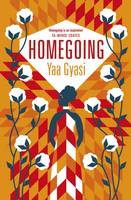
Ghana: Homegoing, by Yaa Gyasi
I resisted this book as my choice for Ghana for quite a while. Even though the author, Yaa Gyasi, was born in Ghana, she was raised in Alabama. Furthermore, the publicity material describes the book as "an intense, heartbreaking story of one family and through their lives the very story of America itself". I didn't want to read an American story, I wanted to read an African story. But I did want to read this book after seeing a lot of positive reviews, and when I did, I found that it is in fact an African story as much as it is an American story - I guess that it is not described that way for marketing reasons - the publishers thought that calling it "the story of America" would sell more books.
Effia and Esi are two sisters - half sisters, in fact - in Ghana in the late eighteenth century. One of them marries a white man, a slave trader in Cape Coast. The other is sold into slavery. The novel follows seven generations of their descendants and all the twists and turns of their lives. It is a stunning novel. There is nothing stereotypical about any of the characters. In America, after escaping via the underground railroad, Esi's grandson Kojo marries a free woman, Anna. And yet heartbreakingly, she is captured by those hunting runaway slaves in the north, and her son H is born into slavery again. After slavery ends, he is convicted for, as far as I could tell, looking at a white woman, and sent as a convict to labour in coal mines. Eventually his descendants return to the north, to New York, but their struggles do not end there.
Effia's son becomes an heir to his uncle, a "Big Man"in his tribe. But her grandson James Richard wants nothing more than to marry the girl he has set his heart on, and manages to disappear in a tribal war to contrive this. So his descendants, too, know struggles and poverty. Furthermore, they are haunted by dreams of the "fire woman" who is deeply connected with their family history.
Eventually the two branches of the family come together, without realising their connection. The ending could have seemed contrived, but didn't. It is a thoroughly satisfying story, and one that revealed as much to me about the colonial history of Ghana as about the history of African Americans.
Effia and Esi are two sisters - half sisters, in fact - in Ghana in the late eighteenth century. One of them marries a white man, a slave trader in Cape Coast. The other is sold into slavery. The novel follows seven generations of their descendants and all the twists and turns of their lives. It is a stunning novel. There is nothing stereotypical about any of the characters. In America, after escaping via the underground railroad, Esi's grandson Kojo marries a free woman, Anna. And yet heartbreakingly, she is captured by those hunting runaway slaves in the north, and her son H is born into slavery again. After slavery ends, he is convicted for, as far as I could tell, looking at a white woman, and sent as a convict to labour in coal mines. Eventually his descendants return to the north, to New York, but their struggles do not end there.
Effia's son becomes an heir to his uncle, a "Big Man"in his tribe. But her grandson James Richard wants nothing more than to marry the girl he has set his heart on, and manages to disappear in a tribal war to contrive this. So his descendants, too, know struggles and poverty. Furthermore, they are haunted by dreams of the "fire woman" who is deeply connected with their family history.
Eventually the two branches of the family come together, without realising their connection. The ending could have seemed contrived, but didn't. It is a thoroughly satisfying story, and one that revealed as much to me about the colonial history of Ghana as about the history of African Americans.
Labels:
Ghana,
world reading,
Yaa Gyasi
Saturday, November 04, 2017
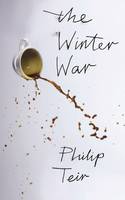
Finland: The Winter War, by Philip Teir
After I brought this home from the library, I wondered at my choice when I saw Philip Teir described as a "Finland Swede" on the dust jacket. But it turns out that he was indeed born in Finland and grew up there - there is a considerable Swedish speaking community in parts of western Finland, something that I had not previously realised (but which makes perfect sense, given the proximity of the two countries).
The first sentence is attention grabbing: "The first mistake that Max and Katriina made that winter - and they would make many mistakes before their divorce - was to deep-freeze their grandchildren's hamster." The book then jumps back in time a few months, and chronicles the lives of Max and Katriina, their daughters Helen and Eva, and other family members. Eva is an art student trying to find her way at art school in London. Eva is married to Christian and has two children. Max's mother is elderly and frail. Max is a sociology professor writing a book which has been a long time coming to fruition. He meets one of his former students, Laura, in a chance encounter and invites her to his sixtieth birthday part where his publisher suggest she help Max with his book. This leads to his having an affair with her.
Actually I'm not sure that it should be called an affair. It doesn't seem to mean all that much to Laura, more just casual sex than a real relationship. By the time I finished the book I didn't really have a lot of sympathy for Max, who seemed to be the author of his own downfall. It's a genre of book that I don't read much - stories of modern life with not much of the weird or unusual about it (despite the opening sentence) but it was well written enough that I found it more absorbing than I expected. The epigraph is a quote by August Stridberg: "And yet those trivial matters were not without significance in life, because life consists of trivial matters", which seemed a very apposite choice, after reading the book.
The Winter War was translated from Swedish by Tiina Nunnally and published by Serpent's Tail, an imprint of Profile Books Ltd (London) in 2015.
The first sentence is attention grabbing: "The first mistake that Max and Katriina made that winter - and they would make many mistakes before their divorce - was to deep-freeze their grandchildren's hamster." The book then jumps back in time a few months, and chronicles the lives of Max and Katriina, their daughters Helen and Eva, and other family members. Eva is an art student trying to find her way at art school in London. Eva is married to Christian and has two children. Max's mother is elderly and frail. Max is a sociology professor writing a book which has been a long time coming to fruition. He meets one of his former students, Laura, in a chance encounter and invites her to his sixtieth birthday part where his publisher suggest she help Max with his book. This leads to his having an affair with her.
Actually I'm not sure that it should be called an affair. It doesn't seem to mean all that much to Laura, more just casual sex than a real relationship. By the time I finished the book I didn't really have a lot of sympathy for Max, who seemed to be the author of his own downfall. It's a genre of book that I don't read much - stories of modern life with not much of the weird or unusual about it (despite the opening sentence) but it was well written enough that I found it more absorbing than I expected. The epigraph is a quote by August Stridberg: "And yet those trivial matters were not without significance in life, because life consists of trivial matters", which seemed a very apposite choice, after reading the book.
The Winter War was translated from Swedish by Tiina Nunnally and published by Serpent's Tail, an imprint of Profile Books Ltd (London) in 2015.
Labels:
Finland,
Philip Teir,
world reading
Monday, October 30, 2017
Papua New Guinea: Tabu, by Moses Maladina
A search of our library's online catalogue revealed several novels set in Papua New Guinea - but as one was written by a New Zealander, and one by an Australian, that left me with Moses Maladina's Tabu. Moses Maladina is (or was in 2003) a senior government minister in Papua New Guinea, with a background in agriculture, law and business. He served as Papua New Guinea's High Commissioner to New Zealand from 1998 - 2002.
Like my choice for Benin, the book deals with the exploitation of the resources of third world countries, and with an inter-racial love affair. However, I found this one a lot easier to read. It is set both in 1933 and in 1997, and alternates between the two to tell the story of Elizabeth Castleton, the young wife of an Australian newly arrived in Port Moresby to work in the Australian administration there, and of her lover, the Papuan Sitiveni (Stephen). At that time such relationships were forbidden, and the White Women's Protection Act rendered any native who had relationships with a white woman liable to harsh punishment. Elizabeth falls pregnant, and leaves for Australia and thence England where she makes a career for herself and brings up her daughter alone.
In 1997 after Elizabeth's death, her grandson Edward travels to Port Moresby both to find out the truth about his grandfather, and to investigate a business deal - which turns out to be a rather shady deal involving mercenaries and the recapture of a gold mine on the island of Bougainville from rebel forces. This story is apparently based on real events.
In "As She Was Discovering Tigony", my choice for Benin, the Frenchwoman Dorcas rushed so precipitately into an affair with an African man that it made no sense to me (the actual relationship later on appeared to be sound, but I couldn't see how it started, especially since she was an older, professional woman). In this book on the other hand, the story arc in which the lonely young woman with little to do falls for the native policeman who has been tasked with showing her around the island proceeds on a much more understandable basis. Although sometimes I felt like shaking Elizabeth for her incredible naivety and selfishness in exposing Sitiveni to the huge risk of discovery.
In 1997 although the country is independent, and the harsher laws no longer exist, many of the locals are still impoverished, and the country appears to still be run for the benefit of wealthier nations and their exploitation of its rich resources of gold, oil and fish. I did feel that the book was written more to raise these issues than to tell a good story - but it was well done and the storyline was quite strong despite the issues being clearly expressed.
Tabu was published by Steele Roberts Limited (Wellington, New Zealand) in 2003.
Like my choice for Benin, the book deals with the exploitation of the resources of third world countries, and with an inter-racial love affair. However, I found this one a lot easier to read. It is set both in 1933 and in 1997, and alternates between the two to tell the story of Elizabeth Castleton, the young wife of an Australian newly arrived in Port Moresby to work in the Australian administration there, and of her lover, the Papuan Sitiveni (Stephen). At that time such relationships were forbidden, and the White Women's Protection Act rendered any native who had relationships with a white woman liable to harsh punishment. Elizabeth falls pregnant, and leaves for Australia and thence England where she makes a career for herself and brings up her daughter alone.
In 1997 after Elizabeth's death, her grandson Edward travels to Port Moresby both to find out the truth about his grandfather, and to investigate a business deal - which turns out to be a rather shady deal involving mercenaries and the recapture of a gold mine on the island of Bougainville from rebel forces. This story is apparently based on real events.
In "As She Was Discovering Tigony", my choice for Benin, the Frenchwoman Dorcas rushed so precipitately into an affair with an African man that it made no sense to me (the actual relationship later on appeared to be sound, but I couldn't see how it started, especially since she was an older, professional woman). In this book on the other hand, the story arc in which the lonely young woman with little to do falls for the native policeman who has been tasked with showing her around the island proceeds on a much more understandable basis. Although sometimes I felt like shaking Elizabeth for her incredible naivety and selfishness in exposing Sitiveni to the huge risk of discovery.
In 1997 although the country is independent, and the harsher laws no longer exist, many of the locals are still impoverished, and the country appears to still be run for the benefit of wealthier nations and their exploitation of its rich resources of gold, oil and fish. I did feel that the book was written more to raise these issues than to tell a good story - but it was well done and the storyline was quite strong despite the issues being clearly expressed.
Tabu was published by Steele Roberts Limited (Wellington, New Zealand) in 2003.
Labels:
Moses Maladina,
Papua New Guinea,
world reading
Wednesday, October 25, 2017
Azerbaijan: Solar Plexus, by Rustam Ibragimbekov
I waited quite a while for this book. While I found Kurban Said's Ali and Nino in our library catalogue, I felt that it had been published too long ago to represent modern Azerbaijan. It was published in 1937 at a time when Azerbaijan was part of Soviet Russia.
Some searching on the internet eventually turned up a reference to Rustam Ibragimbekov's novel, which turned out to be somewhat expensive, however I was able to get our library to buy it and eventually it arrived.
This book is subtitled "A Baku Saga in Four Parts". It tells the story of a group of friends who grow up in houses built around the same courtyard in a street in Baku, following them through some turbulent times in Azerbaijani history, culminating in the early days of independence in the 1990s. Each of the four sections focuses on a different member of the group. Throughout, we see them balancing self interest with their friendships, as they take various actions including betrayals to get ahead and just to survive. Baku is an ancient city and the book speaks of its culture, but also of how it is changing and becoming rough and lawless. There are glimpses of the economy which is built on oil.
The second section was the most difficult for me. This section focuses on Marat, who has stayed in his courtyard apartment when all the other inhabitants have left. Because of nearby quarrying, it is doomed to be pulled down. There are passages in italics which at first I thought were dreams, then perhaps flashbacks, and eventually I wondered if they were a mix of both.
It wasn't until the third and the fourth sections that I gradually began to understand how all the events described related to each other, and all the loose plot ends began to be tied together. By the end of the book, I felt I had enjoyed it, and been somewhat enlightened about contemporary Azerbaijan, even though I had been slightly tempted in the second section to give up (but didn't, owing to the lack of alternatives).
Rustam Ibragimbekov was born in Baku in 1939. He is an internationally award-winning screenwriter, dramatist and producer. In 1994 his film Burnt by the Sun was awarded the Grand Prix at Cannes and an Academy Award for Best Foreign Film. (The narrator of the fourth section, Seidzade, is a writer of novels and screen plays, and I wondered if he was a somewhat autobiographical figure).
Solar Plexus was translated from Russian by Andrew Bromfield and published in 2014 by Glagoslav Publications.
Some searching on the internet eventually turned up a reference to Rustam Ibragimbekov's novel, which turned out to be somewhat expensive, however I was able to get our library to buy it and eventually it arrived.
This book is subtitled "A Baku Saga in Four Parts". It tells the story of a group of friends who grow up in houses built around the same courtyard in a street in Baku, following them through some turbulent times in Azerbaijani history, culminating in the early days of independence in the 1990s. Each of the four sections focuses on a different member of the group. Throughout, we see them balancing self interest with their friendships, as they take various actions including betrayals to get ahead and just to survive. Baku is an ancient city and the book speaks of its culture, but also of how it is changing and becoming rough and lawless. There are glimpses of the economy which is built on oil.
The second section was the most difficult for me. This section focuses on Marat, who has stayed in his courtyard apartment when all the other inhabitants have left. Because of nearby quarrying, it is doomed to be pulled down. There are passages in italics which at first I thought were dreams, then perhaps flashbacks, and eventually I wondered if they were a mix of both.
It wasn't until the third and the fourth sections that I gradually began to understand how all the events described related to each other, and all the loose plot ends began to be tied together. By the end of the book, I felt I had enjoyed it, and been somewhat enlightened about contemporary Azerbaijan, even though I had been slightly tempted in the second section to give up (but didn't, owing to the lack of alternatives).
Rustam Ibragimbekov was born in Baku in 1939. He is an internationally award-winning screenwriter, dramatist and producer. In 1994 his film Burnt by the Sun was awarded the Grand Prix at Cannes and an Academy Award for Best Foreign Film. (The narrator of the fourth section, Seidzade, is a writer of novels and screen plays, and I wondered if he was a somewhat autobiographical figure).
Solar Plexus was translated from Russian by Andrew Bromfield and published in 2014 by Glagoslav Publications.
Labels:
Azerbaijan,
Rustam Ibragimbekov,
world reading
Saturday, October 07, 2017
Bhutan: The Circle of Karma, by Kunzang Choden
I'm always wary when there seems to be only one book available from any country. The quality can vary. And this one sounded not quite my cup of tea - talk of "karma" and other spiritual concepts somewhat taken over by the Western new-agers tended to put me off.
My misgivings however were, to my pleasure, proved wrong. The book is the first novel written in English by a Bhutanese writer. And yet it read well, the English being of a higher standard than that in many of the translations I have read, where the translator should know their native language. The narration is simple and straightforward, telling the story of the life of a Bhutanese woman, Tsomo. When her mother dies in childbirth, her life changes. The book follows through all the twists and turns in her life, as she marries, loses her first husband to her sister, and later marries again. But all along she has desired to study religion and eventually she becomes a nun. This is a society where religion is the only type of learning. Her father has tutored young boys in his home, but as a girl, this was denied to Tsomo.
We see both the benefits and drawbacks of the simple life - the superstition and the useless rituals. For instance, the only treatment for a difficult childbirth is too feed the spirits and ask them to go away.
The book is a fascinating insight into the culture of this tucked away Himalayan kingdom, and also shows the changes than gradual modernisation brings to Tsomo's life - the building of roads, the coming of Western medicine.
While it would be good to have more books available from this nation, if I had had to choose from several, I would have been happy to have chosen this one.
My misgivings however were, to my pleasure, proved wrong. The book is the first novel written in English by a Bhutanese writer. And yet it read well, the English being of a higher standard than that in many of the translations I have read, where the translator should know their native language. The narration is simple and straightforward, telling the story of the life of a Bhutanese woman, Tsomo. When her mother dies in childbirth, her life changes. The book follows through all the twists and turns in her life, as she marries, loses her first husband to her sister, and later marries again. But all along she has desired to study religion and eventually she becomes a nun. This is a society where religion is the only type of learning. Her father has tutored young boys in his home, but as a girl, this was denied to Tsomo.
We see both the benefits and drawbacks of the simple life - the superstition and the useless rituals. For instance, the only treatment for a difficult childbirth is too feed the spirits and ask them to go away.
The book is a fascinating insight into the culture of this tucked away Himalayan kingdom, and also shows the changes than gradual modernisation brings to Tsomo's life - the building of roads, the coming of Western medicine.
While it would be good to have more books available from this nation, if I had had to choose from several, I would have been happy to have chosen this one.
Labels:
bhutan,
Kunzang Choden,
world reading
Friday, September 22, 2017
France: Submission, by Michel Houellebecq
Since we have an election going on here in New Zealand, this seemed a very appropriate book to read right now. It's set in 2002. The protagonist is a middle-aged lecturer at the Sorbonne, an expert on nineteenth century author J-K Huysmans. (I had never hear of Huysmans, and had to google to check that he is actually a real figure.) François is bored and lacks any sense of meaning in life. In the meanwhile, an election is taking place in France. In the first round of voting, Marine Le Pen's far right are ahead in the vote with the new Islamic Brotherhood just edging the socialists out of second place. So for the second round, the socialists throw in their lot with the Islamic party, which sweeps into power and introduces far reaching reforms.
All children are to have the opportunity of an Islamic education. Education is privatised. Henceforth the Islamic schools and universities are by far better funded than the Christian and Jewish institutions, as money pours in from Qatar and Saudi Arabia. Francois's university becomes an Islamic one, and he is offered promotion, on condition that he converts to Islam.
The book is described as a satire, but it's not what I have thought of as satire in the past i.e it's not laugh-aloud funny. But it is thought-provoking, especially regarding the essential meaningless of life in modern Europe. Will François be happier once he has converted to Islam (and acquired a beautiful young submissive wife, with the promise of more to come?) I strongly suspect not.
submission is translated from the French by Lorin Stein and published by Farrar, Strauss and Giroux (New York, 2015)
Now, I'm off to return the book to the library - and to vote - although not for an Islamic party (an option which is not on offer, even if I wanted it!)
All children are to have the opportunity of an Islamic education. Education is privatised. Henceforth the Islamic schools and universities are by far better funded than the Christian and Jewish institutions, as money pours in from Qatar and Saudi Arabia. Francois's university becomes an Islamic one, and he is offered promotion, on condition that he converts to Islam.
The book is described as a satire, but it's not what I have thought of as satire in the past i.e it's not laugh-aloud funny. But it is thought-provoking, especially regarding the essential meaningless of life in modern Europe. Will François be happier once he has converted to Islam (and acquired a beautiful young submissive wife, with the promise of more to come?) I strongly suspect not.
submission is translated from the French by Lorin Stein and published by Farrar, Strauss and Giroux (New York, 2015)
Now, I'm off to return the book to the library - and to vote - although not for an Islamic party (an option which is not on offer, even if I wanted it!)
Labels:
France,
Michel Houellebecq,
world reading
Friday, September 08, 2017
Uganda: Kintu, by Jennifer Nansubuga Makumbi
This book slowed me down a little, as it's over four hundred pages long. It is in six sections, the first section telling of Kintu Kidda, who in 1750 sets out for the capital of the Buganda Kingdom to pledge allegiance to the new leader. His actions along the way result in a curse being placed upon him and on his clan. The next five sections tell the stories of various modern day descendants, and show how the curse plays out in their lives, and how they seek to overcome it.
Unlike many African novels published in the West, there is very little evidence of the West in this book. The characters do not emigrate to the West, or dream of emigrating. Neither are we treated to much exposition of either the benefits or evils of colonialism. Apparently the author, who now lives in Manchester, was rejected by publishing house after publishing house in England. They all supposedly thought the book "too difficult" for Western readers. This puzzled me a little, as the book to me did not seem difficult at all. Perhaps they really wanted to say "not Eurocentric enough" but felt they couldn't say that so said "too difficult" instead. At any rate, it was first published in Kenya in 2014 and was much acclaimed. This edition was published by Transit Books in the United States in 2017.
I found the book very readable and fascinating in its insights into the lives of the people of Uganda. However, somehow I did not feel emotionally involved with the characters and ended up feeling as if I was viewing them from something of a difference rather than being totally drawn in. Nevertheless, I was happy with my choice of book for this country, which does not seem to have the volume of literature that has come from, say, Nigeria where the choices are almost endless.
Unlike many African novels published in the West, there is very little evidence of the West in this book. The characters do not emigrate to the West, or dream of emigrating. Neither are we treated to much exposition of either the benefits or evils of colonialism. Apparently the author, who now lives in Manchester, was rejected by publishing house after publishing house in England. They all supposedly thought the book "too difficult" for Western readers. This puzzled me a little, as the book to me did not seem difficult at all. Perhaps they really wanted to say "not Eurocentric enough" but felt they couldn't say that so said "too difficult" instead. At any rate, it was first published in Kenya in 2014 and was much acclaimed. This edition was published by Transit Books in the United States in 2017.
I found the book very readable and fascinating in its insights into the lives of the people of Uganda. However, somehow I did not feel emotionally involved with the characters and ended up feeling as if I was viewing them from something of a difference rather than being totally drawn in. Nevertheless, I was happy with my choice of book for this country, which does not seem to have the volume of literature that has come from, say, Nigeria where the choices are almost endless.
Labels:
Jennifer Nansubuga Makumbi,
Uganda,
world reading
Monday, August 28, 2017
Brunei: Written in Black, by K H Lim
It seemed as if the choices for Brunei were limited to one of two books: Four Kings, by Christopher Sun, or The Forlorn Adventure, a sci fi novel by Amir Falique. Four Kings is a murder mystery set in France - besides the fact that I have not seen a good review of it, neither novel seemed likely to enlighten me much about life in Brunei.
Then I stumbled on a reference to K H Lim's Written in Black, which seemed much more like what I was looking for. The narrator of this novel is ten year old Jonathan Lee, who is attending the funeral of his "Ah Kong" (grandfather). Jonathan's mother had left for Australia six months previously. His elder brother Michael has been kicked out of the house and has joined a rock band. Jonathan is missing his mother and when he finds out from his cousin Kevin, that she has been in touch with Michael by telephone, he escapes the funeral (a traditional Chinese funeral lasting several days) in an empty coffin in the back of a truck. His quest to find his brother and thus contact his mother leads him to encounter poklans (teenage delinquents), derelict houses full of bats and weird shopkeepers.
It's a fairly unsophisticated story and the idea that a ten year old is narrating is not quite convincing - the voice of the narrator is a little too self aware - more like an adult narrating a ten year old's experiences. Nevertheless, it is an enjoyable story. I was surprised to find that Jonathan's family all had western names, and there was plenty of mention of Western culture - a mother in Australia, New Zealand gardening programmes on the television. This would not have suprised me had it been, for instance, Singapore, but I knew little of Brunei other than that it is an oil-rich country ruled by a Sultan, so I was expecting something a little different. Still, other aspects of the story were definitely not western.
K H Lim was born and raised in Brunei. He graduated from medical school in the UK in 2008 and currently lives in Singapore. Written in Black was published by Monsoon Books in 2014.
Then I stumbled on a reference to K H Lim's Written in Black, which seemed much more like what I was looking for. The narrator of this novel is ten year old Jonathan Lee, who is attending the funeral of his "Ah Kong" (grandfather). Jonathan's mother had left for Australia six months previously. His elder brother Michael has been kicked out of the house and has joined a rock band. Jonathan is missing his mother and when he finds out from his cousin Kevin, that she has been in touch with Michael by telephone, he escapes the funeral (a traditional Chinese funeral lasting several days) in an empty coffin in the back of a truck. His quest to find his brother and thus contact his mother leads him to encounter poklans (teenage delinquents), derelict houses full of bats and weird shopkeepers.
It's a fairly unsophisticated story and the idea that a ten year old is narrating is not quite convincing - the voice of the narrator is a little too self aware - more like an adult narrating a ten year old's experiences. Nevertheless, it is an enjoyable story. I was surprised to find that Jonathan's family all had western names, and there was plenty of mention of Western culture - a mother in Australia, New Zealand gardening programmes on the television. This would not have suprised me had it been, for instance, Singapore, but I knew little of Brunei other than that it is an oil-rich country ruled by a Sultan, so I was expecting something a little different. Still, other aspects of the story were definitely not western.
K H Lim was born and raised in Brunei. He graduated from medical school in the UK in 2008 and currently lives in Singapore. Written in Black was published by Monsoon Books in 2014.
Labels:
Brunei,
K H Lim,
world reading
Subscribe to:
Posts (Atom)